- Bill: SB 5004
- Read the Full Legislation

BJA STOP School Violence Program: The FY26 cycle reopened September 21, 2026. It offers 15 awards up to $2M (for state/public higher ed) and 80 awards up to $1M (for districts, nonprofits, private K-12, and tribal governments). The Grants.gov deadline is October 30, 2026. The JustGrants deadline is November 6, 2026. You may also join this email newsletter for ongoing updates on upcoming grant opportunities.
Washington SB 5004 requires school districts to develop an emergency response system in collaboration with local law enforcement agencies, Public Safety Answering Points (PSAPs), and safety personnel.
Systems must include at least one of the following:
Alyssa’s Law is state legislation requiring K-12 schools to adopt an emergency response system built for rapid, direct contact with 911 and local responders. Washington’s version is now mandatory, and its compliance deadline has already passed.
Yes. Washington’s Alyssa’s Law, SB 5004, required every public school district to have a compliant emergency response system (panic buttons, video/audio access, remote door locks, or code-compliant construction) in place by October 1, 2025. That deadline has passed, so compliance is now mandatory.
Alyssa’s Law is named for Alyssa Alhadeff, a 14-year-old student killed in the February 14, 2018 shooting at Marjory Stoneman Douglas High School in Parkland, Florida. Her parents became leading voices calling for school safety reform. They advocate for legislation that would give every classroom a direct, silent line to law enforcement during an emergency — without triggering school-wide alarms that could escalate danger or tip off a threat.
Washington Governor Bob Ferguson signed Senate Bill 5004 into law on May 19, 2025. This makes Washington one of a growing number of states to enact Alyssa’s Law. The bill passed 98-0 in the House and 49-0 in the Senate. This demonstrated a broad bipartisan consensus on the urgency of modernizing school emergency response. The law was developed with guidance from Washington’s State School Safety Center, which provides best practices, research, and guidance on school safety for districts across the state.
All public school districts, charter schools, and state-tribal education compact schools (STECs) in Washington must comply, regardless of size or location.
Washington’s version of Alyssa’s Law is more flexible than some states. That flexibility is worth understanding carefully. Rather than mandating a single technology, SB 5004 requires school districts to develop an emergency response system in collaboration with local law enforcement agencies, Public Safety Answering Points (PSAPs), and designated safety and security personnel. Districts can satisfy their requirements through panic buttons, live video feeds accessible to first responders, remote door lock controls, or systems that meet Washington’s building code standards for school occupancies.
That list is broader than what many states mandate. With that said, a system chosen without coordination with local law enforcement and 911 dispatch centers does not satisfy SB 5004, regardless of its technical capabilities.
Washington’s law includes a clear accountability structure. All school districts were required to submit an implementation progress report to the Office of the Superintendent of Public Instruction (OSPI) by October 1st of 2025. OSPI compiled these reports into a statewide summary for the legislature by December 1st, 2025. Districts that have not yet reported or implemented a qualifying system are already operating outside the law’s requirements.
Like other states’ versions of Alyssa’s Law, Washington’s SB 5004 does not eliminate the need for existing classroom communication tools. Panic alert systems and emergency response technology are additions to a school’s safety infrastructure. They are not valid replacements for phones, intercoms, or other established communication devices.
Alyssa’s Law has now passed in many states, including New Jersey (2019), Florida (2020), New York (2022), Texas and Tennessee (2023), Utah and Oklahoma (2024), Georgia, Washington, and Oregon (2025), and Virginia and West Virginia (2026). As of early 2026, more than 18 additional states are actively considering legislation.
Washington’s version is notably more flexible than most. While states like Texas specifically mandate silent panic alert technology in every classroom, Washington gives districts a menu of qualifying options. It also focuses heavily on the collaborative planning process with law enforcement and PSAPs. This means:
Some states have set a more prescriptive bar:
Washington sits closer to the flexible end of the spectrum. This creates real opportunity for districts to build solutions that fit their campuses.
Washington’s SB 5004 implementation did not include direct district funding. Nevertheless, the following two federal grant sources may help districts cover compliance costs:
The BJA STOP School Violence Program reopened its FY2026 cycle on September 21, 2026. It now offers 15 awards of up to $2 million each for state governments and public institutions of higher education (Category 1). It also offers 80 awards of up to $1 million each for local governments, school districts (including public charter schools), nonprofits, private K-12 schools, and tribal governments (Category 2). It is a 36-month award. The Grants.gov deadline is October 30, 2026, and the JustGrants deadline is November 6, 2026.
The DHS Homeland Security Grant Program is an annual funding opportunity available to state and local governments. Washington school districts can access HSGP awards through their local or county government agencies. Allowable uses include upgrading emergency communication infrastructure and improving coordination with law enforcement. State program openings generally run from February through June each year. Contact the Washington Military Department’s Emergency Management Division to confirm how your district can access HSGP funds in the current cycle.
Districts that have not yet applied for available grants should treat this as a time-sensitive priority. Grant windows are competitive, and delays in registration or submission can complicate implementation timelines.
Punch Rescue provides resilient hardware and software designed to work when it matters most. This serves as an emergency communication system that satisfies SB 5004’s requirements and remains functional when app-based solutions fail.
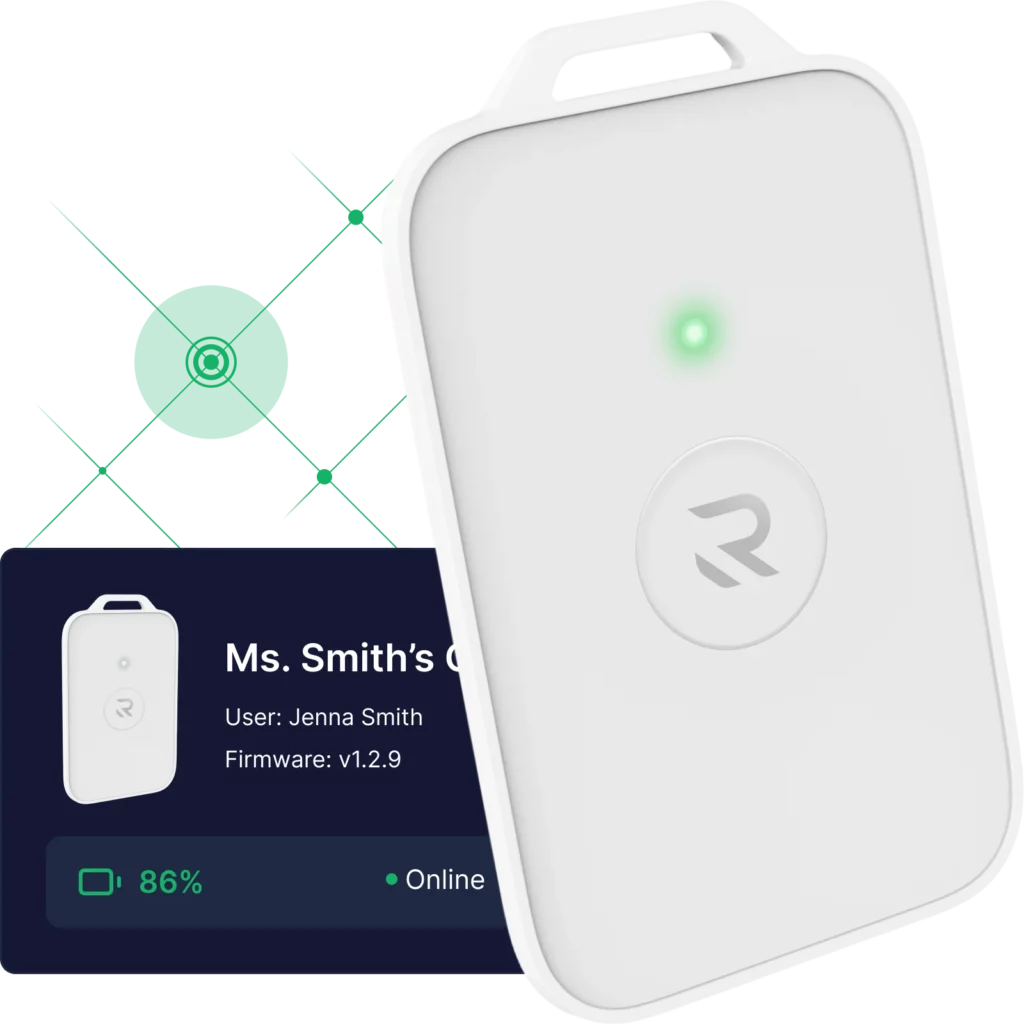
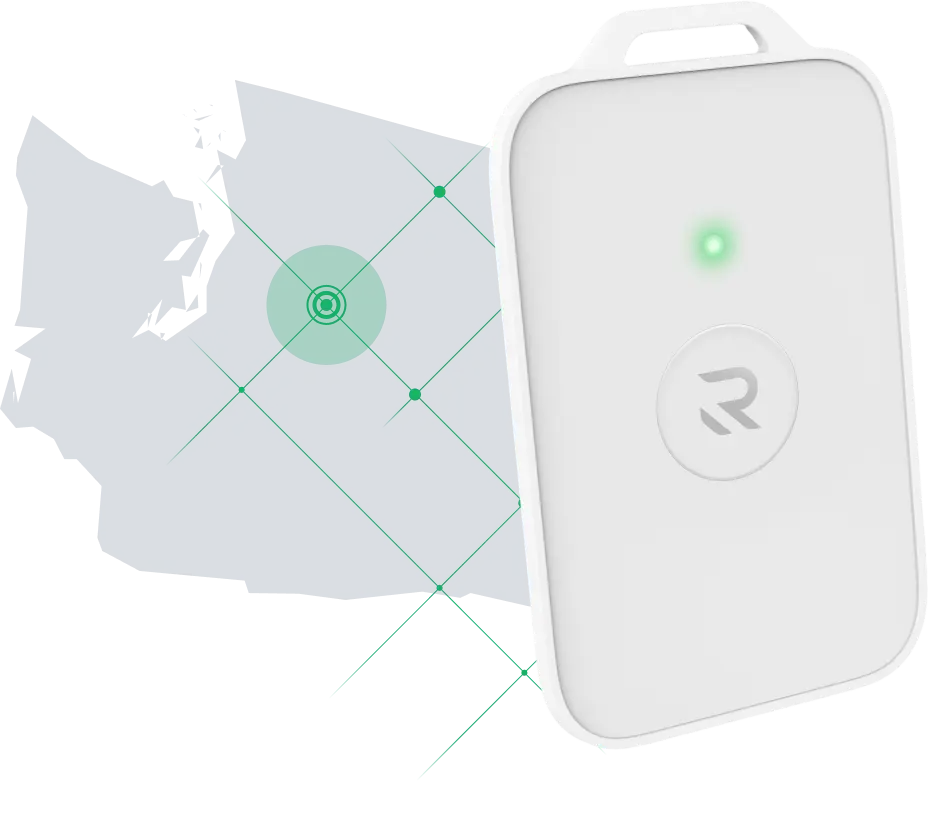
The Rescue Card is a wearable panic button worn by teachers and staff. When pressed, it silently triggers an emergency alert. There’s no phone required. Rescue Repeaters extend signal coverage across a campus — including classrooms, gymnasiums, portable buildings, and outdoor areas where WiFi dead zones are common. The Rescue Base Station anchors the system’s communication infrastructure, with approximately six hours of battery backup to maintain operation during power disruptions. This hardware-first approach directly addresses SB 5004’s qualifying technology category of panic or alert buttons tied to school administration, district staff, and emergency response providers.
Punch Rescue integrates with RapidSOS, a platform that connects activated panic button alerts directly to 911 and public safety agencies. The moment a Rescue Card is pressed, RapidSOS transmits real-time incident data — including location and alert type — to the appropriate dispatch center. This addresses SB 5004’s requirement for coordination with Public Safety Answering Points (PSAPs). It positions Washington schools ahead of the deeper PSAP integration requirements emerging in other states.
Punch Rescue integrates with Mappedin to embed dynamic indoor facility maps directly within the response dashboard. When an alert is triggered, first responders receive accurate, room-level location data. This function supports the Washington legislation’s emphasis on giving law enforcement the information they need to respond quickly and effectively the moment they are notified.
Punch Rescue integrates with Lightspeed Notify for emergency communication coordination, automated response plan distribution, and mass notifications. When an incident occurs, administrators, staff, and first responders receive the right information automatically. There are no manual steps required during a moment of crisis.
The flexibility of Washington’s law can lead districts toward under-built solutions that satisfy the basic requirements of the law without providing real protection. When evaluating systems, you need to ask:
Punch Rescue is built to answer yes to all of the above. It’s also highly customizable to meet unique school district needs and specifications.
Yes. Washington’s Alyssa’s Law, SB 5004, signed May 19, 2025 and effective July 27, 2025, required districts to have a compliant emergency response system in place by October 1, 2025. That deadline has passed, so compliance is now mandatory.
At least one of: panic or alert buttons connected to administration, staff, and emergency responders; a live video or audio feed accessible to law enforcement; remote access to door locks or other physical security controls; or a system meeting state building code requirements for Group E occupancies.
Yes, and it’s not optional. The system has to be developed in collaboration with local law enforcement, Public Safety Answering Points (PSAPs), and safety personnel. A system chosen without that coordination doesn’t satisfy SB 5004, regardless of its technical capabilities.
Yes, on the technology side. Panic buttons, video/audio feed access, remote door locks, and Group E building-code compliance are listed as alternatives. Whichever option a district picks still has to go through the required law-enforcement coordination process.
SB 5004 didn’t include dedicated state funding. Federal BJA STOP School Violence Program funding and the Homeland Security Grant Program (HSGP), accessed through the Washington Military Department’s Emergency Management Division, are the primary avenues. Contact Punch Rescue’s sales team to confirm current funding options for your district.
Punch Rescue’s Rescue Card and RapidSOS integration satisfy SB 5004’s panic-button and direct-responder-connection option, and Punch Rescue works directly with districts and local law enforcement during setup to meet the law’s coordination requirement. Reach out to Punch Rescue to confirm current implementation support for your district.
Washington requires every public school district to implement an emergency response system. The October 2025 reporting deadline has passed. The law is flexible on technology, but strict on process.
Most panic buttons leave you guessing about device status, battery life, and system health. Punch Rescue provides real-time visibility across your entire infrastructure, so you know your school is ready when it matters most.