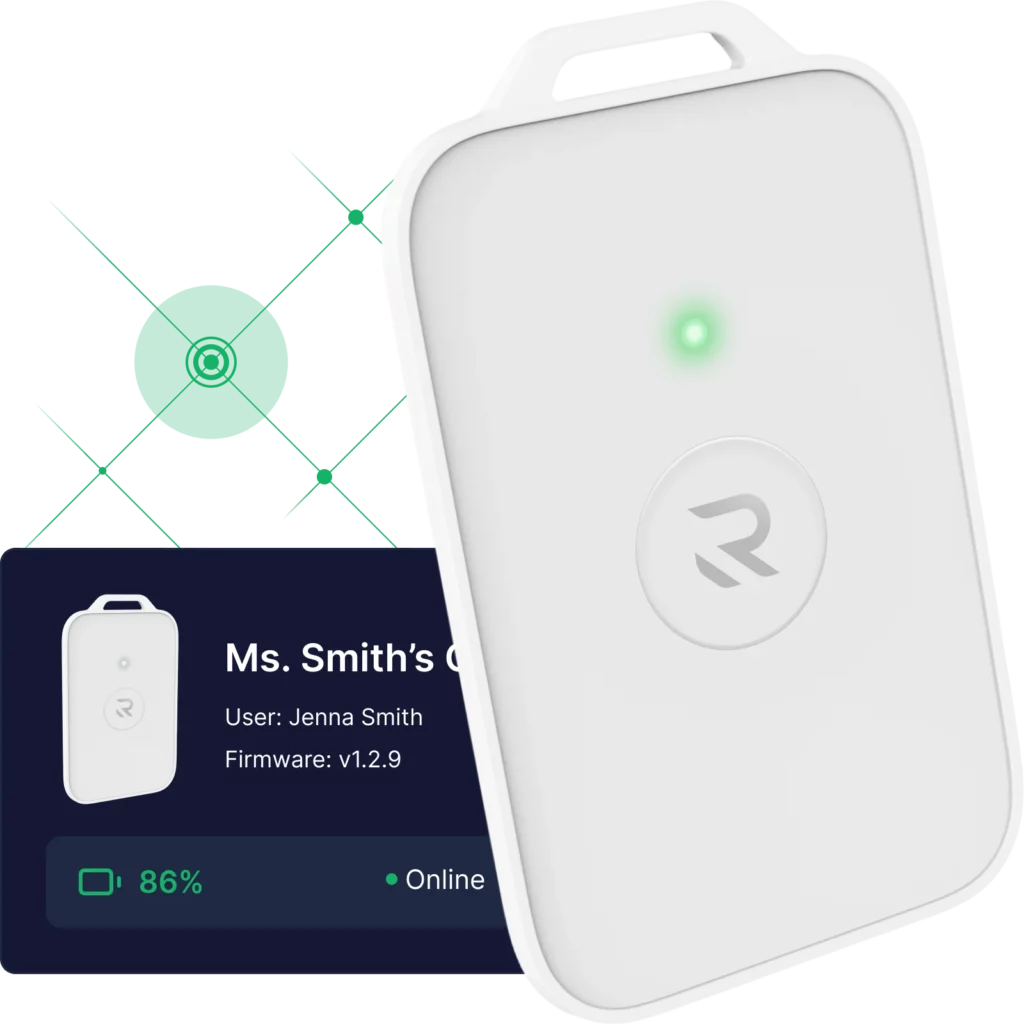
The Most Reliable Panic Button for K12 Schools
Compliance is the baseline; reliability is the goal. Punch Rescue delivers emergency infrastructure with wearable panic buttons built for the realities of daily school life. As you navigate Alyssa’s Law, look beyond simply meeting standards. Demand a system proven to work in the moments that matter most.

Available Through Cooperative Purchasing
Punch Rescue is now available through the TIPS cooperative purchasing contract, helping K-12 school districts simplify procurement and accelerate deployment of emergency communication infrastructure.
No bid process required for eligible districts.
Punch Rescue K12 Emergency Infrastructure
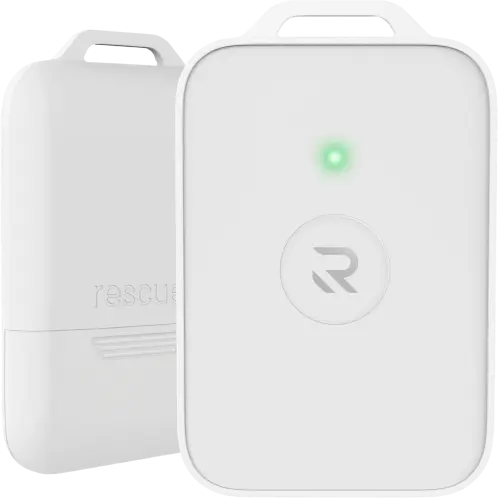
Rescue
Card
A universal button activated emergency reporting card
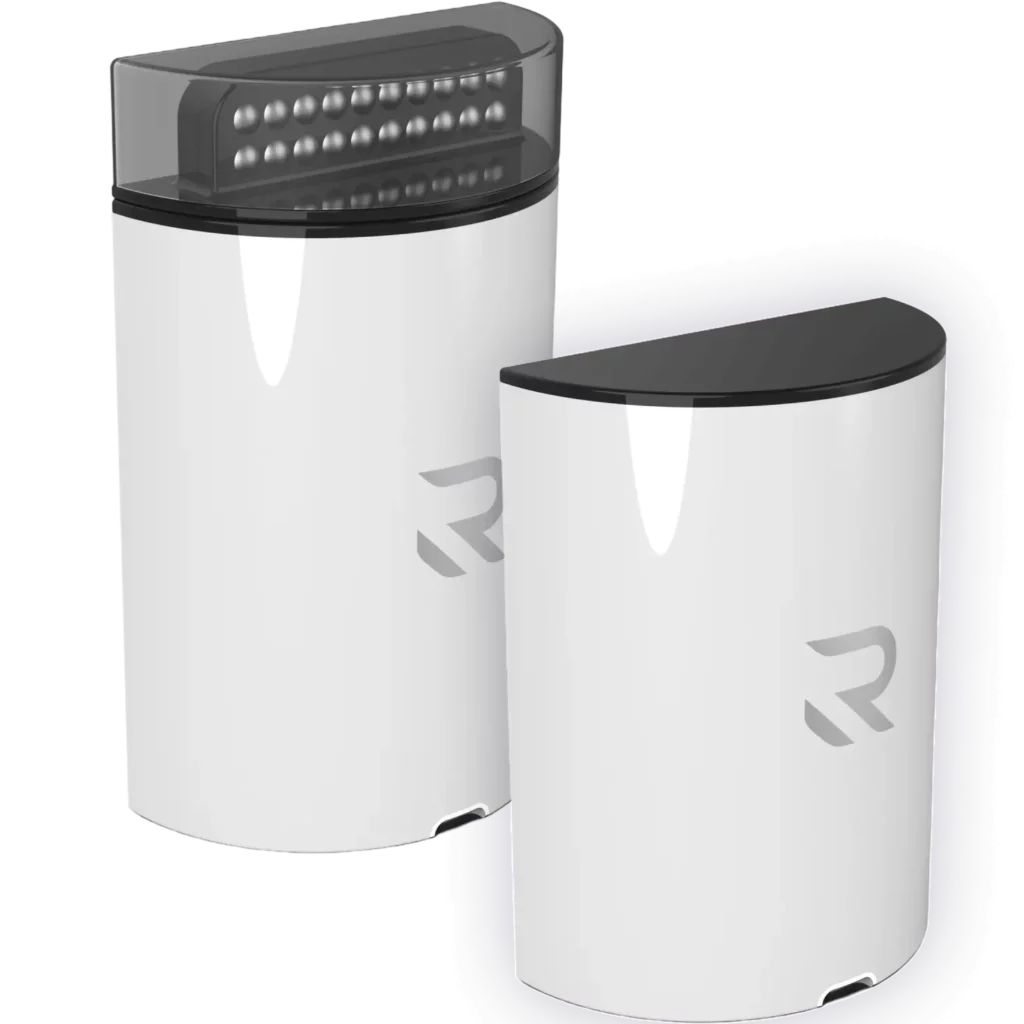
Rescue
Repeater
A device providing precise indoor location awareness
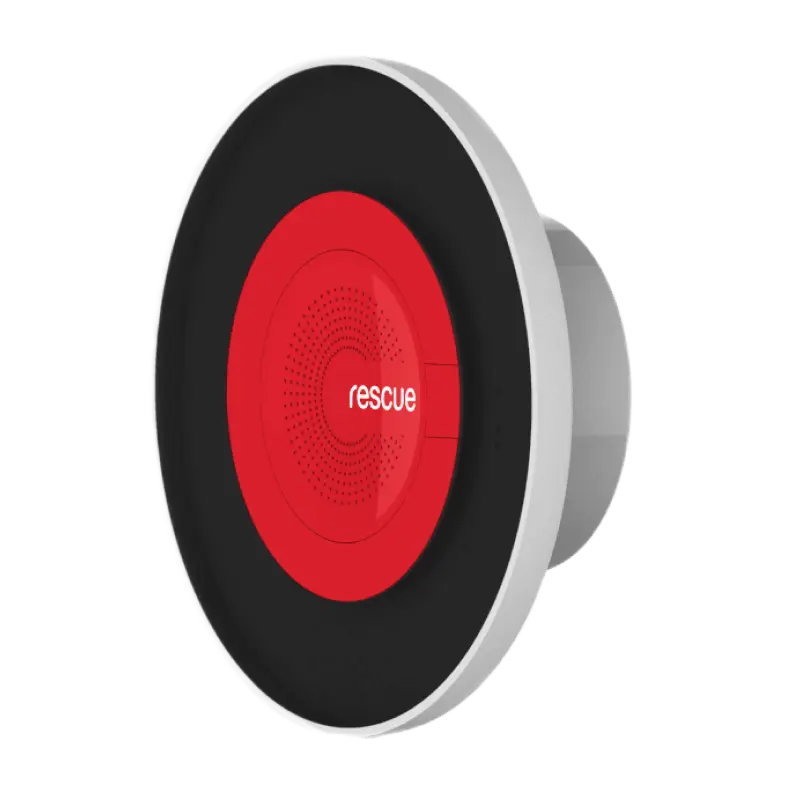
Rescue
Base Station
Alerts everyone through a visual and audio alarm
Rescue
Dashboard
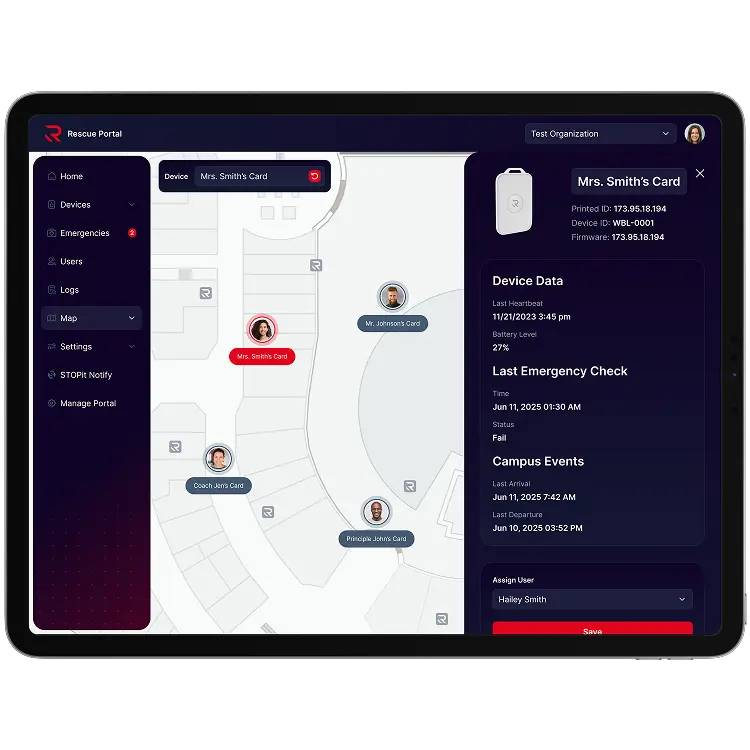
Monitor devices and emergencies from one place
Always Know Your Emergency System is Working
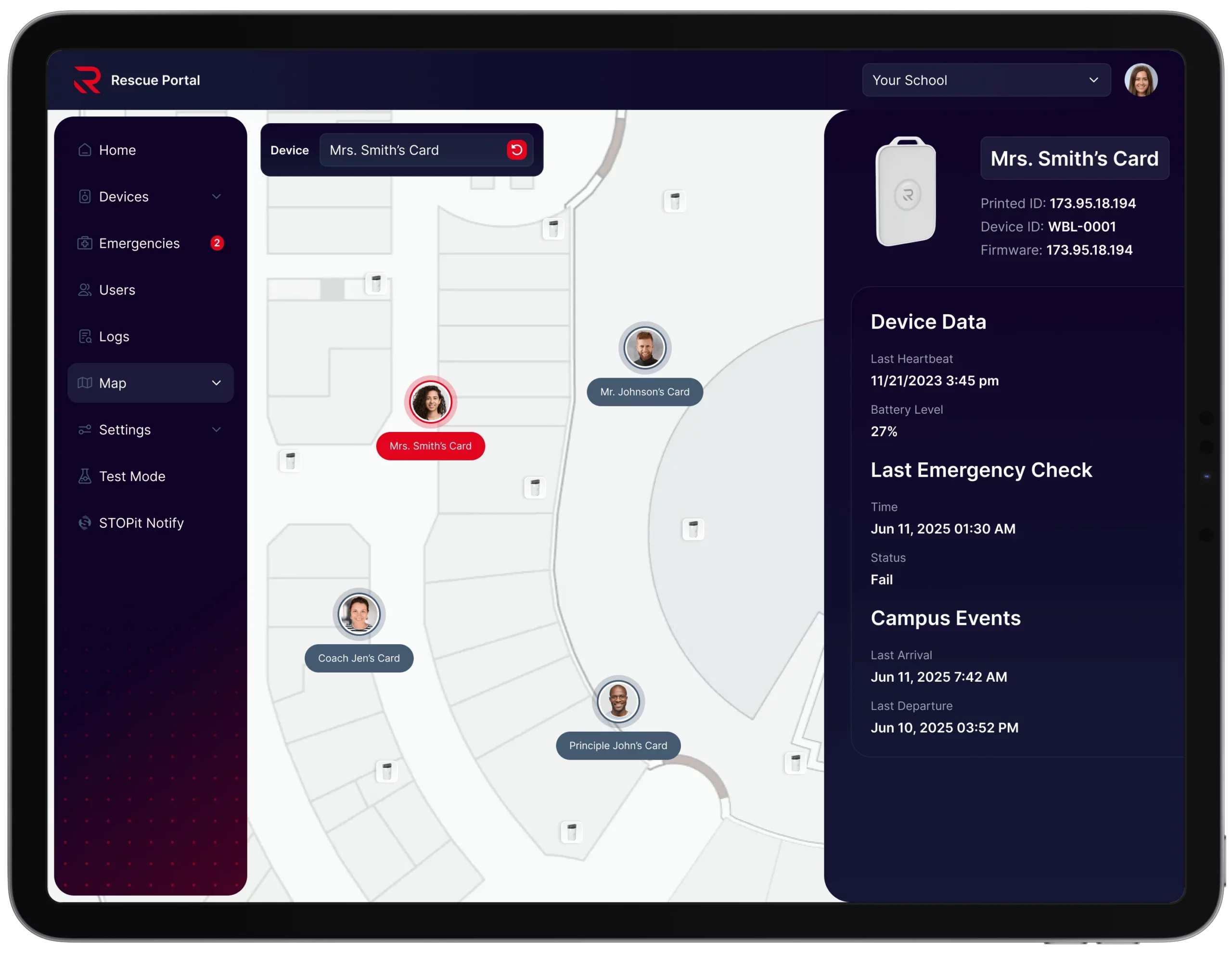
From live dashboards to instant testing to automated replacement alerts, our infrastructure-first design means you’re never flying blind.
See which devices are online, offline, or low battery before an emergency.
Responders see real-time movement on indoor maps.
Test any device instantly and see results in your dashboard.
Built to Meet Real-World Requirements
Punch Rescue meets key marketplace requirements for emergency alert systems including Alyssa’s Law.
Fully Compliant with Alyssa’s Law
Punch Rescue complies with Alyssa’s Law, delivering silent panic buttons that connect directly to law enforcement for rapid, real-time emergency response.
School boards, insurance providers, and parents are demanding documented preparedness. They want systems and policies proven to work under the toughest conditions.
Rescue's Marketplace Standards
- Wearable with Base Station – Lightweight, reliable, indoor/outdoor activation
- Reliable Activation – Swift alerts with no third-party apps required
- Backup/Failsafe Capabilities – Battery backup and mesh network redundancy; expanded backup systems in development
- Training & Support – Staff onboarding included; 3-year support and device replacement
- Data Privacy – FERPA compliant, encrypted communications, opt-in tracking options
- Accessibility – WCAG 2.2 AA compliance underway
- PSAP Communications – No middleware required; designed to increase compatibility with 911 and emergency dispatch systems
K12 Wearable Panic Button FAQ
Does this system meet the exact requirements of Alyssa's Law in our specific state?
Yes, Punch Rescue is fully compliant with Alyssa’s Law. However, because Alyssa’s Law legislation and requirements vary state by state, please reach out to us so we can verify exact compliance for your district. The system delivers silent panic alarms that are linked directly to law enforcement to ensure immediate emergency coordination and rapid response.
Is the system truly a silent alarm as required by the law?
Absolutely. When an internal threat requires discrete action, the system sends silent alerts dispatched directly to 911 with CAD integration.
Does it provide the precise location of the emergency to first responders?
Yes. Relying on strategic Rescue Repeater placements across your campus, the system provides real-time, room-level accuracy so first responders know exactly where the incident is currently happening, not just where it started. First responders gain full situational awareness in seconds.
What happens in a dead zone where cell service or Wi-Fi is weak?
Coverage does not depend on cellular signal strength or Wi-Fi access point density. Rescue Cards utilize a LoRa mesh network to send emergency alerts without relying on Wi-Fi or cellular networks, ensuring your signal gets through even when standard networks are congested or unavailable.
What happens if the school's internet or power goes down?
Our infrastructure is designed specifically to work when conditions degrade. If facility power fails, the Rescue Cards, Rescue Repeaters, and Rescue Base Stations all continue operating on built-in battery backups. Furthermore, Rescue Base Stations include cellular backup to ensure alerts reach responders even if the building’s internet fails.
How do we verify the system is operational every day?
You have real-time visibility into the health of your entire system. The management dashboard shows the online and offline status for every Rescue Card and Rescue Repeater in real-time, enabling proactive maintenance. Additionally, staff can validate their individual Rescue Cards with a single button press without putting the entire system into test, encouraging regular testing.
How long is the battery life on the wearable buttons, and how are we notified when it is low?
Rescue Cards are designed with user-replaceable batteries that provide a lifespan of 12 to 18 months, eliminating the need for daily or weekly charging. When it is time for a change, simply swap out the two CR2032 batteries via the easy-access port.
How easy is the button to use while under extreme stress?
During a crisis, cognitive capacity is compromised. The wearable Rescue Card is designed for single-button activation, eliminating the need to unlock a phone, open an app, or navigate a complex interface when seconds matter.
What mechanisms prevent accidental triggers?
We know false alarms are a major concern for schools. To ensure the right level of response, the Rescue Card features highly configurable, multi-tiered reporting levels. For instance, a “Level 1” alert can be configured to notify only internal responders for situations requiring a discrete response, while a “Level 2” alert activates Rescue Repeater strobe lights and triggers a 911 dispatch.
Is this product eligible for state school safety grants?
While grant eligibility varies by state, Punch Rescue is aligned with major marketplace requirements, including Utah’s statewide RFP. Additionally, Punch Rescue is an Awarded Vendor through The Interlocal Purchasing System (TIPS), which can help streamline procurement for your district.
How long does it take to install, and how much training will our staff need?
Installation is effortless and avoids construction delays, as the infrastructure deploys without requiring hardwiring or facility modifications. Following a simple 5-step self-install guide, onboarding takes about 60 minutes and is handled remotely. Staff onboarding is included, and because the platform is designed to be used daily for drills and training exercises, your team will build the procedural memory needed to act confidently during a real crisis.
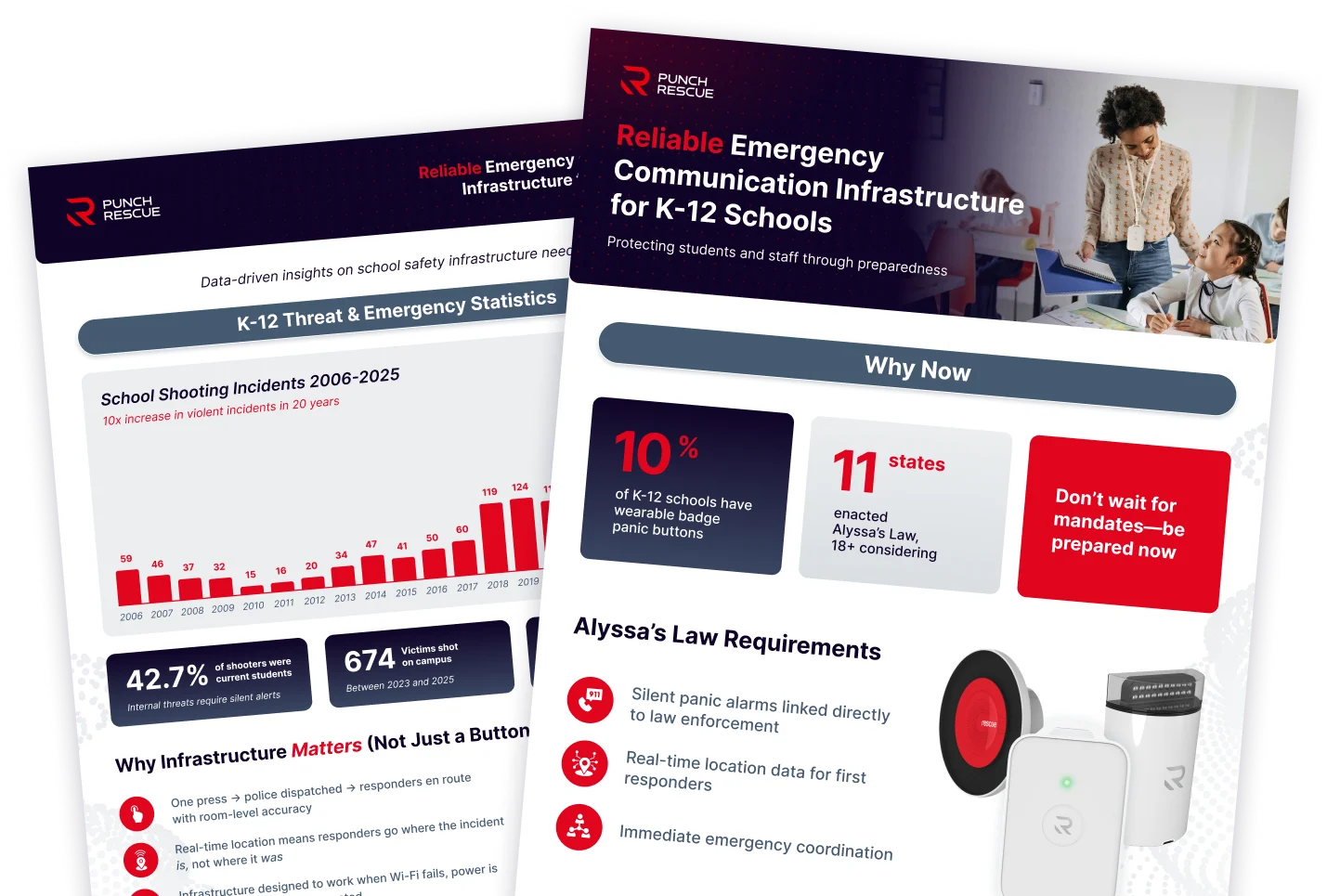
Guide: Emergency Infrastructure for K12
A downloadable PDF detailing the need for wearable panic buttons in k12 and why reliable emergency infrastructure matters.