West Virginia’s legislature sent Alyssa’s Law to Governor Patrick Morrisey’s desk on March 10 with a unanimous 93–0 vote. House Bill 4798 mandates wearable panic buttons for teachers and school staff, direct 911 connectivity, campus-wide lockdown triggering via intercoms and strobe lights, annual training, and coordination with local law enforcement. A dedicated state school safety fund will cover equipment costs through 2029.
West Virginia joins more than 11 states that have enacted some version of Alyssa’s Law. Georgia’s version — which also requires accurate facility floor maps — takes effect July 1, 2026. Illinois introduced its own bill in January. Three additional states passed similar legislation in 2025. The legislative momentum is clear. But the real challenge for K–12 administrators isn’t tracking which states have passed the law. It’s understanding exactly what compliance requires — and what it doesn’t cover.
The Law Is Expanding Faster Than Understanding of It
Named for Alyssa Alhadeff, killed in the 2018 Parkland shooting, Florida’s original 2019 law set a clear mandate that schools must install a silent panic alarm system. It must directly notify law enforcement. This is simple in concept, but considerably more complex in execution as the law has spread and evolved.
Each state version has introduced new specificity. New York’s requires mobile panic buttons with location data. Georgia’s Ricky and Alyssa’s Law adds a mandate for accurate, up-to-date facility maps that first responders can access. West Virginia’s bill distinguishes between emergency types by button-press sequence. Using three presses signals a medical emergency or altercation, while repeated presses trigger a full lockdown with intercoms and strobe lights.
Across all versions, several requirements appear consistently. These include the need for wearable or portable panic button capability for staff, direct or near-direct 911 notification, integration with campus-wide alert mechanisms, and annual staff training. Several state versions now also explicitly reference testing and documentation. This brings the ability to demonstrate that a system has been verified as operational, not just purchased and installed. This last element is where many districts are most exposed.
The Compliance Trap
There is a pattern playing out across districts that have moved quickly to satisfy Alyssa’s Law. Staff purchase a system, demonstrate it during procurement, and check the compliance box. The problem is that this approach treats life-safety infrastructure like a piece of equipment that only needs attention once a year. Emergency communication infrastructure requires ongoing operational verification.
Networks shift. Batteries degrade. Staff turn over, and new teachers may never receive the training the law mandates. The unspoken reality in many school buildings is that no one is entirely certain the panic button system would perform as intended in an actual emergency. In many cases, the documentation to prove otherwise doesn’t exist in any auditable form.
K–12 IT directors and safety administrators are already managing an expanding portfolio of responsibilities. They deal with cybersecurity, device management, AI governance, network infrastructure, and a growing stack of life-safety compliance mandates. A 2026 survey of K–12 technology leaders found most districts lack dedicated funding for cybersecurity, let alone for systematic safety system audits. Asking stretched teams to maintain Alyssa’s Law compliance without reducing complexity elsewhere creates predictable gaps. This is a serious structural problem.
What Does Sustainable Compliance Require?
The most detailed state versions of Alyssa’s Law point toward a more complete picture of what an effective panic button for schools needs to do. This covers things not just in the moment of an emergency, but every day before one occurs.
First, the system must work without internet-dependent infrastructure. Network congestion and failure are documented occurring factors in mass emergencies. A wearable panic button solution that routes through standard Wi-Fi or cellular during a crisis is not a reliable foundation.
Second, real-time location visibility matters. A button being pressed is insufficient information for first responders. Knowing where in the building, by whom, and whether additional alerts are active (before responders enter) changes outcomes.
Third, the system must generate verifiable documentation automatically with testing logs, device health monitoring, and training completion records. It needs the kind of audit trail that supports compliance review, insurance documentation, and (in worst-case scenarios) legal defensibility.
Fourth, and this is where Alyssa’s Law compliance most often breaks down in practice, the system must be manageable by district staff without vendor dependency. Systems don’t get maintained consistently when they require a support call to run a test, update a device, or pull a log are systems that. Compliance requires infrastructure that people can actually use on their own schedule.
Where Does Punch Rescue Fit Into All This?
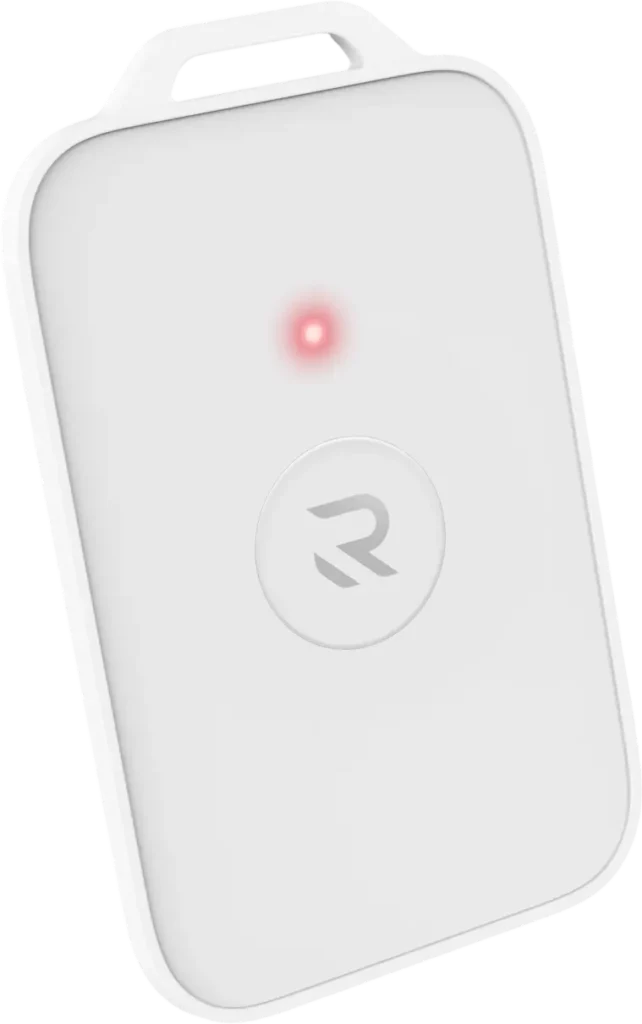
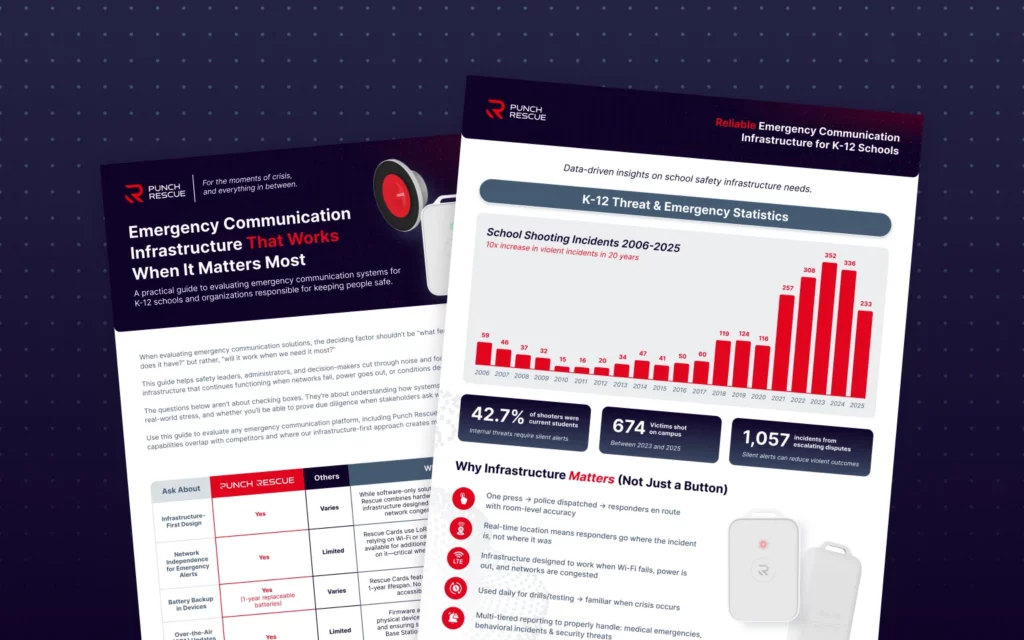
Punch Rescue provides emergency response infrastructure designed around K–12 operational realities. Rescue Cards are wearable panic buttons that operate over a dedicated LoRa mesh network (independent of Wi-Fi and cellular congestion) surfacing real-time location data through indoor mapping directly to Rescue software and connected responders.
The self-managed console is built for IT directors and safety coordinators who cannot place a vendor support call every time they need to verify a device is functional. Testing, updating, and maintaining the system happens in-house, on the district’s schedule. Testing logs are generated automatically with the documentation that supports audits, compliance reviews, and defensible due diligence.
As Alyssa’s Law expands into more states with increasingly specific requirements, the districts that stay ahead of it won’t simply be those that purchased a solution. They’ll be the ones who can demonstrate their system works — today, and every day before an emergency happens.
Sources: West Virginia Legislature Blog, March 10, 2026 (blog.wvlegislature.gov) · WBOY News, March 2026 (wboy.com) · Security Industry Association, October 2025 (securityindustry.org).