- Bill: HB 592
- Read the Full Legislation

Virginia HB 592 permits school boards to provide employees in public elementary and secondary schools with wearable panic alarm systems. A qualifying system must:
Note: Virginia’s law is currently not mandatory. School boards are authorized to act, but are not yet required to do so.
Alyssa’s Law is state legislation aimed at giving K-12 schools a rapid, direct-to-911 way to respond to an emergency. Virginia’s version doesn’t require a system yet. It authorizes school boards to provide one if they choose to.
Not yet. Virginia’s Alyssa’s Law, HB 592, authorizes school boards to provide staff with wearable panic alarm systems connected directly to 911. It permits districts to act, but doesn’t require them to. It takes effect July 1, 2026.
Alyssa’s Law is named for Alyssa Alhadeff, a 14-year-old student killed in the February 14, 2018 shooting at Marjory Stoneman Douglas High School in Parkland, Florida. Her parents became leading voices pushing for school safety reform. They advocate for legislation that would give every classroom a direct, silent line to law enforcement during an emergency (without triggering school-wide alarms that could escalate danger or tip off a threat).
Virginia Governor Abigail Spanberger signed House Bill 592 on April 2, 2026. This makes Virginia one of the most recent states to enact Alyssa’s Law. The law takes effect July 1, 2026. All public elementary and secondary schools in Virginia fall under its scope.
Virginia’s version of Alyssa’s Law is permissive rather than prescriptive. HB 592 gives school boards the legal authority and a clear framework to provide employees with wearable panic alarm systems. It does not yet mandate that every school board act.
A qualifying wearable panic alarm system in Virginia must be capable of two things. It needs to send a silent signal directly to the local 911 public safety answering point the moment it is activated. It also needs to trigger a multisensory schoolwide emergency notification when appropriate. A device that notifies only school administrators does not meet the standard.
Virginia’s permissive approach is not an excuse to wait. School boards that move now have a great opportunity to evaluate vendors carefully, apply for available grants at a competitive advantage, and implement systems before a mandate arrives. Given the national legislative trend, it is a matter of when, not if, the laws change. Districts that delay until a mandate is enacted will face compressed timelines, vendor backlogs, and limited grant availability.
As with other states’ versions of Alyssa’s Law, panic alarm systems work in tandem with the rest of a school’s safety infrastructure. They do not replace existing classroom phones, intercoms, or other established communication devices.
Alyssa’s Law has now passed in many states, including New Jersey (2019), Florida (2020), New York (2022), Texas and Tennessee (2023), Utah and Oklahoma (2024), Georgia, Washington, and Oregon (2025), and Virginia and West Virginia (2026). As of early 2026, more than 18 additional states are actively considering legislation.
Virginia sits at the most flexible end of the spectrum, offering authorization rather than an order. This is not unusual for early-stage adoption. New York and Oregon followed a similar path before tightening requirements in subsequent legislative sessions. The pattern across states is that permissive laws usually give way to mandates as legislative momentum builds. Virginia schools that treat HB 592 as a signal to begin planning will be better positioned than those that wait for forced action.
Some states have set a more prescriptive bar:
Virginia’s HB 592 did not include direct district funding for implementation. However, two federal grant programs can help schools cover the cost of a qualifying wearable panic alarm system:
The BJA STOP School Violence Program reopened its FY2026 cycle on September 21, 2026. It now offers 15 awards of up to $2 million each for state governments and public institutions of higher education (Category 1). It also offers 80 awards of up to $1 million each for local governments, school districts (including public charter schools), nonprofits, private K-12 schools, and tribal governments (Category 2). It is a 36-month award. The Grants.gov deadline is October 30, 2026, and the JustGrants deadline is November 6, 2026.
The DHS Homeland Security Grant Program is an annual funding opportunity available to state and local governments. Virginia school districts can access HSGP awards through the Virginia Department of Emergency Management (VDEM). Allowable uses include upgrading emergency communication infrastructure and improving coordination with law enforcement. State program openings generally run from February through June each year. Contact VDEM directly to confirm how your district can access HSGP funds in the current cycle.
Districts that have not yet applied for available grants should treat this as a time-sensitive priority. Grant windows are competitive, and delays in registration or submission can complicate implementation timelines.
Punch Rescue provides resilient hardware and software designed to work when it matters most. For Virginia schools, that means a wearable panic alarm system that meets every technical requirement of HB 592 and remains functional when app-based solutions fail.
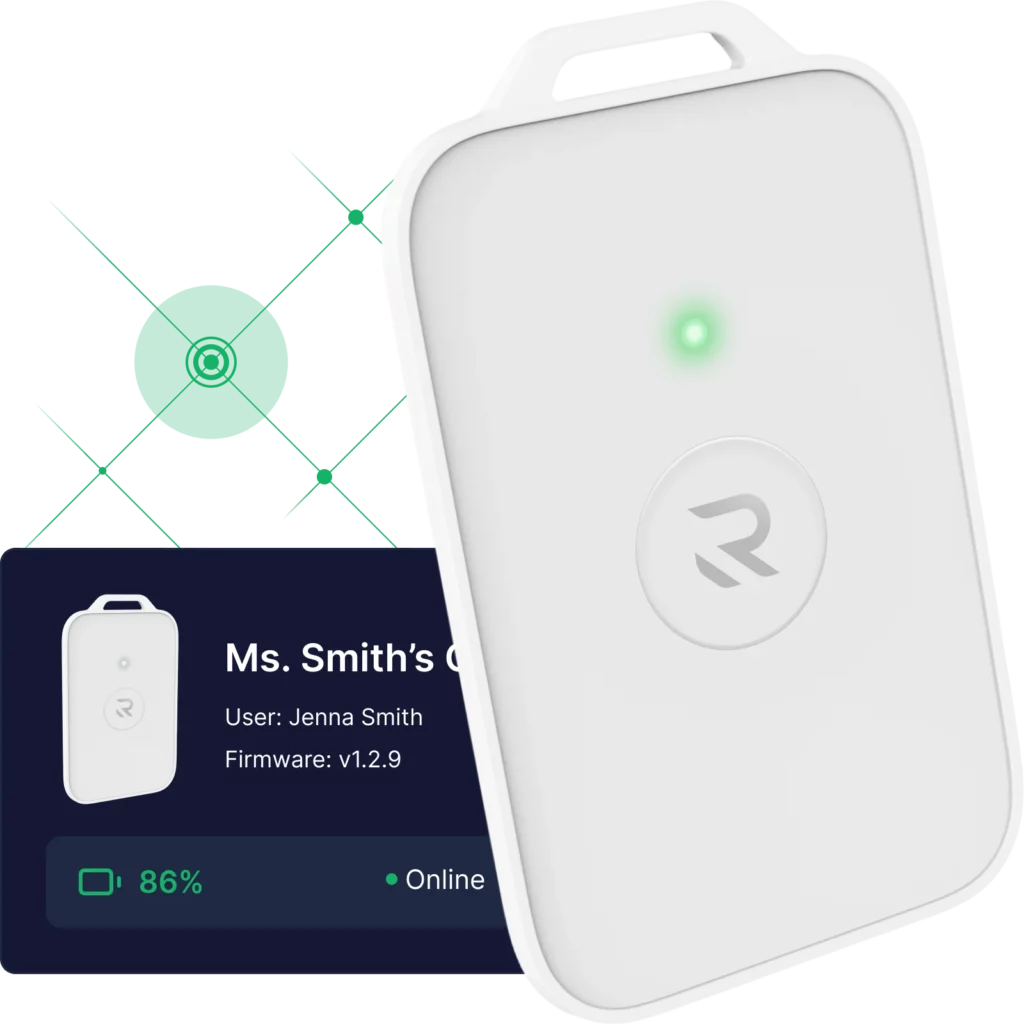
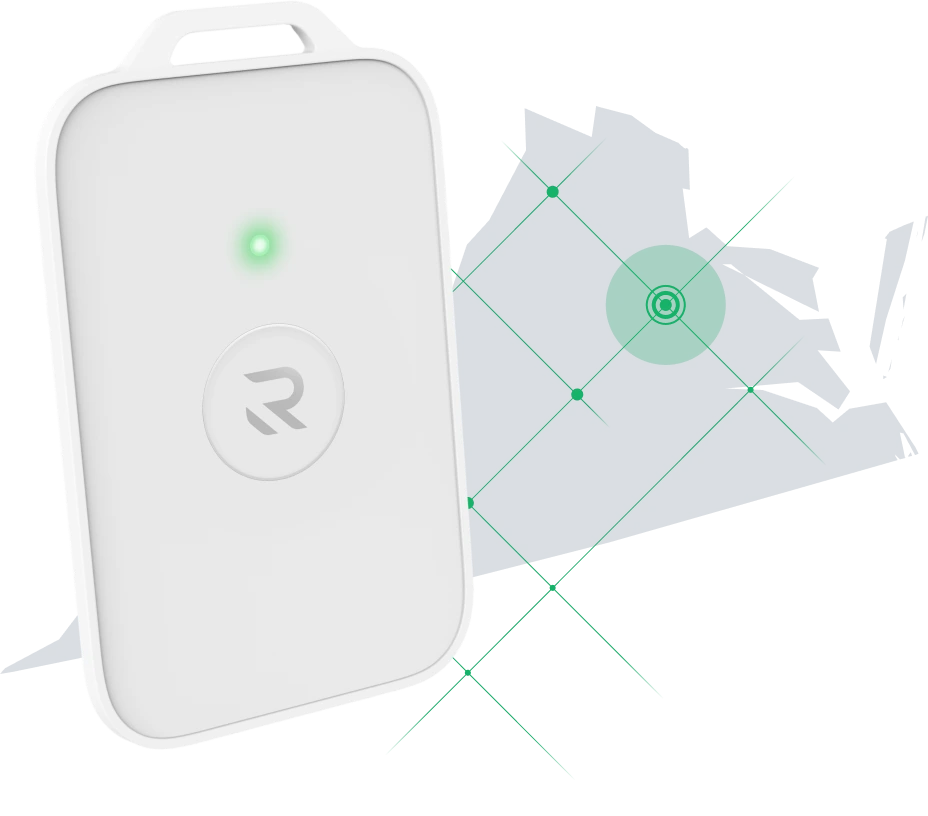
The Rescue Card is a wearable panic button worn by teachers and staff. When pressed, it silently triggers an emergency alert. There’s no phone required. Rescue Repeaters extend signal coverage across a campus. They reach classrooms, gymnasiums, portable buildings, and outdoor areas where WiFi dead zones are common. The Rescue Base Station anchors the system’s communication infrastructure, with approximately six hours of battery backup to maintain operation during power disruptions. This hardware-first approach directly addresses HB 592’s definition of a qualifying wearable panic alarm system.
Punch Rescue integrates with RapidSOS, a platform that connects activated panic button alerts directly to 911 and public safety agencies. The moment a Rescue Card is pressed, RapidSOS transmits real-time incident data. It sends the location and alert type to the appropriate dispatch center. This directly satisfies HB 592’s requirement that a qualifying device send a signal to the local 911 public safety answering point indicating a school security emergency.
Punch Rescue integrates with Mappedin to embed dynamic indoor facility maps directly within the response dashboard. When an alert is triggered, first responders receive accurate, room-level location data. This supports faster, more effective response from the moment law enforcement is notified.
Punch Rescue integrates with Lightspeed Notify for emergency communication coordination, automated response plan distribution, and mass notifications. When an incident occurs, administrators, staff, and first responders receive the right information automatically. No manual steps are required during a moment of crisis. This directly addresses HB 592’s requirement for a multisensory schoolwide emergency notification capability.
Virginia’s permissive law means the decision is currently yours to make. The technical standard HB 592 sets, however, is quite clear. When evaluating systems, you need to ask:
Punch Rescue is built to answer yes to all of the above. It’s also highly customizable to meet unique school district needs and specifications.
Not yet. Virginia’s Alyssa’s Law, HB 592, signed April 2, 2026 and effective July 1, 2026, authorizes school boards to provide staff with wearable panic alarm systems. It doesn’t require them to. School boards are permitted to act, not yet mandated to.
It has to be wearable on the user’s body, allow manual activation that sends a signal directly to the local 911 public safety answering point, and be able to trigger a multisensory schoolwide security emergency notification when appropriate.
Districts that install and test a system on their own timeline avoid a rushed rollout if Virginia follows the path other “consider” states like New York and Oregon have started down toward a full mandate.
No. The law authorizes public school boards specifically; it doesn’t extend the same authorization to private schools.
Federal BJA STOP School Violence Program funding applies, and the Homeland Security Grant Program (HSGP), accessed through the Virginia Department of Emergency Management (VDEM), covers emergency communication infrastructure and law enforcement coordination. Contact VDEM directly to confirm HSGP access, and contact Punch Rescue’s sales team to confirm current funding and pricing options.
Punch Rescue’s Rescue Card is a wearable device with RapidSOS 911 connectivity and multisensory alert capability, matching what HB 592 requires of any system a Virginia school board chooses to authorize. Reach out to Punch Rescue to confirm current documentation for your board’s evaluation.
Virginia has authorized school boards to provide staff with wearable panic alarm systems. The framework is in place, the technical standard is spelled out, and national trends point toward the likelihood of a future mandate.
Most panic buttons leave you guessing about device status, battery life, and system health. Punch Rescue provides real-time visibility across your entire infrastructure, so you know your school is ready when it matters most.