
West Virginia’s new Alyssa’s Law fund is making panic buttons achievable for schools. Here’s what the legislation covers, what it costs, and what comes next.
If you’re a school administrator, you’ve probably talked about the idea of deploying panic buttons. Everyone agrees it’s a good idea. But the conversation often stalls when it comes time to discuss how to budget for this.
West Virginia just took a meaningful step toward solving that problem. Alyssa’s Law passed through the state legislature with dedicated funding. This now provides K-12 schools a real pool of money, with a clear goal, and a transparent cost per institution. For districts that have wanted this technology but couldn’t make the numbers work, there is now a straightforward and viable path forward. This legislated plan can serve as a model for other states to follow.
What Does Alyssa’s Law Require and What Does It Mean for Your Staff?
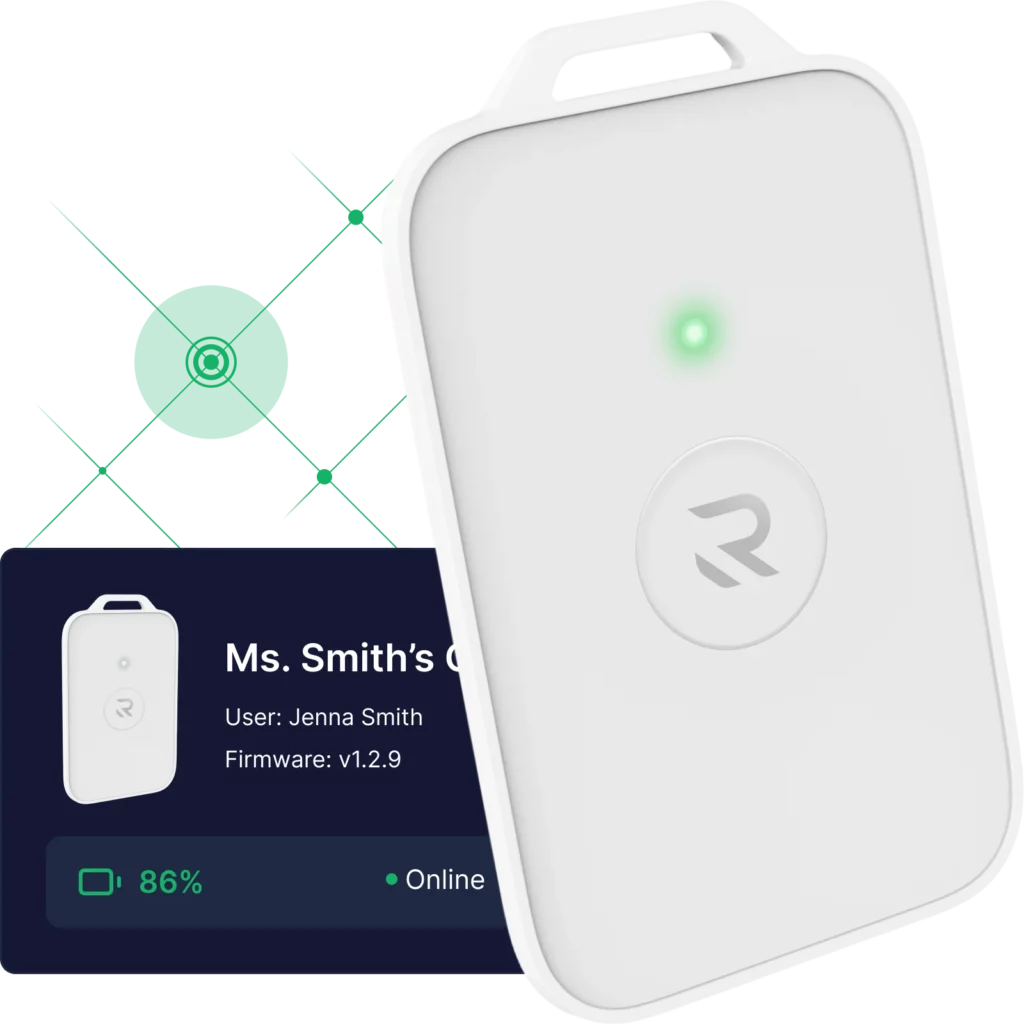
At its core, Alyssa’s Law requires schools to equip staff with wearable panic buttons capable of reaching law enforcement and emergency services with a single press.
For teachers and staff, that means no one has to unlock a phone during a crisis. There’s no need to navigate an app under pressure. With one press your 911 center, law enforcement, and EMS are notified simultaneously.
Del. Jonathan Pinson, who helped pass West Virginia’s version of the law, aptly noted that every teacher and staff member is getting equipped with a wearable emergency button that directly connects them to local help. The law also builds in flexibility for future upgrades, so whatever your district installs today doesn’t have to be the ceiling.
What Does It Actually Cost, and Who’s Helping Pay for It?
The first official contributions to West Virginia’s fund tell an intentional story. The Alhadeff family — whose daughter Alyssa was killed in the 2018 Parkland shooting — donated $48,888 through their organization Make Our Schools Safe. The number 8 is repeated to honor Alyssa’s volleyball number. The West Virginia Department of Education contributed $348,888. The fund is held with Homeland Security, with a $10 million goal.
The per-school cost for panic button installation runs approximately $20,000. At that rate, the fund covers around 500 schools when fully realized.
That’s a real number with real math behind it. This is the kind of transparency that helps administrators make a case to their school boards and budget committees.
What Does a Fully Equipped School Actually Look Like?
Jackson County, West Virginia offers a concrete answer. Local funding brought wearable emergency buttons online across the district. Deputies are now required to spend dedicated time in schools each week. And when a button is pressed, law enforcement receives both an alert and a map showing where in the building the signal originated.
That indoor location detail matters more than it might seem. In a large building, knowing an alert was sent is very different from finding exactly where to respond. The mapping technology helps to improve that process significantly.
Jackson County is also rolling out AI-driven cameras designed to alert staff and law enforcement when a person of concern enters campus. This adds another layer of vigilance on top of the panic button accessibility.
Sheriff Ross Mellinger has been direct about the district’s philosophy. They want to build the emergency communication infrastructure before a crisis forces anyone’s hand. Reactive funding, he noted, always comes too late.
What Can Districts in Other States Do Right Now?
West Virginia’s model of state legislation is replicable, with its dedicated fund, seed contributions from advocacy organizations, and clear costs per-school. Other states are watching, and several are moving toward similar frameworks.
If your district is evaluating wearable panic button options or trying to understand what emergency communication infrastructure would require in your buildings, Punch Rescue’s team can walk you through what a deployment looks like. We’re happy to help answer any questions you have about your state legislature and funding.
→ Start that conversation here.
TL;DR:
West Virginia passed Alyssa’s Law with real funding attached. There’s a $10 million goal, costing about $20,000 per school. Contributions have already come from the Alhadeff family and the state DOE.
Jackson County shows what an equipped district looks like in practice, offering wearable panic buttons, mapped alerts for law enforcement, and AI cameras on the way. For K-12 administrators evaluating emergency communication infrastructure, this is the model to watch.