Network independence means emergency systems work when Wi-Fi and cellular fail. Learn why it matters for school panic buttons and wearable emergency buttons.
If you ask a vendor whether their emergency communication system is network independent, most will say yes. What that claim actually means varies widely, and the difference matters enormously when conditions degrade.
Network independence is not a binary feature. It exists on a spectrum. Understanding where a system sits on that spectrum is one of the most important questions a school safety leader can ask.
What Does Network Independence Mean for School Safety Systems?
A truly network-independent emergency communication system does not rely on the school’s Wi-Fi infrastructure or public cellular networks to transmit emergency alerts. It uses a dedicated radio protocol that operates independently of shared consumer infrastructure.
This matters because the networks schools rely on daily are not designed for emergency surge conditions. During a major incident, demand spikes sharply. Staff, students, parents, responders, and media all attempt to communicate simultaneously. Consumer networks become congested. Signals queue, delay, and in some cases fail to transmit entirely.
A wearable panic button that sends alerts through the school’s Wi-Fi network is only as reliable as that Wi-Fi network. If power goes out and access points go dark, the panic button stops working. If the network is congested, the alert may be delayed or dropped.
Why Do Public Wi-Fi and Cellular Networks Fail During Emergencies?
Standard Wi-Fi equipment has no battery backup unless specifically equipped with uninterruptible power supplies. Most schools have generators that prioritize HVAC and lighting, not network infrastructure. A power outage can take down every Wi-Fi access point in a building within minutes.
Cellular networks face a different problem. They are designed for typical peak demand, not emergency surge conditions. During major incidents, voice calls fail, messages delay, and service becomes unpredictable. FirstNet, the dedicated public safety broadband network, was created specifically because consumer cellular networks become unreliable during emergencies.
An emergency communication system that routes through either of these networks inherits their vulnerabilities. When they fail, the system fails too.
How Do Network-Independent Emergency Systems Work?
Hardware-integrated emergency communication systems use private radio networks to carry emergency signals. These networks are physically separate from the school’s Wi-Fi infrastructure and do not compete with congested cellular traffic.
In-building Rescue Repeaters create a mesh of coverage points throughout a facility, so signals reach every room. This includes basements, stairwells, and interior areas where Wi-Fi coverage is weak. Emergency alerts travel through this dedicated infrastructure and reach a Rescue Base Station that can connect to external responders through multiple redundant pathways.
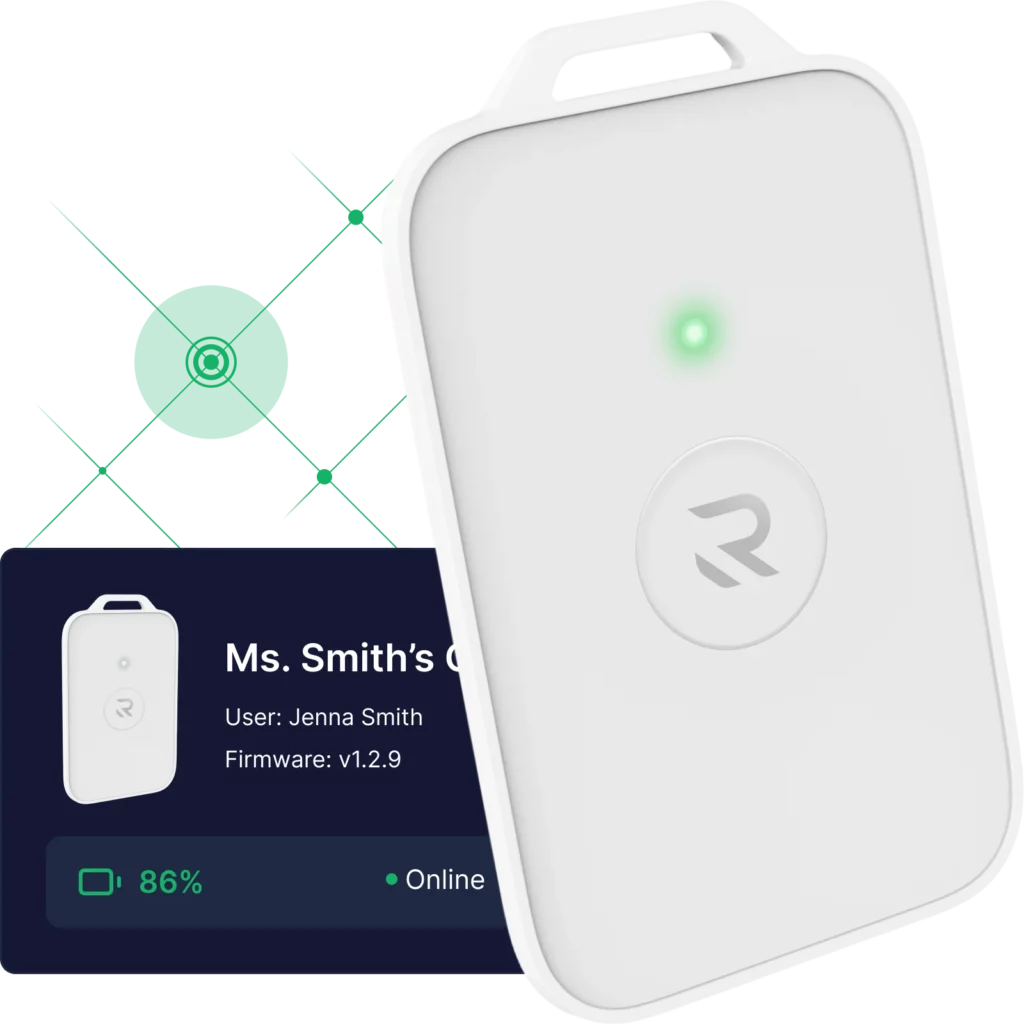
Rescue Cards (wearable emergency buttons) carried by staff send signals directly to this dedicated infrastructure. No phone is needed. No network connection is required from the device itself.
What Questions Should Schools Ask About Network Independence?
Start by asking vendors to be specific. Does their system use the school’s Wi-Fi, cellular, or a dedicated radio network for emergency reporting? What happens when Wi-Fi access points lose power? What is the backup plan if cellular is congested?
Ask to see the system tested in your actual buildings, in your basements and stairwells, with your network under realistic load. Vendor demonstrations in ideal conditions do not reveal the gaps that become visible when infrastructure is stressed.
Defensible preparedness means understanding your system’s actual dependencies and being able to document that you evaluated them honestly.
Punch Rescue provides emergency communication infrastructure designed so reporting does not rely on Wi-Fi or cellular, even when those networks are available for other functions. Reach out to learn more.
TL;DR: Network Independence in School Emergency Systems
What Does Network Independence Mean?
True network independence means emergency alerts travel on a dedicated radio network separate from school Wi-Fi and public cellular. They are not affected by congestion or power loss that disables shared infrastructure.
Why Do Shared Networks Fail?
Wi-Fi access points lose power during outages. Cellular networks congest during emergencies when demand surges. Systems that depend on either network inherit those vulnerabilities at exactly the worst moment.
What Should Schools Look For?
Dedicated radio infrastructure, building-wide repeated coverage, battery backup at every layer, and the ability to test the system under realistic and degraded conditions.