Free Pilot: Punch Rescue + Lightspeed Notify | May 5, 1PM EST | Register for Webinar
May 8, 2026

Over-the-Air Updates

In This Article:

Most emergency devices stay the same forever. If something needs to be fixed or improved, the device has to be physically replaced or sent back. That’s how most of the industry still operates; Punch Rescue was built differently.

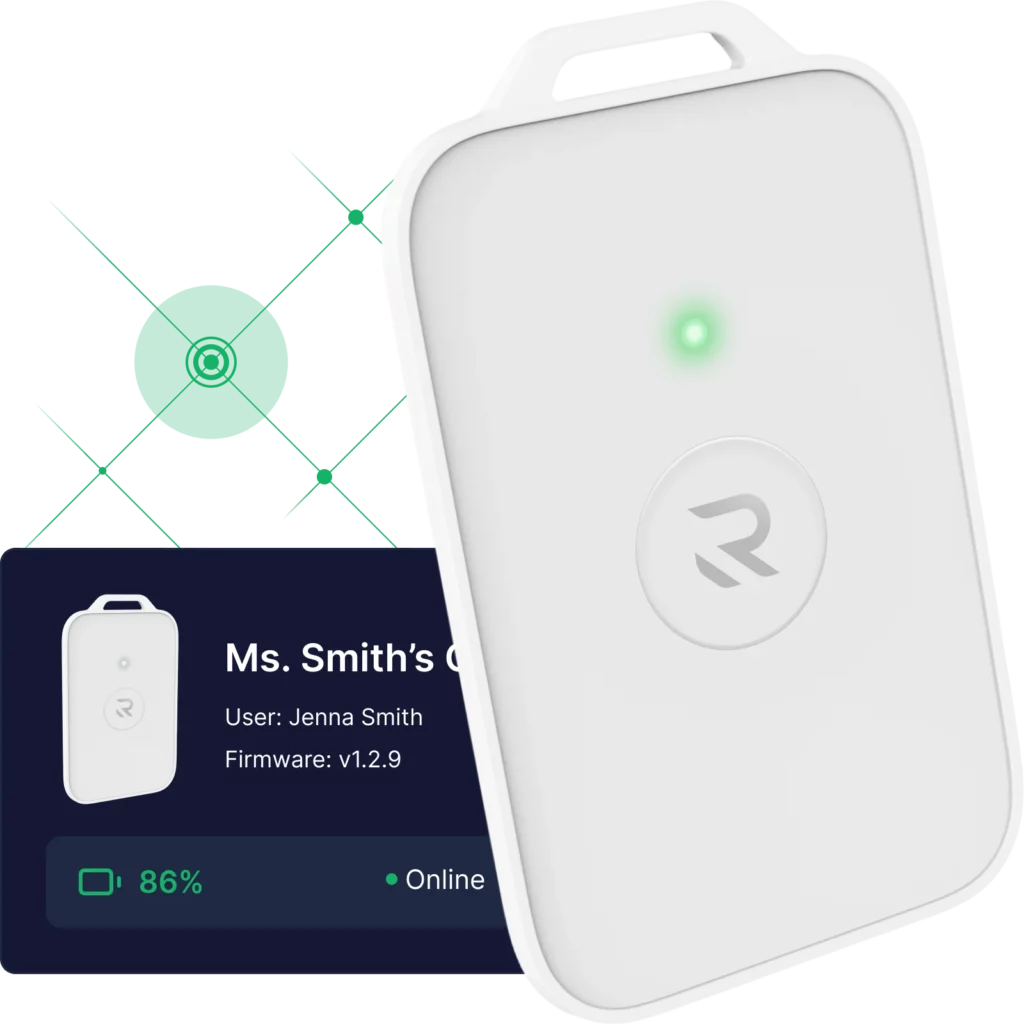
The entire Punch Rescue system supports over-the-air (OTA) software updates. Base stations, repeaters, and Rescue Cards can all receive improvements remotely, meaning better performance, bug fixes, and new functionality reach the full system without touching a single device.

Since early deployment, we’ve pushed updates that improve how cards communicate, how accurately they report location, and how flexibly they can be configured. The cards customers have today are better than the ones they installed, with no replacements required.

How OTA updates work across the system

We’ve expanded how updates reach devices over time:

  • The mobile app can update a single nearby card
  • The mobile app can update multiple nearby cards at once
  • Repeaters can now deploy OTA updates to cards automatically, with no customer involvement required

That last step matters. It means updates reach cards the same way we already handle updates for base stations and repeaters: quietly, reliably, and without adding work for IT teams.

Why this is a bigger deal than it sounds

Think about any modern device you use regularly. An Apple Watch, a laptop, or a wearable fitness tracker. All of them improve over time through software. None of them require you to ship them back.
Emergency devices should work the same way.

When a device can’t be updated, bugs become recalls. Improvements become replacement programs. And customers are left managing hardware cycles instead of focusing on preparedness.

Based on what we’re hearing from customers and partners, Punch Rescue appears to be the only panic button in the space that supports over-the-air software updates across the entire system. Competitors are dealing with recalls. We’re deploying improvements.

Built for the future

Punch Rescue has built a platform that gets better over time. As the Rescue Card evolves to support broader use cases, including identification, access control, and emergency response, the ability to deploy updates without hardware swaps becomes foundational.

Removing that friction opens up a lot of possibilities.

Panic buttons with reliable emergency infrastructure.
Related Articles
Symbols of wifi connectivity and ongoing cell network service
Safety Technology

Network Independence: What It Means for School Emergency Systems

Network independence means emergency systems work when Wi-Fi and cellular fail. Learn why it matters for school panic buttons and wearable emergency buttons. If you...

K-12 students using smart phone apps on their cell phones
Safety Technology, School Safety

Why Wearable Panic Buttons Outperform Smartphone Apps in School Emergencies

Wearable panic buttons outperform smartphone apps in school emergencies. Learn why dedicated hardware beats app-based systems when conditions are degraded....
Digital illustration of fully charged battery icon with data visualization representing battery backup and power resilience in emergency systems
Safety Technology

When the Lights Go Out: Why Battery Backup Matters More Than You Think

Why battery backup matters for school panic buttons and emergency systems. Learn what happens when power fails and how to evaluate power resilience claims. When...

How We Started

In 2017, a young lifeguard at a YMCA of Charlotte branch suffered a seizure while opening the pool alone. She fell into the water and drowned before anyone knew she needed help.

We heard the full story later that year at a conference in Seattle. Our emergency communication platform, PunchAlert, was already deployed at that YMCA, but it couldn’t help. She couldn’t unlock a phone, open an app, or call for assistance.

That tragedy exposed the fundamental constraint: when people need help most, they often can’t use the tools we’ve given them. We spent two days in Seattle with aquatics directors and risk managers, determined to solve what software alone couldn’t. The answer wasn’t another app, it was infrastructure designed for the worst-case scenarios.

Punch Rescue was born from that commitment: wearable devices that work when nothing else can, connected to infrastructure that doesn’t rely on the person in crisis to operate it. From aquatics to K-12 schools and beyond, we’ve remained focused on one principle: protecting the people who matter most, especially when they can’t protect themselves.