- Bill: HB 4798
- Read the Full Legislation

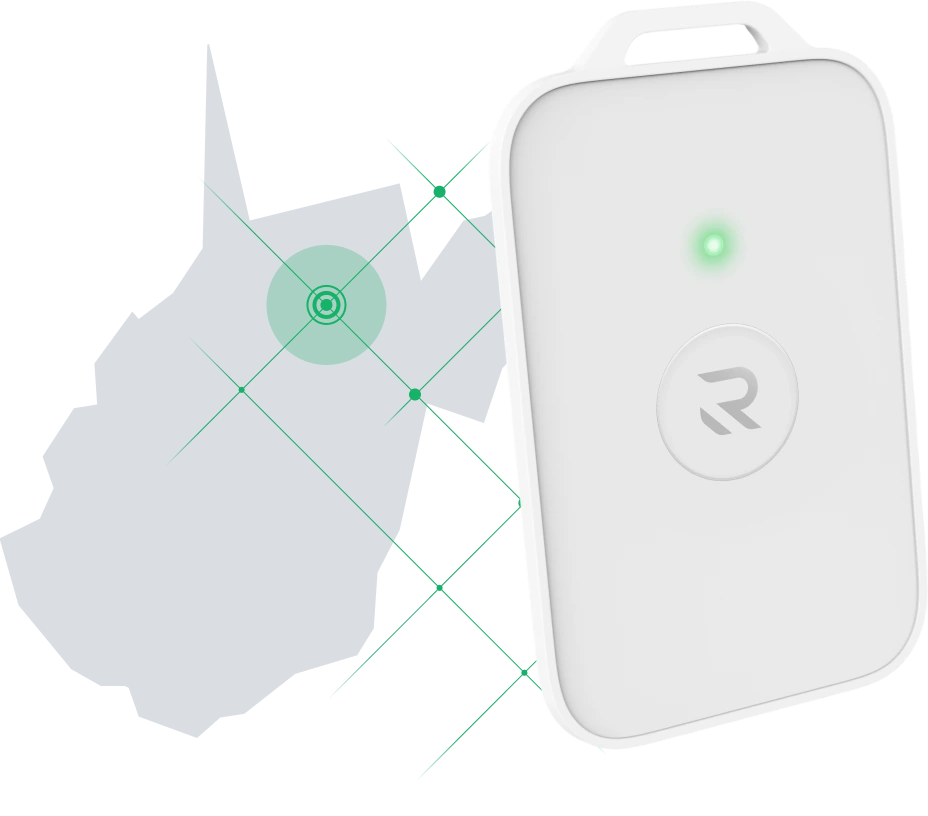
West Virginia HB 4798 requires every county school board to provide each school with a compliant wearable panic alert system. Requirements include:
Alyssa’s Law is state legislation requiring K-12 schools to give staff a rapid, silent way to reach 911 and trigger a coordinated emergency response. West Virginia’s version is one of the most individualized in the country, mandating a device for every staff member.
Yes. West Virginia’s Alyssa’s Law, HB 4798, requires every school to give each staff member a wearable panic button connected directly to 911, with simultaneous campus-wide lockdown notification. It’s one of the only states mandating the device at the individual-staff level.
Alyssa’s Law is named for Alyssa Alhadeff, a 14-year-old student killed in the February 14, 2018 shooting at Marjory Stoneman Douglas High School in Parkland, Florida. Her parents became leading voices calling for school safety reform. They advocate for legislation that would give every classroom a direct, silent line to law enforcement during an emergency (without triggering school-wide alarms that could escalate danger or tip off a threat).
West Virginia passed House Bill 4798 in April 2026. This created Alyssa’s Law within the state. The bill passed both chambers and was signed into law with strong bipartisan support. The West Virginia State Board of Education, in collaboration with the Division of Homeland Security and Emergency Management, is responsible for establishing the rules and regulations needed to implement the system.
All public schools in West Virginia are subject to the law. Every county school board must provide a compliant wearable panic alert system at each school within its jurisdiction.
West Virginia’s version of Alyssa’s Law is among the more comprehensive in the country. HB 4798 mandates a specific, integrated system with clear requirements at every level.
Every staff member must be equipped with a wearable panic button. That button must be capable of transmitting 911 calls and mobile activations directly to local emergency responders the moment it is pressed. It must simultaneously initiate a campus-wide lockdown notification. The law also requires that all security data within each school facility be accessible to local law enforcement agencies through established access protocols. This includes camera feeds, site maps, and access controls.
Finally, all personnel must receive annual training on the system before the start of each school year. The training requirement is built directly into the law, applying to all districts.
One of the most notable features of West Virginia’s legislation is the development of the Alyssa Alhadeff School Safety Fund within the State Treasury. The fund is going to be administered by the WV Department of Homeland Security and will be dedicated specifically to implement mobile panic buttons and similar school safety equipment. This is a meaningful distinction from states that passed Alyssa’s Law without any accompanying funding mechanism. It signals the legislature’s intent to make compliance achievable.
As with other states’ versions of Alyssa’s Law, panic alarm systems work in tandem with the rest of a school’s safety infrastructure. They do not replace existing classroom phones, intercoms, or other established communication devices.
Alyssa’s Law has now passed in many states, including New Jersey (2019), Florida (2020), New York (2022), Texas and Tennessee (2023), Utah and Oklahoma (2024), Georgia, Washington, and Oregon (2025), and Virginia and West Virginia (2026). As of early 2026, more than 18 additional states are actively considering legislation.
West Virginia’s version is one of the most comprehensive enacted to date. The requirement that every staff member receive a wearable panic button puts West Virginia alongside Utah in demanding campus-wide individual coverage. The lockdown notification requirement, along with the mandated law enforcement access to security data, takes the law further than most states’ versions.
Some states have set a more flexible standard:
West Virginia’s combination of strict requirements and a dedicated funding mechanism makes it one of the more forward-looking implementations of Alyssa’s Law in the country.
West Virginia schools have access to a combination of state and federal funding sources to cover implementation costs.
HB 4798 has prompted the development of the Alyssa Alhadeff School Safety Fund within the State Treasury. This will eventually be administered by the WV Department of Homeland Security. All funding within this dedicated fund will be designated for implementing mobile panic buttons and similar school safety equipment. Districts should contact the WV Department of Homeland Security directly to confirm current availability and disbursement processes as the implementing rules are finalized.
The BJA STOP School Violence Program reopened its FY2026 cycle on September 21, 2026. It now offers 15 awards of up to $2 million each for state governments and public institutions of higher education (Category 1). It also offers 80 awards of up to $1 million each for local governments, school districts (including public charter schools), nonprofits, private K-12 schools, and tribal governments (Category 2). It is a 36-month award. The Grants.gov deadline is October 30, 2026, and the JustGrants deadline is November 6, 2026.
Districts that have not yet explored available funding should begin now. Even with a dedicated state fund in place, grant windows are competitive and implementing rules take time to finalize.
Punch Rescue provides resilient hardware and software designed to work when it matters most. For West Virginia schools, that means a wearable panic alert system built to satisfy every requirement of HB 4798. It remains functional and reliable when app-based solutions fail, too.
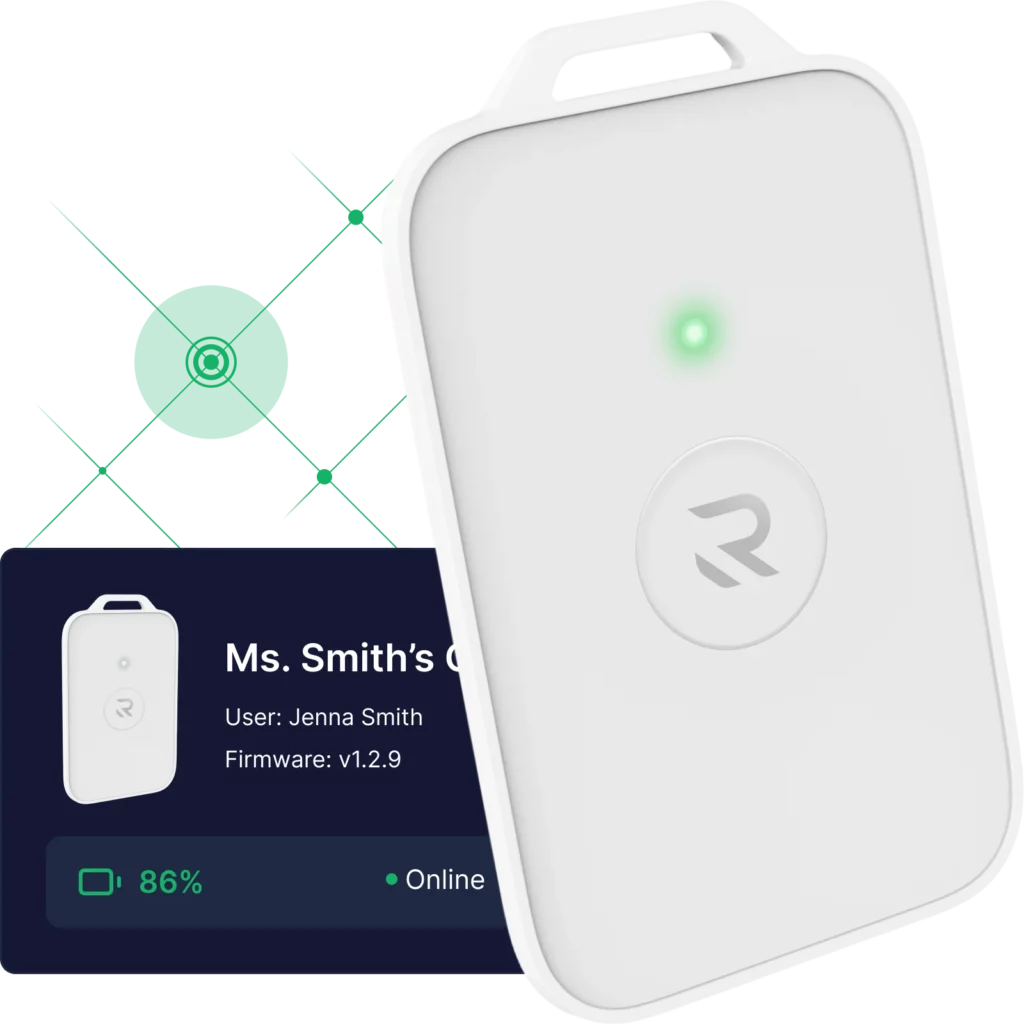
The Rescue Card is a wearable panic button worn by teachers and staff. When pressed, it silently triggers an emergency alert. There’s no phone required. Rescue Repeaters extend signal coverage across a campus. This covers classrooms, gymnasiums, portable buildings, and outdoor areas where WiFi dead zones are common. The Rescue Base Station anchors the system’s communication infrastructure, with approximately six hours of battery backup to maintain operation during power disruptions. The hardware-first design ensures that every staff member can activate an alert from anywhere on campus, satisfying HB 4798’s individual wearable requirement at scale.
Punch Rescue integrates with RapidSOS. This is a platform that connects activated panic button alerts directly to 911 and public safety agencies. The moment a Rescue Card is pressed, RapidSOS transmits real-time incident data (including location and alert type) to the appropriate dispatch center. This directly addresses HB 4798’s requirement that the system transmit 911 calls and mobile activations to local emergency responders upon activation.
Punch Rescue integrates with Mappedin to embed dynamic indoor facility maps directly within the response dashboard. When an alert is triggered, first responders receive accurate, room-level location data. This supports HB 4798’s requirement that security data be accessible to local law enforcement agencies during an emergency.
Punch Rescue integrates with Lightspeed Notify for emergency communication coordination, automated response plan distribution, and mass notifications. When an incident occurs, administrators, staff, and first responders receive the right information automatically. No manual steps are required during a moment of crisis. This addresses HB 4798’s simultaneous campus-wide lockdown notification requirement.
West Virginia’s law is detailed and specific. The vendor evaluation process should be too. When choosing a system, you need to ask:
Punch Rescue is built to answer yes to all of the above. It’s also highly customizable to meet unique school district needs and specifications.
Yes. West Virginia’s Alyssa’s Law, HB 4798, effective June 8, 2026, requires a wearable panic button for every staff member. It’s one of the only states to mandate the device at the individual-staff level rather than one per classroom or building.
A system that transmits 911 calls and mobile activations directly to local emergency responders, simultaneous campus-wide lockdown notifications triggered upon activation, security data (camera feeds, site maps, access controls) accessible to local law enforcement, and annual staff training before the start of each school year.
Both. Activating a device has to simultaneously notify local emergency responders and trigger a campus-wide lockdown notification. The two aren’t separate systems under the law.
Not fully. The fund, which will eventually be administered by the WV Department of Homeland Security and is dedicated to panic buttons and related equipment, is still in development. Districts should contact the WV Department of Homeland Security directly to confirm current availability and disbursement timing as the implementing rules are finalized.
Federal BJA STOP School Violence Program funding is available now, while the state’s dedicated Alyssa Alhadeff School Safety Fund is finalized. Contact Punch Rescue’s sales team to confirm current funding pathways and pricing for your district.
Punch Rescue’s Rescue Card gives every staff member a wearable panic button, and the RapidSOS and Lightspeed Notify integrations satisfy HB 4798’s direct-responder and simultaneous campus-wide notification requirements. Reach out to Punch Rescue to confirm current documentation for your district as implementing rules finalize.
West Virginia mandates wearable panic buttons for every staff member. This makes it one of the most comprehensive versions of Alyssa’s Law in the country. The law also created a dedicated state fund to help schools pay for it.
Most panic buttons leave you guessing about device status, battery life, and system health. Punch Rescue provides real-time visibility across your entire infrastructure, so you know your school is ready when it matters most.