Free Pilot: Punch Rescue + Lightspeed Notify | May 5, 1PM EST | Register for Webinar
June 9, 2026

Rescue Intelligence

In This Article:

Most safety platforms are adding AI features: A chatbot here, a generated report there. In most cases, it’s AI added onto systems that weren’t built with ‘intelligence features’ in mind.

The way we’ve architected Rescue Intelligence is different. The data and integration layer has been the foundation underneath everything we’ve built.

What’s already live

Two AI-powered tools are already deployed and in use:

  • AI after-action reports analyze what happened during an emergency and surface what could be done better, automatically, without someone having to piece it together manually.
  • AI mapping helps administrators figure out optimal device placement across their facility, so coverage decisions are informed rather than guesswork.

These are currently running in our platform today.

Where Rescue Intelligence is going

Our roadmap builds toward something more significant: a safety intelligence hub with an agentic workflow engine. 

Think of this as the central nervous system for safety intelligence. Information flows in from across the organization, is automatically connected and analyzed, then used to determine where attention, communication and action should occur.

In practical terms, that means agents working in the background to keep your system healthy, monitoring devices, flagging issues proactively, and taking action before problems become failures. It means custom workflows that combine reliable, rule-based decision making with agents that can interpret unstructured data like audio and video.

We’re bringing on Agent Deployment Engineers to build custom integrations for partners, connecting Rescue Intelligence to third-party systems like video surveillance and access control. Our APIs and webhooks are already built to support this.

The direction we’re building 

Our goal is to give our customers a centralized place where safety intelligence compounds over time. 

  • After-action reports that pull from every data source in the building. 
  • Proactive alerts before a device goes offline. 
  • Agentic workflow engine built that protects all customer data.
  • IoT multi-device data ingestion for comprehensive safety assessments.

The more data that flows into Rescue Intelligence, the more useful it becomes.

Panic buttons with reliable emergency infrastructure.
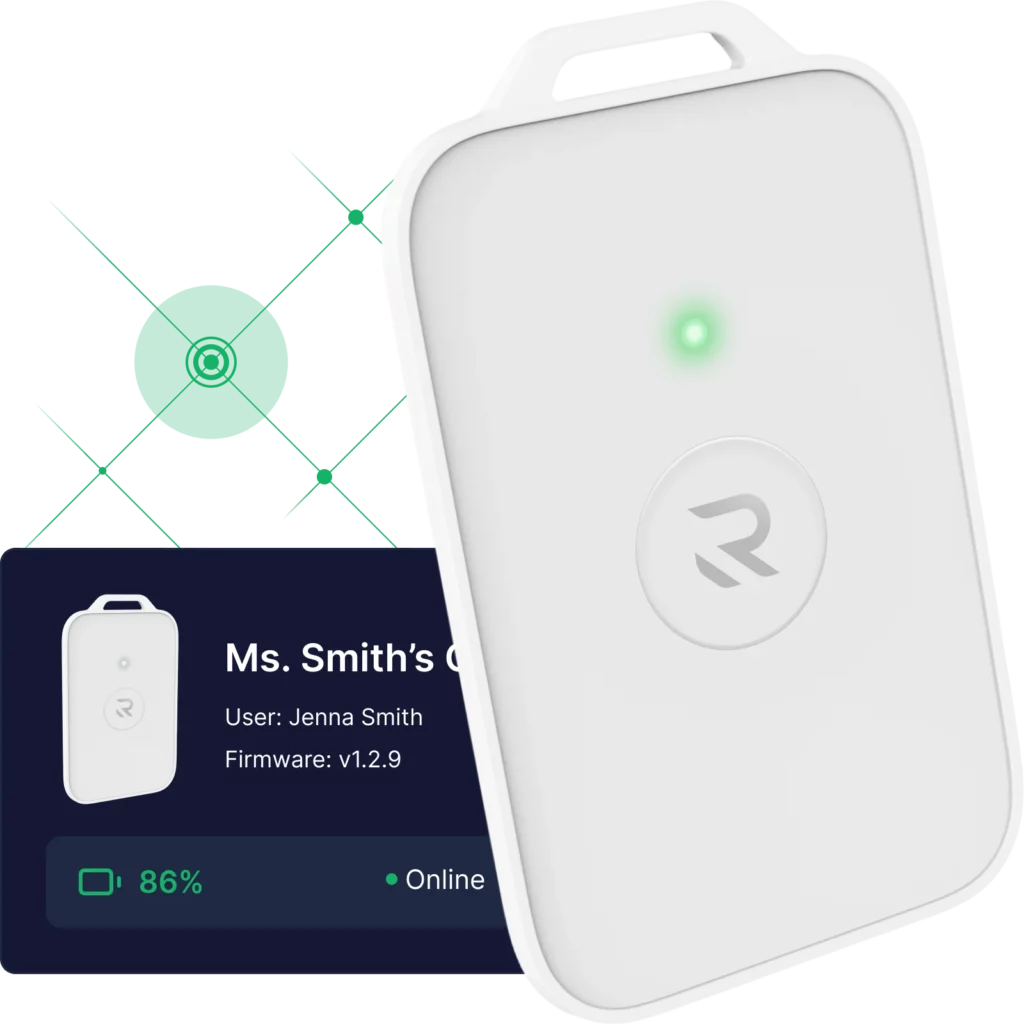
A Punch Rescue Rescue Card wearable panic button overlaid a green grid graphic and a screenshot of the Rescue Dashboard.
Related Articles
school district procurement administrator reviewing contract
Safety Technology

Punch Rescue Is Now Available Through TIPS Cooperative Purchasing

Punch Rescue is now available through the TIPS cooperative purchasing contract, simplifying how K-12 schools procure emergency communication infrastructure. Procurement is one of the less...

A dashboard screen monitoring a safety system
Safety Technology

Real-Time Visibility in Emergency Systems: Why It Matters for School Safety Leaders

Real-time visibility in emergency systems helps staff monitor devices, track panic button alerts, and prove preparedness. See what’s needed in infrastructure. Most conversations about school...

Safety Technology

How Much Power it Takes for Real Time Visibility

There is a reason our repeaters get plugged into standard wall outlets, not just stuck to a wall. Punch Rescue repeaters are installed in every...

How We Started

In 2017, a young lifeguard at a YMCA of Charlotte branch suffered a seizure while opening the pool alone. She fell into the water and drowned before anyone knew she needed help.

We heard the full story later that year at a conference in Seattle. Our emergency communication platform, PunchAlert, was already deployed at that YMCA, but it couldn’t help. She couldn’t unlock a phone, open an app, or call for assistance.

That tragedy exposed the fundamental constraint: when people need help most, they often can’t use the tools we’ve given them. We spent two days in Seattle with aquatics directors and risk managers, determined to solve what software alone couldn’t. The answer wasn’t another app, it was infrastructure designed for the worst-case scenarios.

Punch Rescue was born from that commitment: wearable devices that work when nothing else can, connected to infrastructure that doesn’t rely on the person in crisis to operate it. From aquatics to K-12 schools and beyond, we’ve remained focused on one principle: protecting the people who matter most, especially when they can’t protect themselves.