Alyssa’s Law requires panic buttons in schools across multiple states. Here’s what K-12 administrators need to know about compliance requirements and next steps.
If your state has passed Alyssa’s Law, or is moving toward it, you’ve probably already noticed that the requirements come with real specificity. It’s not enough to have a communication plan. The laws often call for a direct link between staff and law enforcement, and it’s expected that the link be accessible and immediate.
This article breaks down what Alyssa’s Law requires, which states have enacted it, and what administrators need to think through as they evaluate compliance.
What Is Alyssa’s Law and What Does It Require?
Alyssa’s Law is named after Alyssa Alhadeff, one of the victims of the 2018 Parkland shooting. The law was first enacted in Florida and New Jersey. It requires public K-12 schools to install mobile panic alert systems that, when activated, directly notify law enforcement and initiate emergency response protocols.
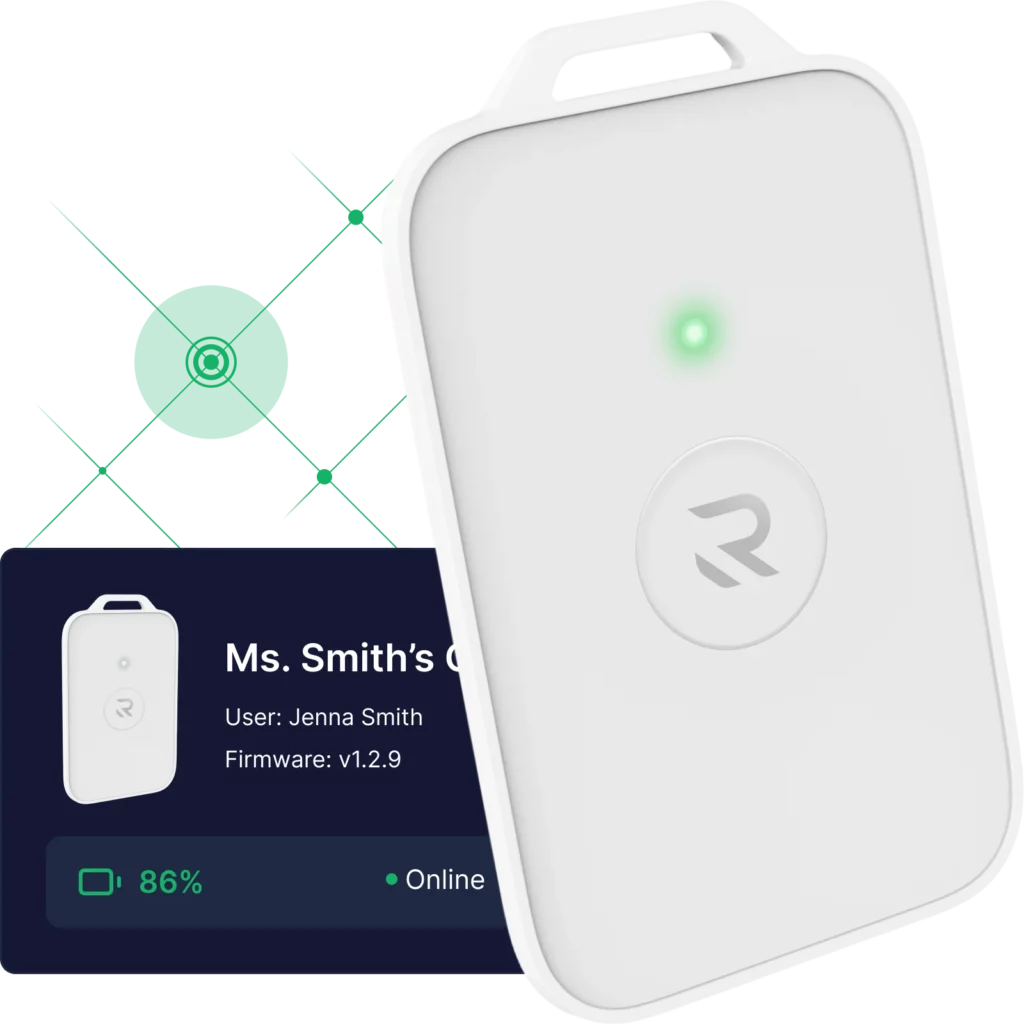
The specific requirements vary by state, but the consistent thread is that staff should be able to summon help immediately without having to find a phone, navigate a lock screen, or wait for someone to relay a message. A wearable panic button or wearable emergency button carried by staff is the most common implementation model.
For current state-by-state legislative status, the Alyssa’s Law Alliance tracks active legislation and enacted requirements. We also have put together a helpful resource for K-12 schools, showing recent updates on legislation for numerous states.
Which States Have Already Passed Alyssa’s Law?
As of this writing, Alyssa’s Law has been enacted in Florida, New Jersey, New York, and Texas, among others. Several additional states have introduced or are advancing similar legislation. Given how quickly this is moving, the best practice is to check your state legislature’s current session directly rather than relying on older summaries.
What’s clear is that the legislative direction across the country is toward formal panic button requirements for K-12 schools. Whether your state has passed a law or not, administrators are increasingly treating this as a “when, not if” planning question.
What Does a Panic Button System Need to Do to Be Compliant?
Alyssa’s Law doesn’t prescribe a single technology. What it does require is that the panic button system:
- Be accessible to staff at all times, not just at a fixed location
- Directly connect to local law enforcement or a monitored emergency dispatch
- Trigger a response without requiring staff to make a phone call
This is where the distinction between a software-based app and actual emergency communication infrastructure matters. An app on a phone depends on the phone being accessible, charged, and connected. Purpose-built infrastructure, including wearable emergency button devices carried by staff, doesn’t carry those dependencies.
How Does Punch Rescue Support Alyssa’s Law Compliance?
Punch Rescue provides emergency communication infrastructure designed to meet the core intent of Alyssa’s Law requirements. The Rescue Card is a wearable panic button that staff carry throughout the day. When activated, it sends an immediate alert through the Rescue System, which operates on a dedicated LoRa network independent of Wi-Fi and cellular service.
The system provides indoor mapping so responders know where the alert originated, along with versatile reporting options for documentation. That documentation matters both for compliance verification and for post-incident review.
Punch Rescue works with schools to map their campus, configure the system, and establish the connection with local law enforcement that Alyssa’s Law compliance requires.
What Should Administrators Do to Prepare for Compliance?
Start by confirming your state’s current requirements and any pending legislation. Even in non-Alyssa’s Law states, districts are increasingly being asked by school boards and insurance carriers to demonstrate that they have a formalized emergency communication plan that includes staff-accessible alerting.
Once you know where your state stands, the questions to work through are:
- Does our current system meet the standard of being “accessible at all times?”
- Is there a documented direct connection to law enforcement?
- Can staff activate an alert without relying on a functioning phone or internet connection?
If any of those answers are uncertain, it’s a reasonable time to evaluate what a more purposefully built infrastructure looks like.
TL;DR: How Can K-12 Schools Meet Alyssa’s Law Panic Button Requirements?
Alyssa’s Law requires K-12 schools to install panic button systems that directly connect staff to law enforcement. It’s being mandated in more states every year.
- Compliance means staff-accessible alerting that doesn’t depend on phones or internet connectivity. This is a standard that app-based systems often can’t meet on their own.
- Punch Rescue offers wearable panic button infrastructure that meets the core intent of these requirements and operates on a dedicated network independent of Wi-Fi and cell service.