Software-only panic buttons fail when Wi-Fi goes down, power is lost, or networks congest. Learn why hardware-integrated emergency systems perform reliably.
Software-only panic buttons are an appealing option on paper. There’s less new technology to install. They have familiar smartphone interfaces. They have lower upfront costs. The conditions that make this software appealing, however, are not the conditions under which emergency communication systems typically get used.
The real test of any panic button system is not how it performs during a vendor demo with full power, perfect Wi-Fi, and calm users. The real test is what happens when the building loses power, networks congest, and a staff member is too frightened to navigate a phone screen.
What Are the Hidden Dependencies of App-Based Panic Button Systems?
Every app-based panic button system depends on a chain of conditions being true simultaneously:
- Staff members need to own compatible smartphones with the app installed and notifications enabled.
- The device needs to be charged.
- The school’s Wi-Fi or cellular network needs to be functioning.
- The user needs to unlock the screen, locate the app, and activate it under acute stress.
Push notification delivery adds another layer of uncertainty. Platform documentation explicitly describes push notifications as best-effort mechanisms without guaranteed delivery timing. Delivery can be affected by device state, network conditions, operating system power management, and user settings. In other words, there is no guarantee that a panic alert sent through a consumer notification system will arrive.
Why Do Software-Only Systems Fail During Network Congestion?
During a real emergency, network demand spikes sharply. Everyone in the building attempts to communicate at once. Staff are making calls, students are texting parents, security cameras are uploading footage, and responders are trying to access information. All of this traffic competes for the same Wi-Fi and cellular bandwidth.
Consumer networks are not designed for emergency surge conditions. They are designed for normal peak demand. When that design threshold is exceeded, messages queue, delay, and in severe cases they fail to transmit. A software-only panic button routing through that congested network becomes unreliable precisely when it’s most needed.
How Does Power Loss Affect App-Based Emergency Systems?
Standard Wi-Fi access points have no battery backup unless specifically equipped with uninterruptible power supplies. Most schools do not have these for every access point throughout their buildings. When building power fails, Wi-Fi coverage disappears.
Staff attempting to activate a smartphone panic button app during a power outage may find they have no network connectivity (even if their phone is charged). The app may show connecting or no signal while the emergency continues. The wearable emergency button that was supposed to provide a backup layer of protection has no infrastructure to connect to.
What Does a More Resilient Panic Button System Look Like?
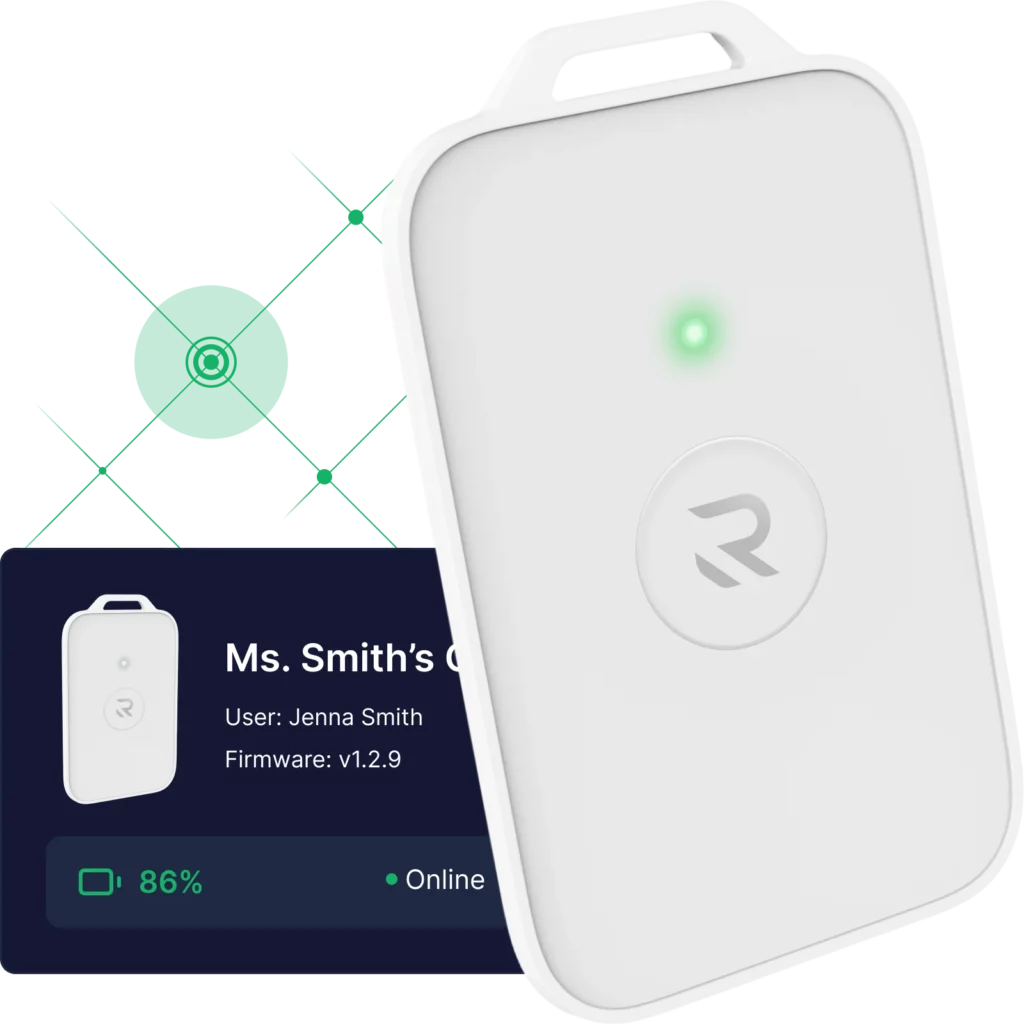
Hardware-integrated systems separate emergency communication from the shared consumer infrastructure that becomes unreliable during incidents. Dedicated radio networks carry emergency signals on pathways that do not compete with congested Wi-Fi or cellular traffic. The battery backup that’s built into devices and their supporting infrastructure maintains functionality when the building’s power fails.
Wearable emergency buttons eliminate the smartphone dependency entirely. One-button activation requires no unlocking, no app navigation, and no multi-step process under stress. In-building repeaters provide coverage throughout a facility including areas where Wi-Fi signal is weak or absent.
This all addresses the specific failure modes that software-only systems cannot.
Punch Rescue offers hardware-integrated emergency communication infrastructure designed to work under degraded conditions. Contact our team to discuss your school’s specific needs.
TL;DR: Why Software-Only Panic Buttons Fall Short
What Makes App-Based Systems Vulnerable?
Software-only systems depend on charged phones, functioning networks, enabled notifications, and multi-step activation under stress. Push notifications have no guaranteed delivery. Any failure in this chain weakens the reliability of the system.
When Do These Systems Fail?
Systems fail during power outages that take down Wi-Fi, during network congestion when emergency demand surges, and during high-stress situations (when navigating a phone interface is cognitively difficult).
What Is the Alternative?
It’s better to invest in hardware-integrated emergency communication systems with dedicated radio networks, battery backup at every layer, wearable one-button activation, and building-wide coverage independent of smartphone ownership.