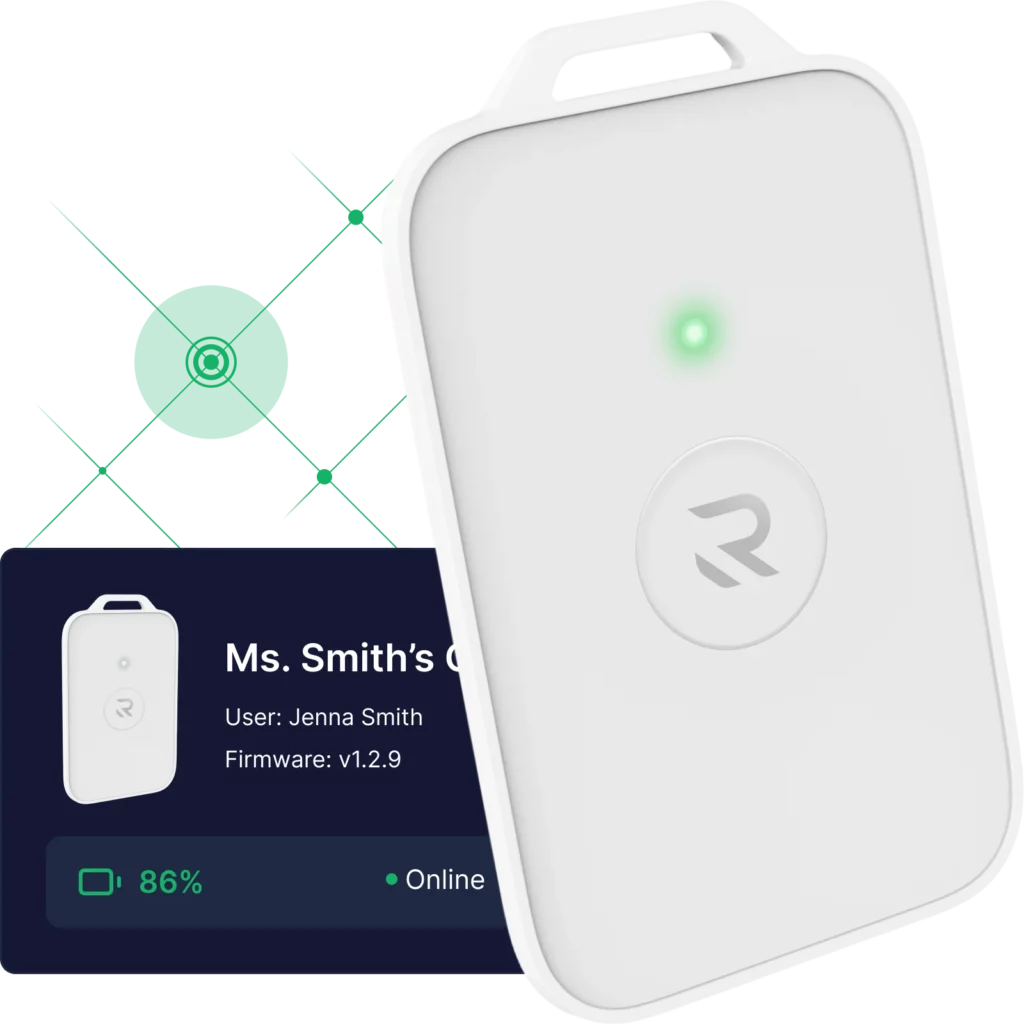
When it comes to emergency communication for aquatic facilities, the bar is low. There is essentially one alternative on the market, and it relies on BLE only, which means frequent false alarms and a single activation method. That’s not good enough for an environment where a missed or ignored alert can cost a life.
The Rescue Raft wearable aquatic panic button was built differently.
Three ways to trigger an alert
Most aquatic panic buttons give lifeguards one option. The Raft gives them three:
- A manual button press
- Automatic LoRa alert triggered by water submersion
- Patented fall detection
That redundancy matters. In a real emergency, a lifeguard may not have the time or ability to press a button. The Rescue Raft wearable aquatic panic button is designed to trigger automatically when it needs to.
False alarms are now an extreme rarity
Early fall detection technology in this space was notoriously trigger-happy. Quick movements, a run to the bathroom, a sudden shift in position: all of these could set it off. We’ve spent significant time improving our fall detection algorithm, and the results speak for themselves. False alerts from fall detection are now an extreme rarity, even in the situations that used to cause them most.
That matters because a system that cries wolf stops being taken seriously. Reliability isn’t just about triggering when something is wrong. It’s about not triggering when nothing is.
All the platform improvements, included
The Rescue Raft wearable aquatic panic button isn’t a standalone device. It runs on the same Punch Rescue platform as everything else, which means every software improvement we’ve shipped this year carries over automatically.
That includes:
- AI after-action reports that pull together everything that happened during an incident into a clean, exportable summary
- Ask Rescue, our AI chat interface where a director of aquatic safety can pull any custom report, ask questions about their system, or get answers without digging through dashboards
Inventory update
We recently ran out of inventory and have restocked. More units are arriving within the next 60 days. If you’ve been waiting or evaluating, now is a good time to reach out.