- Bill: SB 17
- Read the Full Legislation

BJA STOP School Violence Program: The FY26 cycle reopened September 21, 2026. It offers 15 awards up to $2M (for state/public higher ed) and 80 awards up to $1M (for districts, nonprofits, private K-12, and tribal governments). The Grants.gov deadline is October 30, 2026. The JustGrants deadline is November 6, 2026. You may also join this email newsletter for ongoing updates on upcoming grant opportunities.
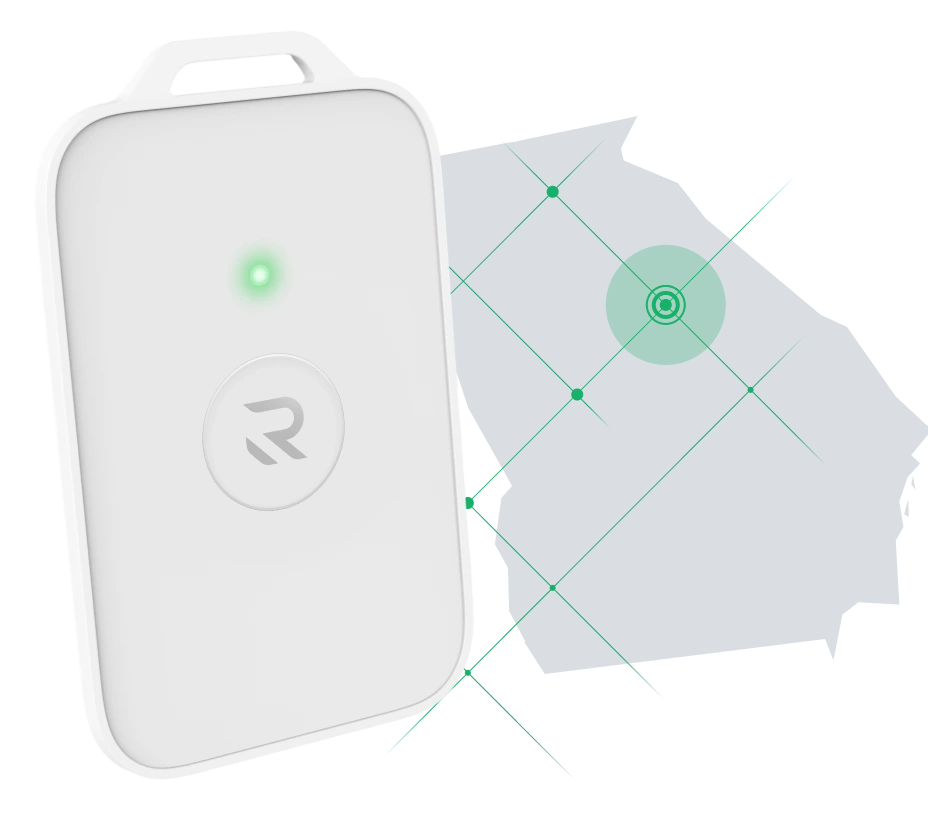
Georgia’s Ricky and Alyssa’s Law requires all K-12 school systems to implement two systems:
Mobile Panic Alert System (“Alyssa’s Alert”)
School Mapping Data
Alyssa’s Law is state legislation requiring K-12 schools to adopt rapid, direct-to-911 panic-alert technology. Georgia’s version, known as Ricky and Alyssa’s Law, is unusually detailed. It requires two separate systems.
Yes. Georgia’s Ricky and Alyssa’s Law, SB 17, requires every K-12 school system to implement both a Mobile Panic Alert System with real-time 911 and NG911 connectivity, and comprehensive digital school mapping data for first responders. Full compliance is required by July 1, 2026.
What Is Ricky and Alyssa’s Law in Georgia?
Georgia’s version of Alyssa’s Law is named after two significant individuals. Alyssa Alhadeff was a 14-year-old student killed in the February 14, 2018 shooting at Marjory Stoneman Douglas High School in Parkland, Florida. Richard “Ricky” Aspinwall was a coach and one of four victims killed in the September 4, 2024 shooting at Apalachee High School in Winder, Georgia. Their families both became advocates for the kind of legislation that could have made a difference in those moments.
Governor Brian Kemp signed Senate Bill 17 on April 9, 2025. The bill cleared the Senate unanimously and was developed with input from law enforcement officials who responded to the Apalachee shooting. The law took effect July 1, 2025, with a full compliance deadline of July 1, 2026.
All K-12 school systems in Georgia must comply, including private schools.
Georgia’s Ricky and Alyssa’s Law is one of the most detailed and technically demanding versions of Alyssa’s Law enacted in any state. It requires two distinct systems. A mobile panic alert system and a school mapping data program are needed, each with specific technical standards.
The mobile panic alert system (referred to in the law as “Alyssa’s Alert”) must connect disparate emergency services technologies. This is so that real-time coordination can happen between multiple local and state first responder agencies. It must further integrate with Next Generation 9-1-1 technology and link directly to public safety answering points. It also has to utilize school mapping data, giving first responders precise location information the moment an alert is triggered.
The school mapping data requirement goes further than any other state’s version of Alyssa’s Law. Schools must procure comprehensive digital building data that includes interior room layouts, access points, critical utility locations, emergency equipment locations, and aerial imagery of the surrounding area. That data needs to be shared in formats compatible with public safety software platforms, verified for accuracy annually, and made available to emergency responders. The Georgia Emergency Management and Homeland Security Agency is responsible for establishing the specific rules and regulations governing the mapping data requirements.
Apalachee High School had a panic button alert system in place when the shooting occurred on September 4, 2024. It had been installed just one week earlier. Teachers activated it immediately. Law enforcement received 26 silent alerts, and the suspect was in custody within ten minutes. That incident is part of why SB 17 passed unanimously and why Georgia’s version of the law is more detailed than most.
As with other states’ versions of Alyssa’s Law, mobile panic alert systems are additions to a school’s safety infrastructure. They are not replacements for existing classroom phones, intercoms, or other established communication devices.
Alyssa’s Law has now passed in many states. This includes New Jersey (2019), Florida (2020), New York (2022), Texas and Tennessee (2023), Utah and Oklahoma (2024), Georgia, Washington, and Oregon (2025), and Virginia and West Virginia (2026). As of early 2026, more than 18 additional states are actively considering legislation.
Georgia’s version is among the most advanced in the country. The combination of a mandatory mobile panic alert system with Next Generation 9-1-1 integration, direct PSAP connectivity, and a separate school mapping data mandate puts Georgia at the prescriptive end of the spectrum (alongside Florida and Utah).
Georgia’s dual-system requirement underscores how effective emergency response depends both on notification speed and on the quality of information first responders receive the moment they are notified.
Georgia has made school safety funding available to help districts address Ricky and Alyssa’s Law compliance needs. Schools may be able to use these resources for panic alert systems, school mapping, and related safety upgrades.
The Georgia Emergency Management and Homeland Security Agency administers school safety resources and grant opportunities that may help support compliance planning and implementation. Districts should review current eligibility rules, award amounts, and application timelines directly with GEMA before applying.
Districts should contact the Georgia Emergency Management and Homeland Security Agency (GEMA) to confirm eligibility requirements and current application windows.
The BJA STOP School Violence Program reopened its FY2026 cycle on September 21, 2026. It now offers 15 awards of up to $2 million each for state governments and public institutions of higher education (Category 1). It also offers 80 awards of up to $1 million each for local governments, school districts (including public charter schools), nonprofits, private K-12 schools, and tribal governments (Category 2). It is a 36-month award. The Grants.gov deadline is October 30, 2026, and the JustGrants deadline is November 6, 2026.
The July 1, 2026 compliance deadline is approaching. Districts that haven’t yet applied for available funding should treat this as an immediate priority.
Punch Rescue provides resilient hardware and software designed to work when it matters most. For Georgia schools, that means an emergency communication system that satisfies SB 17’s requirements for real-time first responder connectivity, precise location data, and coordinated mass notification. It remains functional and reliable when app-based solutions fail, too.
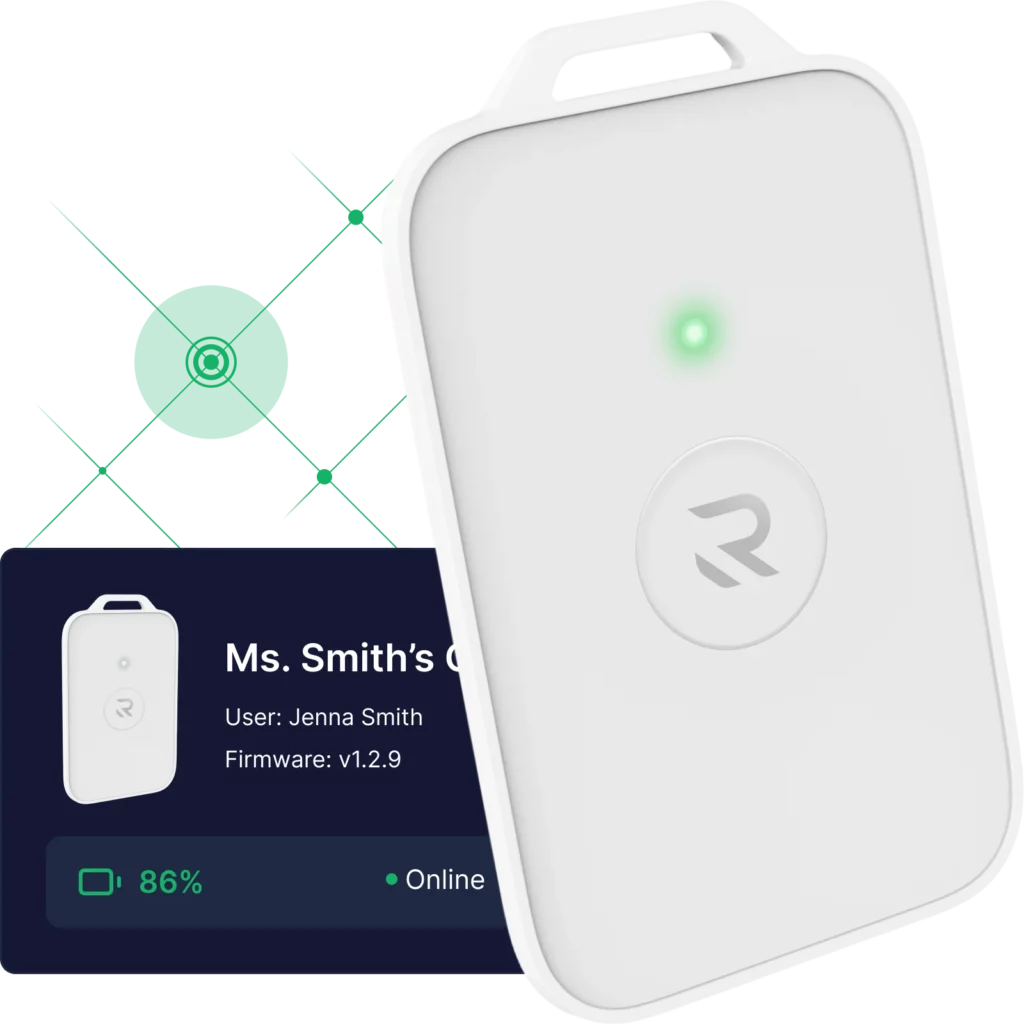
The Rescue Card is a wearable panic button worn by teachers and staff. When pressed, it silently triggers an emergency alert. There’s no phone required. Rescue Repeaters extend signal coverage across a campus. This covers classrooms, gymnasiums, portable buildings, and outdoor areas where WiFi dead zones are common. The Rescue Base Station anchors the system’s communication infrastructure, with approximately six hours of battery backup to maintain operation during power disruptions.
Punch Rescue integrates with RapidSOS, a platform that connects activated panic button alerts directly to 911 and public safety agencies. The moment a Rescue Card is pressed, RapidSOS transmits real-time incident data (including location and alert type) to the appropriate dispatch center. This directly addresses SB 17’s requirement that Alyssa’s Alert integrate with Next Generation 9-1-1 technology and connect directly to public safety answering points (PSAPs).
Punch Rescue integrates with Mappedin to embed dynamic indoor facility maps directly within the response dashboard. When an alert is triggered, first responders receive accurate, room-level location data. This supports SB 17’s requirement that the mobile panic alert system utilize school mapping data. It gives law enforcement the precise location information the law was designed to deliver.
Punch Rescue integrates with Lightspeed Notify for emergency communication coordination, automated response plan distribution, and mass notifications. When an incident occurs, administrators, staff, and first responders receive the right information automatically. There are no manual steps required during a moment of crisis. This addresses SB 17’s requirement for real-time coordination between multiple state and local first responder agencies.
Note: The details of any technology’s implementation in Georgia may be guided by GEMA/HS rules.
What Does This Mean for Your District?
Georgia’s law is detailed, and the July 1, 2026 deadline is not far off. When evaluating systems, you need to ask:
Punch Rescue is built to answer yes to all of the above. It’s also highly customizable to meet unique school district needs and specifications.
Yes. Georgia’s “Ricky and Alyssa’s Law,” SB 17, was signed April 9, 2025 and takes effect July 1, 2025, with full compliance required by July 1, 2026. It requires two systems, not one.
First, a Mobile Panic Alert System (called “Alyssa’s Alert” in the statute) with real-time 911 connectivity and Next Generation 9-1-1 (NG911) integration through direct links to the local PSAP. Second, comprehensive school mapping data (interior layouts, access points, utility locations, and emergency equipment positions).
July 1, 2026 is the full compliance deadline, though the law itself takes effect July 1, 2025. Districts have a runway, but both the panic-alert and mapping-data components need to be in place by the deadline.
Yes, SB 17 requires both components together. A district that installs only a panic alert system without the mapping-data component hasn’t fully complied with Ricky and Alyssa’s Law.
Federal COPS SVPP and BJA STOP funding apply, and the Georgia Emergency Management and Homeland Security Agency (GEMA) oversees implementation guidance. Districts should contact GEMA to confirm eligibility requirements, and contact Punch Rescue’s sales team to confirm current funding and pricing for both the panic-alert and mapping components.
Punch Rescue’s Rescue Card and RapidSOS integration satisfy SB 17’s mobile panic alert and NG911/PSAP requirements, and the Mappedin integration satisfies the school mapping data component. Reach out to Punch Rescue to confirm current GEMA/HS implementation guidance for your district ahead of the July 1, 2026 deadline.
Georgia’s Ricky and Alyssa’s Law is one of the most technically demanding versions enacted anywhere in the country.
Most panic buttons leave you guessing about device status, battery life, and system health. Punch Rescue provides real-time visibility across your entire infrastructure, so you know your school is ready when it matters most.