- Bill: HB5107 (Public Act 104-0789)
- Read the Full Legislation

COPS SVPP, the U.S. Department of Education’s School Safety Enhancement Program, and FEMA’s Nonprofit Security Grant Program all closed their FY26 application cycles in late July and August 2026. Districts should watch for FY27 announcements.
The BJA STOP School Violence Program, however, reopened its FY2026 cycle on September 21, 2026. The Grants.gov deadline is October 30, 2026, and the JustGrants deadline is November 6, 2026.
Join this email newsletter for ongoing updates on upcoming grant opportunities.
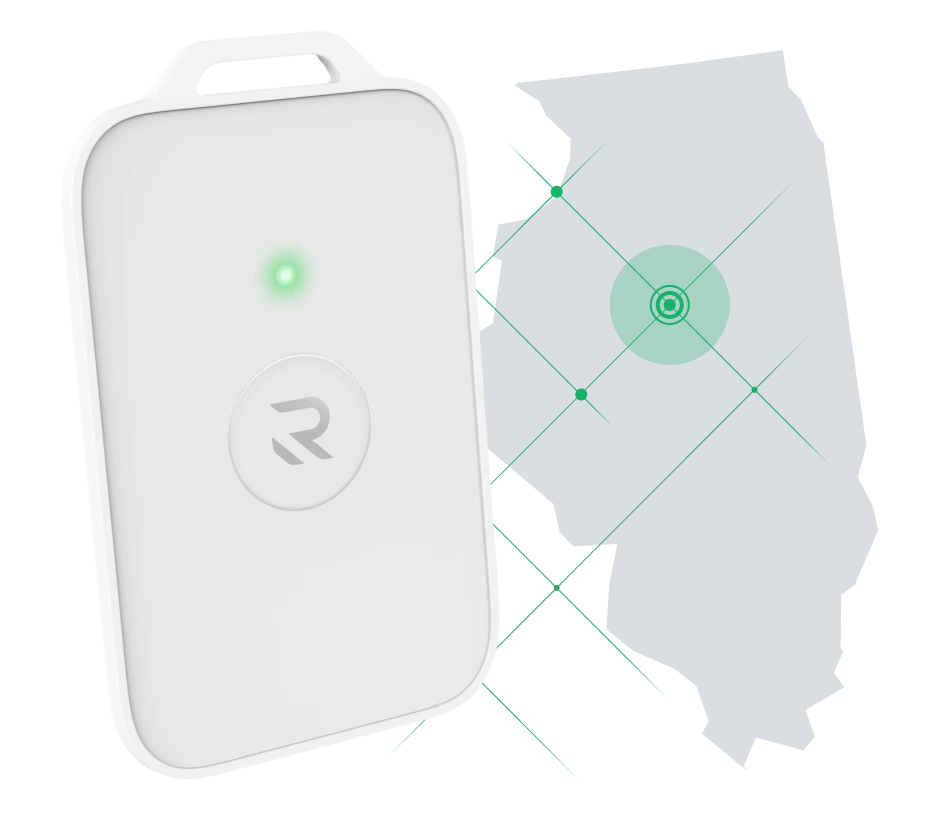
Public Act 104-0789 (Illinois’s version of Alyssa’s Law) requires every Illinois public school district and private school to consider the use of a mobile panic alert system (“Alyssa’s Alert”) when developing its school emergency and crisis response plan. A qualifying system must:
Districts and private schools are responsible for the cost of connecting their system to local PSAP infrastructure. The Illinois State Police must adopt rules defining a qualifying system by March 1, 2027, weighing six factors. These include system scalability, connection reliability across internet and cellular networks, ease of integration with existing safety systems, alert efficiency, testing requirements, and interoperability with crisis-response mapping tools.
Alyssa’s Law is state legislation focused on giving K-12 schools a direct, silent line to local law enforcement during an emergency incident. Illinois’s law is a consideration requirement, rather than an installation mandate. A district that documents its evaluation and decides against a system is not automatically out of compliance. A district that never considers one at all is.
Alyssa’s Law is named for Alyssa Alhadeff, a 14-year-old student killed in the February 14, 2018 shooting at Marjory Stoneman Douglas High School in Parkland, Florida. Her mother, Lori Alhadeff, founded the nonprofit Make Our Schools Safe. With it she has urged states nationwide to require a direct, silent line between classrooms and law enforcement.
Governor JB Pritzker signed HB5107 on August 7, 2026. This made Illinois the 13th state to enact a version of Alyssa’s Law. The bill’s primary sponsor was Rep. Nabeela Syed. HB5107 passed with near-unanimous support: 108–0 in the House, 59–0 in the Senate, and 113–0 on the House’s concurrence with a Senate amendment.
At the signing, Lori Alhadeff said, “The principle is simple: time equals life. We are already seeing the impact of this technology in schools today.”
The law takes effect January 1, 2027.
Most districts read “consider” and stop there. Illinois’s law, however, requires a documented evaluation as part of a school’s official emergency and crisis response plan. This entails a paper trail showing the district actually weighed one.
Districts that skip the documentation are the least prepared if Illinois follows the pattern already set by New York and Oregon. In both states, consideration requirements gave way to installation mandates within a few legislative sessions.
Before any district can point to a system and call it compliant, the Illinois State Police has to define what “compliant” means. State Police must adopt rules by March 1, 2027. They’ll be weighing scalability, network reliability, integration with existing safety infrastructure, alert efficiency, testing cadence, and interoperability with crisis-response mapping tools. Districts that wait for the final rule before evaluating anything will be starting from zero with less runway before the 2028–2029 school year deadline.
Illinois’s law puts a real operational obligation on top of the purchase decision. A qualifying system must integrate with the district’s local Public Safety Answering Point. Districts must also coordinate with that PSAP before they buy or implement anything. Once installed, the system has to be tested with PSAPs and first responders at least once a year.
HB5107 applies to every public school district and every private school in Illinois. There’s no carve-out by size or funding source. Each school is responsible for the cost of connecting its system to local PSAP infrastructure, so budgeting for that connectivity fee (with the hardware) belongs in a district’s evaluation from the start.
Panic alert systems are additions to a school’s safety infrastructure. They are not replacements for existing classroom phones, intercoms, or other established communication devices.
New Jersey (2019), Florida (2020), New York (2022), Texas and Tennessee (2023), Utah and Oklahoma (2024), Georgia, Washington, and Oregon (2025), Virginia and West Virginia (2026) and now Illinois (2026) have all enacted some version of Alyssa’s Law. More than a dozen additional states are actively considering legislation.
Illinois sits closer to the flexible end of the spectrum, alongside those states which require school districts to consider a system rather than install one. That puts Illinois well short of the harder mandates in Utah (wearable panic buttons, live video feeds, remote door locks, and two-way communication), Georgia (a mobile panic alert system integrated with Next Generation 9-1-1 plus comprehensive school mapping data), Texas (silent panic alert technology required in every classroom), and Florida (direct PSAP integration with annual state reporting and a 24-hour failure-notification rule).
What sets Illinois apart from other “consider-only” states is the technical specificity built into the requirement itself. Even though installation isn’t mandatory, any system a district does choose to consider has to meet a defined bar. PSAP integration, annual testing, and coordination with local 911 (before purchase) are all required. That’s closer to what Utah or Georgia require of a system than to Tennessee’s looser language.
HB5107 did not include direct state funding for districts to purchase or connect a qualifying system.
The primary federal funding source nationwide. The FY26 cycle offered up to $500,000 per award over a 36-month period, with a 25% local cash match, and roughly $1 million reserved for rural/tribal/low-resourced microgrants of up to $100,000. Both FY26 deadlines (August 4, 2026 for Grants.gov and August 11, 2026 for JustGrants) have now closed. Districts should watch for the FY27 announcement.
The BJA STOP School Violence Program reopened its FY2026 cycle on September 21, 2026. It now offers 15 awards of up to $2 million each for state governments and public institutions of higher education (Category 1). It also offers 80 awards of up to $1 million each for local governments, school districts (including public charter schools), nonprofits, private K-12 schools, and tribal governments (Category 2). It is a 36-month award. The Grants.gov deadline is October 30, 2026, and the JustGrants deadline is November 6, 2026.
This new U.S. Department of Education program for FY26 includes roughly $93 million available nationally across an estimated 30 awards. This covers infrastructure security, emergency response planning, and staff/SRO training and preparedness. Only State Educational Agencies may apply. Illinois districts can’t apply directly, so this runs through the Illinois State Board of Education.
The FY26 deadline was July 28, 2026 and has closed. Districts should ask ISBE whether it applied and how any award would be sub-granted.
This is a FEMA program for nonprofit organizations at elevated risk of attack, including private and religious schools. It is relevant given HB5107 covers Illinois’s private schools directly. FY26 funding totaled roughly $300 million nationally. The deadline was July 24, 2026 and has closed. Private schools should watch for the FY27 opening.
Districts and private schools that document their evaluation now (ahead of the Illinois State Police’s March 2027 rulemaking) will be positioned to move fast once these cycles reopen.
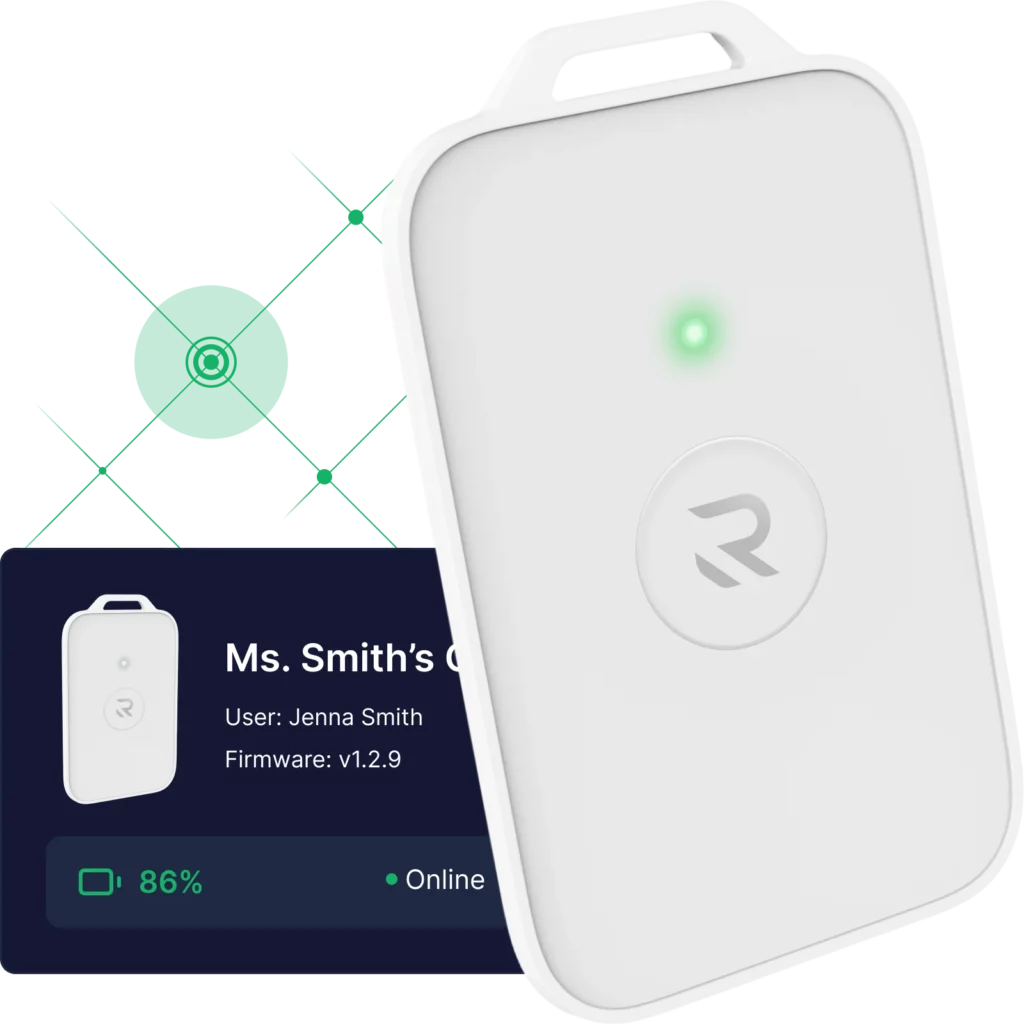
The Rescue Card is a wearable panic button worn by teachers and staff. When pressed, it silently triggers an emergency alert without requiring a cell phone to be used. Rescue Repeaters extend signal coverage across a campus. This covers classrooms, gymnasiums, portable buildings, and outdoor areas where WiFi dead zones are common. The Rescue Alert Stations anchor the system’s communication infrastructure, with approximately six hours of battery backup to maintain operation during power disruptions.
This hardware-first approach is built for exactly the kind of diverse, always-on connectivity HB5107 calls for.
Punch Rescue integrates with RapidSOS, which connects an activated panic button directly to 911 and public safety agencies. The moment a Rescue Card is pressed, RapidSOS transmits real-time incident data (including location and alert type) to the appropriate dispatch center. This is the same PSAP integration HB5107 requires of a qualifying system.
Punch Rescue integrates with Mappedin to embed dynamic indoor facility maps directly within the response dashboard. When an alert is triggered, first responders receive accurate, room-level location data. This is directly relevant to the mapping-tool interoperability factor the Illinois State Police is required to weigh in its March 2027 rules.
Punch Rescue integrates with Lightspeed System’s Notify technology for emergency communication coordination, automated response plan distribution, and mass notifications. When an incident occurs, administrators, staff, and first responders receive the right information automatically. No manual steps are required during a moment of crisis, and no scrambling is needed to coordinate the kind of multi-agency response HB5107 calls for.
Punch Rescue is built to answer yes to all of the above. It’s also highly customizable to meet unique school district needs and specifications.
Not exactly. HB5107 (Public Act 104-0789), Illinois’s version of Alyssa’s Law, requires every public school district and private school to consider a mobile panic alert system as part of its emergency and crisis response plan.
It must connect to diverse emergency service technologies, integrate with the local Public Safety Answering Point for direct 911 transmission, and undergo testing with PSAPs and first responders at least once a year.
They need to have done so by the start of the 2028–2029 school year. Before that, the Illinois State Police must finalize its technical qualifying-system rules by March 1, 2027.
Yes. HB5107 covers public school districts and private schools statewide. Each is responsible for its own PSAP connectivity costs.
COPS SVPP, the U.S. Department of Education’s School Safety Enhancement Program, and FEMA’s Nonprofit Security Grant Program are all closed for FY26. Watch each for its FY27 announcement. The BJA STOP School Violence Program is the exception. Its FY26 cycle reopened September 21, 2026, with Grants.gov and JustGrants deadlines of October 30 and November 6, 2026.
Yes. Rescue Card’s wearable activation, RapidSOS’s direct PSAP connectivity, and Mappedin’s room-level location data are built to satisfy HB5107’s core technical requirements. Contact the Punch Rescue team for current documentation to support your district’s consideration record.
Most panic buttons leave you guessing about device status, battery life, and system health. Punch Rescue provides real-time visibility across your entire infrastructure, so you know your school is ready when it matters most.