- Bill: HB 4073
- Read the Full Legislation

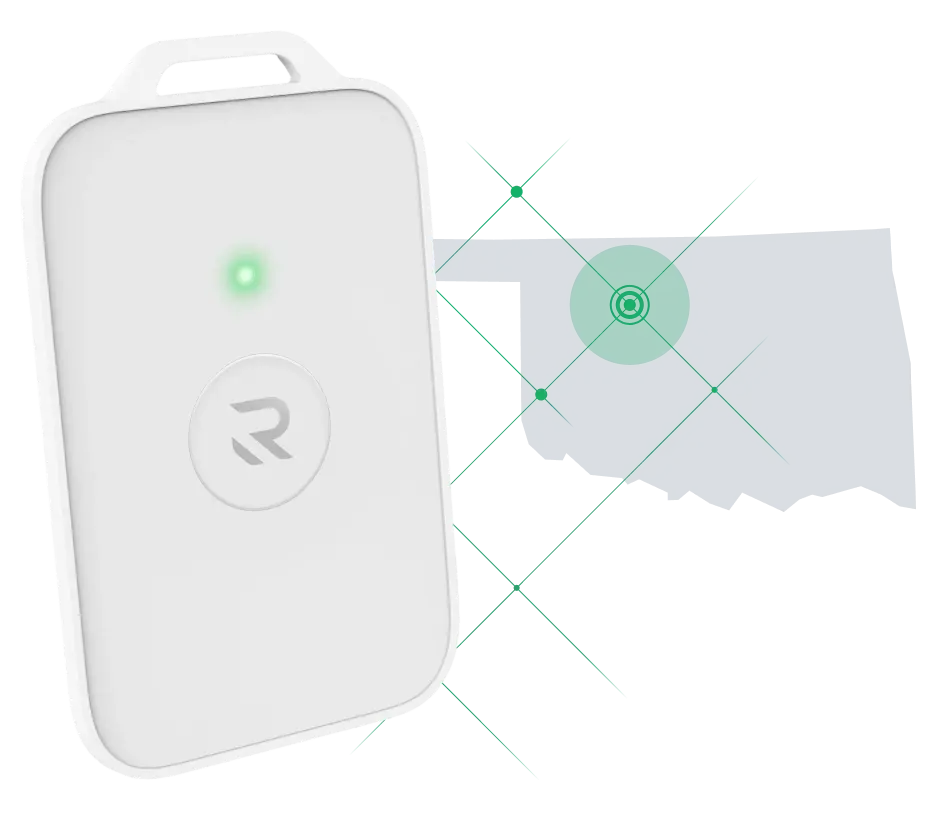
HB 4073 requires every Oklahoma school district to implement a mobile panic alert system, referred to in the statute as a school security alert and response system. The system must be able to:
Note: A panic button alone doesn’t satisfy HB 4073. The law specifically requires automatic location-based alerts, real-time coordination, and floor-plan data, not just a signal that something is wrong.
Alyssa’s Law is state legislation requiring K-12 schools to adopt mobile panic-alert technology that connects directly to 911. Oklahoma’s version adds a distinct requirement. The technology has to come from a vendor the state has already approved.
Yes. Oklahoma’s Alyssa’s Law, HB 4073, requires every public school district to implement a mobile panic alert system that automatically alerts staff and shares floor plans and location data with 911. The system must come from one of roughly 11 vendors OSDE has already approved.
Alyssa’s Law is named for Alyssa Alhadeff, a 14-year-old student killed in the February 14, 2018 shooting at Marjory Stoneman Douglas High School in Parkland, Florida. Her mother, Lori Alhadeff, became a leading voice pushing for school safety reform, founding the nonprofit Make Our Schools Safe. The law’s advocates push for legislation that gives every classroom a direct, silent line to law enforcement during an emergency (without triggering school-wide alarms that could escalate danger or tip off a threat).
Oklahoma’s version of Alyssa’s Law was authored by Rep. Kevin Wallace and Sen. Darrell Weaver. Governor Kevin Stitt signed HB 4073 on June 14, 2024. This made Oklahoma the seventh state in the nation to enact some version of the law. It took effect July 1, 2024, ahead of the 2024–25 school year. Oklahoma was among the states that passed a version of Alyssa’s Law in 2024, alongside Utah.
Advocacy groups, including Make Our Schools Safe, supported HB 4073’s passage. They continue to track how the state’s approved-vendor process affects district-level compliance.
Oklahoma took a different approach than most Alyssa’s Law states. Leaving vendor selection entirely up to districts. HB 4073, however, requires the Oklahoma State Department of Education (OSDE) Board to adopt and maintain a list of approved mobile panic alert vendors that meet the law’s minimum criteria.
Districts should confirm current vendor-list status directly with OSDE before contracting. The list is reviewed periodically, so approvals can change between school years. See the current OSDE vendor recommendation list for the most recent published version.
As with every state’s version of Alyssa’s Law, mobile panic alert systems are additions to a school’s safety infrastructure. They are not replacements for existing classroom phones, intercoms, or other established communication devices.
Alyssa’s Law has now passed in New Jersey (2019), Florida (2020), New York (2022), Texas and Tennessee (2023), Utah and Oklahoma (2024), Georgia, Washington, and Oregon (2025), and Virginia and West Virginia (2026). As of early 2026, more than 18 additional states are actively considering legislation.
Oklahoma’s law is squarely in the middle of the national spectrum. It’s a real mandate with specific technical requirements, but it’s implemented through state procurement control rather than a building-by-building certification process (like New Jersey’s).
Some states have gone further on the technology itself:
Oklahoma’s approved-vendor model most closely resembles Florida’s FDOE-approved vendor list, where reimbursement and compliance both depend on choosing a vendor the state has already vetted.
Oklahoma has tied its primary funding mechanism directly to an existing state fund, alongside the usual federal grant sources.
The Oklahoma Legislature has made a historic, recurring investment of $50 million a year in the School Security Revolving Fund. Districts can draw on existing allocations to cover HB 4073 compliance costs, provided the system comes from an OSDE-approved vendor. Districts should contact OSDE directly, or review the School Safety and Security page to confirm current fund availability.
The federal School Violence Prevention Program, administered by the COPS Office at the U.S. Department of Justice, has been the primary federal funding source for school safety technology nationwide. The FY26 application window is now closed, however. The program offered a maximum federal share of $500,000 per award over three years, with a local cost-share requirement of at least 25%.
The Grants.gov deadline was August 4, 2026, and the JustGrants deadline was August 11, 2026.
The BJA STOP School Violence Program provides funding to prevent and reduce school violence. It awards up to $2 million for state governments and public institutions. Up to $1 million is available for independent school districts, nonprofits, and public charter schools. Allowable expenses include threat assessment teams, anonymous reporting tools, and school safety technology. Application cycles open annually, typically in late summer or fall. Districts should monitor BJA’s funding opportunities page for the FY26 announcement.
Districts should confirm a vendor’s OSDE-approved status before committing any of these funds. Federal and state dollars spent on a non-approved system don’t bring a district closer to HB 4073 compliance.
Punch Rescue provides resilient hardware and software designed to work when it matters most. For Oklahoma schools, that means a system built to satisfy HB 4073’s technical standard, automatic location-based alerts, floor plans, and real-time coordination with responders.
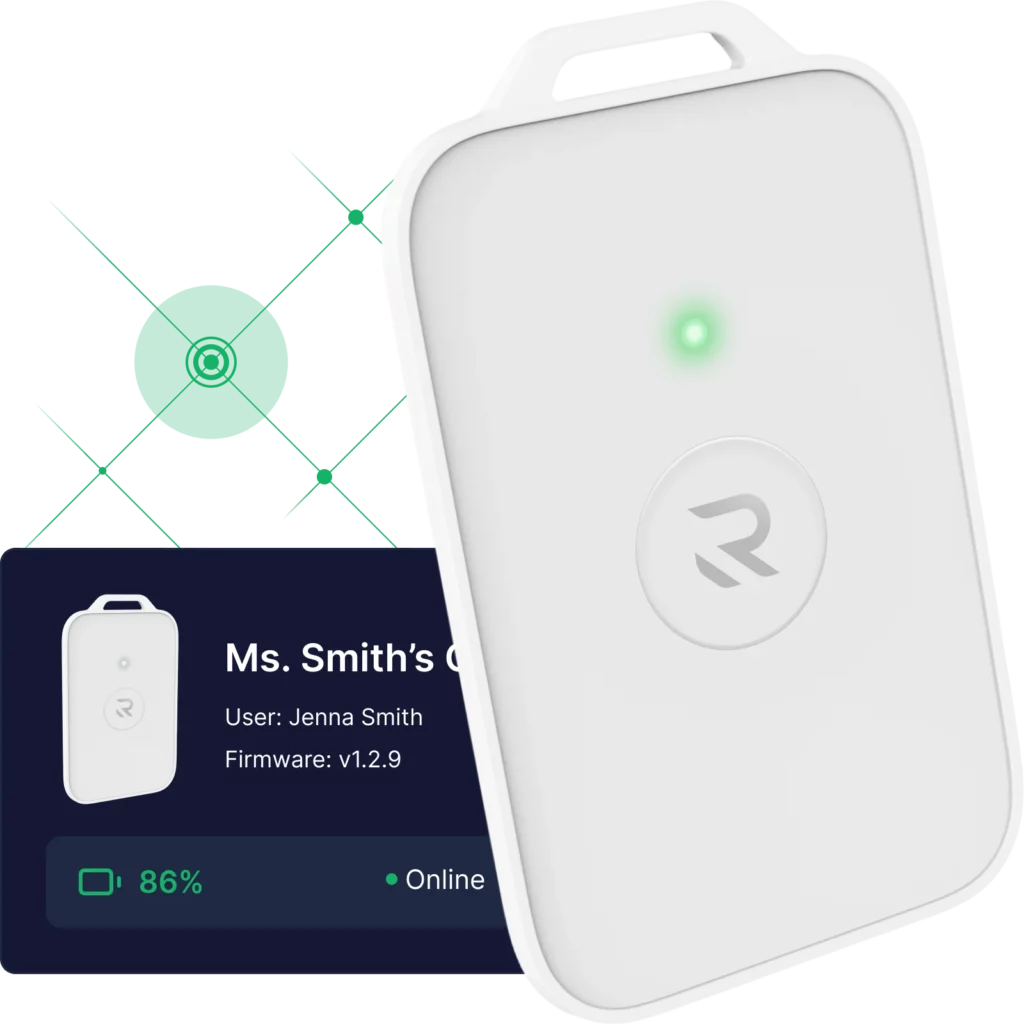
The Rescue Card is a wearable panic button worn by teachers and staff. When pressed, it silently triggers an emergency alert. There’s no phone required. Rescue Repeaters extend signal coverage across a campus. This covers classrooms, gymnasiums, portable buildings, and outdoor areas where WiFi dead zones are common.
The Rescue Base Station anchors the system’s communication infrastructure. It comes with approximately six hours of battery backup to maintain operation during power disruptions. This hardware is designed to work where app-based systems routinely fail, in the areas of campus with weak or no WiFi signal. These are precisely the spaces where staff are most vulnerable and least able to reach a phone.
Punch Rescue integrates with RapidSOS, a platform that connects activated panic button alerts directly to 911 and public safety agencies. The moment a Rescue Card is pressed, RapidSOS transmits real-time incident data (including location and alert type) to the appropriate dispatch center. This satisfies HB 4073’s requirement to deliver critical information during 911 calls.
Punch Rescue integrates with Mappedin to embed dynamic indoor facility maps directly within the response dashboard. When an alert is triggered, first responders receive accurate, room-level location data. This meets HB 4073’s specific requirement that responders receive floor plans and precise location during an emergency.
Punch Rescue integrates with Lightspeed System’s Notify technology for emergency communication coordination, automated response plan distribution, and mass notifications. When an incident occurs, administrators, staff, and first responders receive the right information automatically. There are no manual steps required during a moment of crisis.
Districts should confirm Punch Rescue’s current status on the OSDE-approved vendor list directly with the Oklahoma State Department of Education before contracting, since the list is reviewed periodically.
Oklahoma’s approved-vendor requirement means the vendor question comes before the technology question. When evaluating systems, you need to ask:
Punch Rescue is built to answer yes to all of the above. It’s also highly customizable to meet unique school district needs and specifications.
Yes. Oklahoma’s Alyssa’s Law, HB 4073, signed June 14, 2024 and effective July 1, 2024, requires every public school district to implement a mobile panic alert system. It must only come from a vendor the state has already approved.
Automatically alert designated school personnel when an emergency response is initiated, deliver floor plans and precise location data to 911 during a call, and support real-time coordination between school personnel and emergency responders.
No. HB 4073 requires the Oklahoma State Department of Education (OSDE) to maintain a list of approved vendors, and districts must contract with a vendor on that list. A system that meets every technical requirement but isn’t on the approved list still doesn’t satisfy the law. Districts should confirm current vendor-list status directly with OSDE before contracting.
OSDE currently lists roughly 11 approved vendors, and the list is reviewed periodically. Approvals can change between school years. Contact Punch Rescue to confirm Punch Rescue’s current OSDE-approved status before your district contracts.
The state’s School Security Revolving Fund committed $50 million a year, though the original three-year commitment is set to conclude in 2026 pending extension legislation. Federal COPS SVPP and BJA STOP funding are also available. Contact Punch Rescue’s sales team to confirm current fund status alongside OSDE.
Punch Rescue’s Rescue Card, RapidSOS, and Mappedin integrations are built to satisfy HB 4073’s automatic-alert, floor-plan, and real-time coordination requirements. Reach out to Punch Rescue to confirm current OSDE-approved vendor status before your district contracts.
Oklahoma requires every public school district to implement a mobile panic alert system from a state-approved vendor. A system that meets the technical standard but isn’t on OSDE’s approved list still doesn’t satisfy the law.
Most panic buttons leave you guessing about device status, battery life, and system health. Punch Rescue provides real-time visibility across your entire infrastructure, so you know your school is ready when it matters most.