- Bill: Existing Framework is in the Comprehensive School Safety Plan
- Read the Full Legislation

BJA STOP School Violence Program: The FY26 cycle reopened September 21, 2026. It offers 15 awards up to $2M (for state/public higher ed) and 80 awards up to $1M (for districts, nonprofits, private K-12, and tribal governments). The Grants.gov deadline is October 30, 2026. The JustGrants deadline is November 6, 2026. You may also join this email newsletter for ongoing updates on upcoming grant opportunities.
California does not require silent panic alarms. It does require every public school, including charter schools, to maintain a Comprehensive School Safety Plan (CSSP) under Education Code §§32280–32289.5. Every district must:
Alyssa’s Law is state legislation requiring K-12 schools to adopt rapid, direct-to-911 panic-alert technology. California hasn’t passed a version of it. Schools operate instead under the state’s existing school safety planning framework.
California hasn’t passed an Alyssa’s Law bill, making it one of the last large states without one. Public schools, including charter schools, must instead maintain a Comprehensive School Safety Plan under Education Code §§32280–32289.5, reviewed and adopted every year by March 1.
Alyssa’s Law is named for Alyssa Alhadeff. Alyssa was a 14-year-old student killed in the February 14, 2018 shooting at Marjory Stoneman Douglas High School in Parkland, Florida. Her mother, Lori Alhadeff, became a leading voice pushing for school safety reform, founding the nonprofit Make Our Schools Safe. The law’s advocates push for legislation that gives every classroom a direct, silent line to law enforcement during an emergency (without triggering school-wide alarms that could escalate danger or tip off a threat).
The first version of an Alyssa’s Law was passed in 2019. Since then, eleven states have enacted their own versions. California has not.
Advocacy groups, including Make Our Schools Safe, are actively campaigning for California to pass Alyssa’s Law. As of mid-2026, no such bill has been introduced or enacted in the state legislature. Districts in California are currently governed only by the general CSSP mandate described above. There is no building-level panic alarm requirement of any kind.
A silent panic alarm system is not outside California’s current legal framework. It fits directly inside it. The CSSP already requires documented emergency response procedures and annual coordination with local law enforcement. Districts that install a panic alert system today can:
Districts that take this approach now will have a tested, working system in place well before any statewide mandate arrives, rather than a rushed installation on a compliance deadline.
California doesn’t yet have an Alyssa’s Law bill, but a related bill has moved through Sacramento. AB 598 would create a School Mapping Data Grant Program under the California Office of Emergency Services, funding standardized digital campus maps for first responders. It passed the Assembly 79–0 in June 2025 and was held under submission in the Senate Appropriations Committee in August 2025. As a two-year bill, it can still be taken back up in the 2026 session.
AB 598 is not a panic alarm mandate, but it reflects the same national shift toward integrated location data for first responders that’s already law in Georgia and Florida. Districts that want to get ahead of the trend, rather than wait for Sacramento to force the decision, should evaluate systems that already meet the mapping and location-data standards other states have adopted.
Alyssa’s Law has now passed in New Jersey (2019), Florida (2020), New York (2022), Texas and Tennessee (2023), Utah and Oklahoma (2024), Georgia, Washington, Oregon and Virginia and West Virginia (2026). As of early 2026, more than 18 additional states are actively considering legislation.
California sits at the earliest stage of the national spectrum. It hasn’t yet introduced a bill, let alone passed one. Even states that started with permissive “consider” language, like New York in 2022, are already facing pressure to tighten their laws into mandates. Some states have gone considerably further:
California is the largest K-12 system in the country, with more than 5.7 million public school students enrolled for the 2025–26 school year, according to the California Department of Education. That scale means a future statewide mandate would be the largest and most complex rollout Alyssa’s Law has seen anywhere. Districts that build a tested system now, on their own timeline, will be far better positioned than those trying to retrofit thousands of campuses against a compliance deadline.
California schools don’t need to wait for a state mandate to fund a compliant system. Several pathways are available right now.
The federal School Violence Prevention Program, administered by the COPS Office at the U.S. Department of Justice, is the primary funding source for school safety technology nationwide. The FY26 cycle is open, with up to $73 million available and a maximum award of $500,000 per grantee over a 36-month grant period. Districts must provide a 25% local cash match.
Eligible expenses for this program include silent panic alarms, emergency alert technology, entry control systems, and staff training. Approximately $1 million is reserved for microgrants of up to $100,000 for rural, tribal, and low-resourced districts.
The Grants.gov deadline is August 4, 2026, and the JustGrants deadline is August 11, 2026.
The BJA STOP School Violence Program reopened its FY2026 cycle on September 21, 2026. It now offers 15 awards of up to $2 million each for state governments and public institutions of higher education (Category 1). It also offers 80 awards of up to $1 million each for local governments, school districts (including public charter schools), nonprofits, private K-12 schools, and tribal governments (Category 2). It is a 36-month award. The Grants.gov deadline is October 30, 2026, and the JustGrants deadline is November 6, 2026.
CMAS gives California public schools pre-negotiated pricing and built-in state bid-law compliance. This cuts procurement time from the 6–12 months a traditional RFP takes down to roughly 4–8 weeks. Panic alarm systems, access control, and related security technology are eligible categories, so districts can purchase now without waiting on a mandate or a competitive grant cycle.
Districts building an SVPP application should complete a campus network and safety assessment first. A credible plan for closing coverage gaps (particularly in gyms, portable classrooms, and outdoor areas) strengthens the application. That also prevents the most common cause of panic alert failures after installation.
Punch Rescue provides resilient hardware and software designed to work when it matters most. For California schools, that means the system is built to satisfy the technical standard other states have already written into law. Districts can be ready the moment California follows a similar trend.
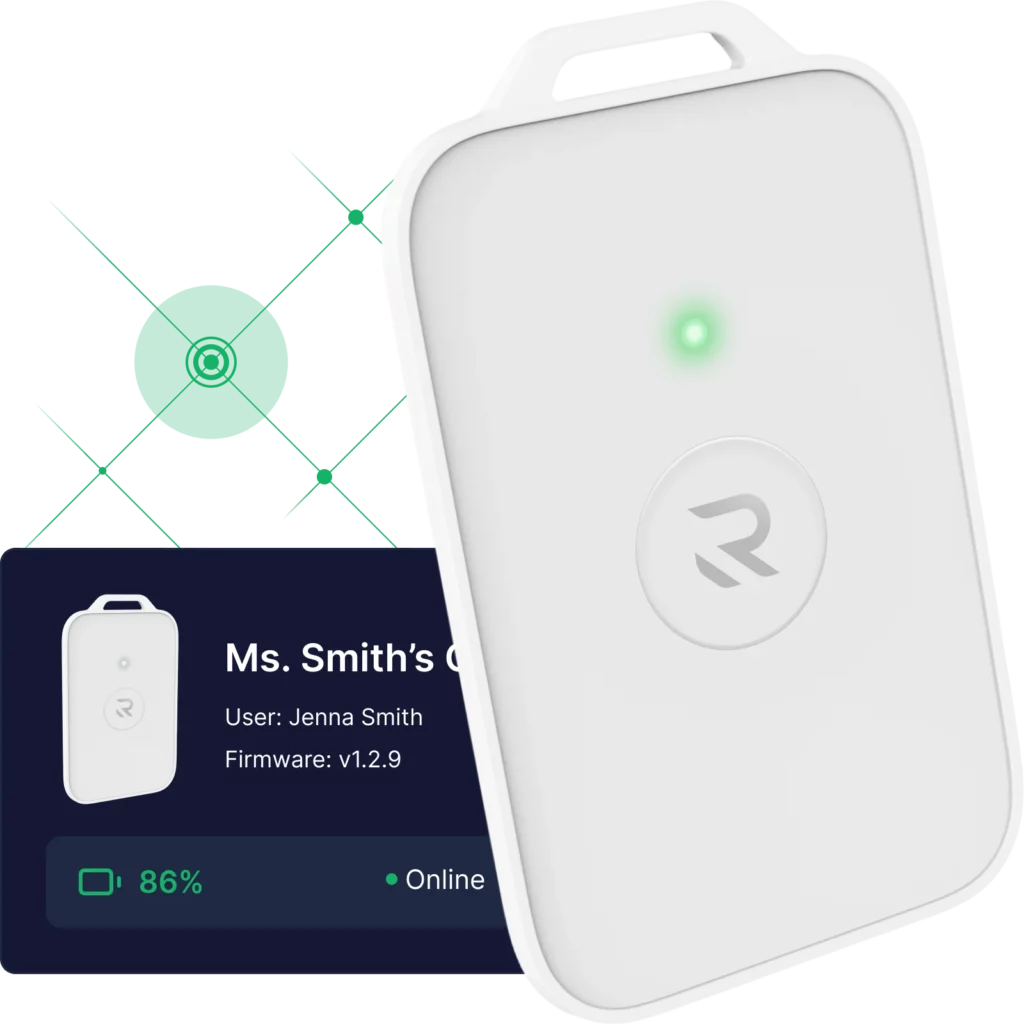
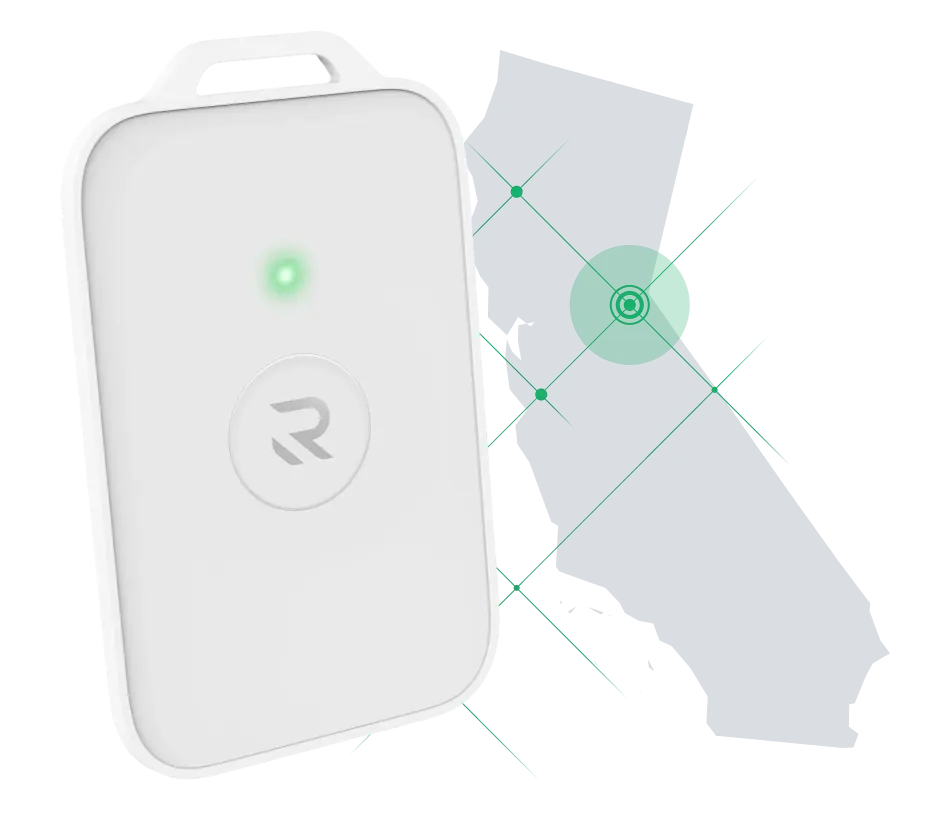
The Rescue Card is a wearable panic button worn by teachers and staff. When pressed, it silently triggers an emergency alert. There’s no phone required. Rescue Repeaters extend signal coverage across a campus, covering classrooms, gymnasiums, portable buildings, and outdoor areas where WiFi dead zones are common.
The Rescue Base Station anchors the system’s communication infrastructure. It comes with approximately six hours of battery backup to maintain operation during power disruptions. This hardware is designed to work where app-based systems routinely fail, in the areas of campus with weak or no WiFi signal. These are precisely the spaces where staff are most vulnerable and least able to reach a phone.
Punch Rescue integrates with RapidSOS, a platform that connects activated panic button alerts directly to 911 and public safety agencies. The moment a Rescue Card is pressed, RapidSOS transmits real-time incident data (including location and alert type) to the appropriate dispatch center. This is the direct law enforcement link at the center of every state’s version of Alyssa’s Law.
Punch Rescue integrates with Mappedin to embed dynamic indoor facility maps directly within the response dashboard. When an alert is triggered, first responders receive accurate, room-level location data. This positions California schools ahead of both the mapping-data direction of AB 598 and the mapping requirements already law in Georgia and Florida.
Punch Rescue integrates with Lightspeed System’s Notify technology for emergency communication coordination, automated response plan distribution, and mass notifications. When an incident occurs, administrators, staff, and first responders receive the right information automatically. There are no manual steps required during a moment of crisis.
California’s absence of a mandate means the decision, and the timeline, is still yours. When evaluating systems, you need to ask:
Punch Rescue is built to answer yes to all of the above. It’s also highly customizable to meet unique school district needs and specifications.
No. California hasn’t passed an Alyssa’s Law bill, making it one of the last large states without one, even as 12 other states now require some version of it. There’s no building-level panic alarm mandate of any kind.
Every public school, including charter schools, must maintain a Comprehensive School Safety Plan (CSSP) under Education Code §§32280–32289.5, covering emergency response procedures, law enforcement coordination, and staff training, adopted annually by March 1.
Not directly. AB 598 would create a School Mapping Data Grant Program, funding standardized digital campus maps for first responders. It passed the Assembly 79–0 in June 2025 and was held in Senate Appropriations in August 2025. As a two-year bill, it can still move in the 2026 session, but it isn’t a panic-alarm mandate.
Yes, and it fits directly into the existing CSSP framework. Districts can document a panic alert system as part of their required annual emergency-response procedures and law enforcement coordination, rather than waiting for a statewide requirement.
The COPS School Violence Prevention Program (SVPP) and California Multiple Award Schedules (CMAS) (which offers pre-negotiated pricing without a competitive bid) are both available now. Federal and state grant windows change; contact Punch Rescue’s sales team to confirm current funding and CMAS pricing options for your district.
Punch Rescue’s Rescue Card, RapidSOS, and Mappedin integrations are built to the technical standard other states have already written into law, so California districts can document a system in their CSSP now and be ready if a mandate follows. Reach out to Punch Rescue to confirm current CMAS eligibility and documentation for your district.
California has not passed Alyssa’s Law, and no bill requiring silent panic alarms has been introduced in the state legislature. Existing law, however, already requires every public school to maintain an annually updated safety plan that a panic alert system fits into today.
Most panic buttons leave you guessing about device status, battery life, and system health. Punch Rescue provides real-time visibility across your entire infrastructure, so you know your school is ready when it matters most.