- Bill: HB 3083
- Read the Full Legislation

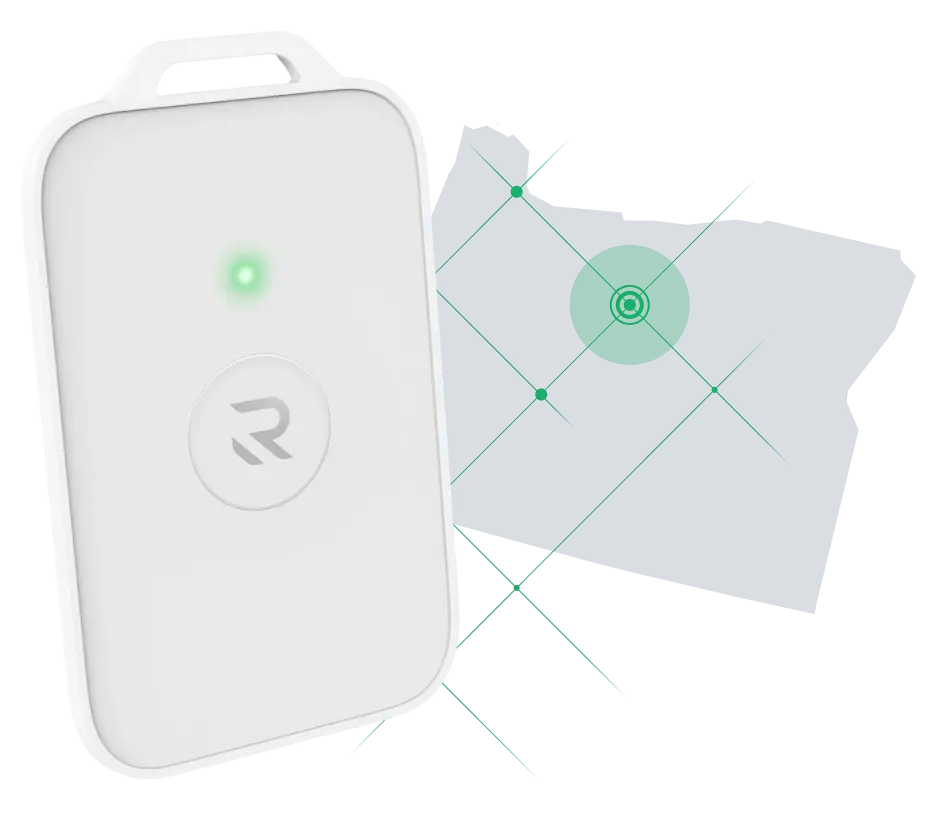
Oregon HB 3083 requires all K-12 educational institutions serving 50 or more students (whether public or private) to consider the installation of a panic alarm system as part of their school safety planning. A qualifying panic alarm system must consist of either a wireless or a wearable panic alarm that is directly connected to local law enforcement.
Alyssa’s Law is state legislation aimed at giving K-12 schools a direct, silent line to local law enforcement during an emergency. Oregon’s version doesn’t require installation. It requires schools to formally consider a qualifying panic alarm system as part of safety planning.
Not as a mandatory installation. Oregon’s Alyssa’s Law, HB 3083, requires all public and private K-12 schools serving 50 or more students to consider installing a wireless or wearable panic alarm connected directly to local law enforcement.
Alyssa’s Law is named for Alyssa Alhadeff, a 14-year-old student killed in the February 14, 2018 shooting at Marjory Stoneman Douglas High School in Parkland, Florida. Her parents became leading advocates for school safety reform. They call for legislation that would give every classroom a direct, silent line to law enforcement during an emergency (without triggering school-wide alarms that could escalate danger or tip off a threat).
Governor Tina Kotek signed House Bill 3083 on May 28, 2025. This makes Oregon one of the most recent states to enact Alyssa’s Law. Introduced by Representative Emerson Levy, the bill passed the Oregon House unanimously 50-0 before clearing the Senate. The law amends Oregon’s existing school safety legislation, which already required schools to document safety plans and conduct regular emergency drills and training.
All public and private K-12 schools in Oregon are subject to the law, as well as any institution serving 50 or more students.
Oregon’s version of Alyssa’s Law is a consideration mandate, similar in structure to New York and Virginia. HB 3083 requires schools to consider installing a panic alarm system as part of their school safety planning process. The law specifies that a qualifying system must consist of either a wireless or wearable panic alarm that’s directly connected to local law enforcement.
That definition is more specific than some states’ versions. Oregon’s law explicitly names wearable devices as a qualifying technology. This positions schools to deploy hardware-based solutions rather than relying on app-based alternatives (which depend on staff having a phone accessible during a crisis). The direct connection to local law enforcement is also explicit in saying that a system which routes alerts to school administrators alone does not satisfy the law.
The application here is broader than most states. Unlike Texas or West Virginia, which apply exclusively to public schools, Oregon’s law extends to private K-12 schools and any institution serving 50 or more students.
Oregon is notable for having aligned its state grant program with the law’s requirements before the law was even passed. The Oregon Wireless Panic Alarm Grant, administered by the Oregon Department of Education’s School Safety and Emergency Management (SSEM) program, was established in 2023. It is now directly aligned with HB 3083. Schools can apply for reimbursement of $2,000 per school building. The state has allocated $2.5 million toward this program.
As with other states’ versions of Alyssa’s Law, panic alarm systems are additions to a school’s safety infrastructure. They are not replacements for existing classroom phones, intercoms, or other established communication devices.
Alyssa’s Law has now passed in many states. This includes New Jersey (2019), Florida (2020), New York (2022), Texas and Tennessee (2023), Utah and Oklahoma (2024), Georgia, Washington, and Virginia and West Virginia (2026). As of early 2026, more than 18 additional states are actively considering legislation.
Oregon sits at the flexible end of the spectrum. Like New York and Virginia, the law uses “consider” language rather than mandating installation. Unlike those states, however, Oregon’s law specifically names wearable panic alarms as qualifying technology. This adds more technical clarity than most consideration-stage laws provide. And Oregon stands apart from nearly every other state for having a dedicated, pre-existing grant already aligned to the law.
Some states have established a more prescriptive bar:
Oregon’s trajectory follows the pattern of other states that started with permissive language before tightening requirements. Schools that act now (while the grant funding is available and the timeline is flexible) will be ahead of the compliance curve.
Oregon is one of the few states with a dedicated, active grant already aligned to its Alyssa’s Law requirements.
The BJA STOP School Violence Program reopened its FY2026 cycle on September 21, 2026. It now offers 15 awards of up to $2 million each for state governments and public institutions of higher education (Category 1). It also offers 80 awards of up to $1 million each for local governments, school districts (including public charter schools), nonprofits, private K-12 schools, and tribal governments (Category 2). It is a 36-month award. The Grants.gov deadline is October 30, 2026, and the JustGrants deadline is November 6, 2026.
The Wireless Panic Alarm Grant and federal STOP funding can be stacked. This gives Oregon districts a meaningful path to fund comprehensive systems well above the $2,000 per school reimbursement threshold.
Punch Rescue provides resilient hardware and software designed to work when it matters most. For Oregon schools, that means a wearable panic alarm system that satisfies HB 3083’s definition of a qualifying device (and remains functional when app-based solutions fail).
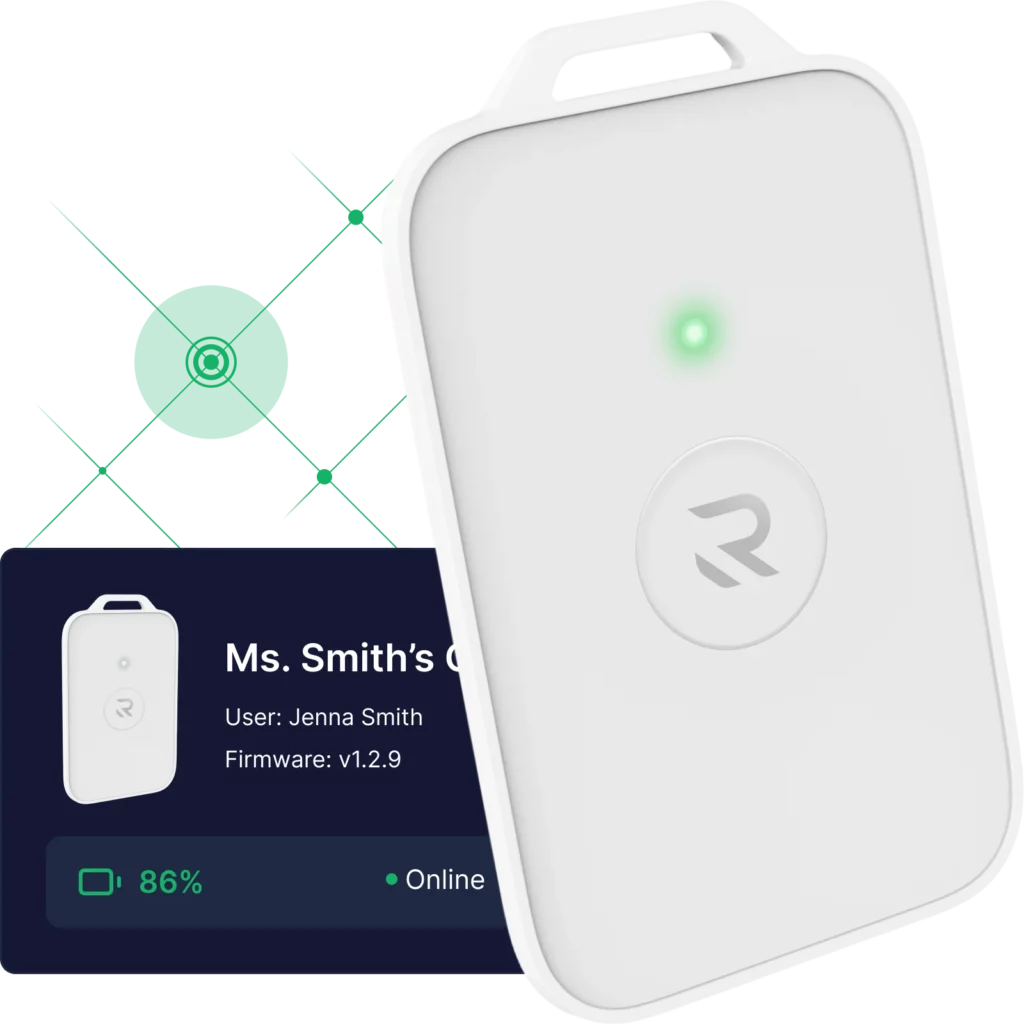
The Rescue Card is a wearable panic button worn by teachers and staff. When pressed, it silently triggers an emergency alert. There’s no phone required. Rescue Repeaters extend signal coverage across a campus (including classrooms, gymnasiums, portable buildings, and outdoor areas where WiFi dead zones are common). The Rescue Base Station anchors the system’s communication infrastructure, with approximately six hours of battery backup to maintain operation during power disruptions.
This hardware-first approach directly satisfies HB 3083’s qualifying technology category of wearable panic alarms connected to local law enforcement.
Punch Rescue integrates with RapidSOS, a platform that connects activated panic button alerts directly to 911 and public safety agencies. The moment a Rescue Card is pressed, RapidSOS transmits real-time incident data (including location and alert type) to the appropriate dispatch center. This satisfies HB 3083’s requirement for direct connection to local law enforcement and positions Oregon schools ahead of the deeper PSAP integration requirements emerging in other states.
Punch Rescue integrates with Mappedin to embed dynamic indoor facility maps directly within the response dashboard. When an alert is triggered, first responders receive accurate, room-level location data. This gives law enforcement the building-level information they need to respond effectively the moment they are notified.
Punch Rescue integrates with Lightspeed System’s Notify technology for emergency communication coordination, automated response plan distribution, and mass notifications. When an incident occurs, administrators, staff, and first responders receive the right information automatically. No manual steps are required during a moment of crisis.
Oregon’s grant funding and flexible timeline are genuine advantages for schools that use them. When evaluating systems, you need to ask:
Punch Rescue is built to answer yes to all of the above. It’s also highly customizable to meet unique school district needs and specifications.
Not as a mandatory installation. Oregon’s Alyssa’s Law, HB 3083, signed May 28, 2025, requires all K-12 schools (public and private) serving 50 or more students to consider installing a panic alarm system as part of school safety planning. It’s a “consider,” not a “must install,” standard.
Either a wireless or wearable panic alarm directly connected to local law enforcement. Oregon’s definition is more specific than most “consider” states. It explicitly names wearable devices as qualifying technology instead of leaving the technology undefined.
All public and private K-12 schools, plus any institution serving 50 or more students. This is broader than states like Texas or West Virginia, which apply only to public schools.
No. HB 3083 requires a direct connection to local law enforcement. A system that routes alerts only to school administrators doesn’t meet the law’s definition of a qualifying panic alarm.
The original grant ($2.5 million allocated for $2,000-per-building reimbursements) covered the 2023–2025 biennium, and its application deadlines have passed. Contact Punch Rescue’s sales team to confirm current funding-cycle status for the 2025–2027 biennium, alongside checking directly with ODE’s School Safety and Emergency Management program.
Punch Rescue’s Rescue Card, a wearable panic button with RapidSOS 911 connectivity, satisfies HB 3083’s definition of a qualifying wearable panic alarm connected to local law enforcement. Reach out to Punch Rescue to confirm current documentation for your district’s safety planning process.
Oregon requires every K-12 school to consider installing a panic alarm system.
Most panic buttons leave you guessing about device status, battery life, and system health. Punch Rescue provides real-time visibility across your entire infrastructure, so you know your school is ready when it matters most.