- Bill: No Alyssa's Law bill has been enacted in Ohio.
- Read the Full Legislation

Ohio does not yet require panic alert systems, but existing law already requires significant school safety planning. Public and chartered nonpublic schools must:
Alyssa’s Law is state legislation that requires K-12 schools adopt rapid, direct-to-911 panic-alert technology. Ohio hasn’t passed a version of it yet. Schools operate instead under the state’s existing school safety requirements.
Alyssa’s Law is named for Alyssa Alhadeff, a 14-year-old student killed in the February 14, 2018 shooting at Marjory Stoneman Douglas High School in Parkland, Florida. Her mother, Lori Alhadeff, became a leading voice pushing for school safety reform, founding the nonprofit Make Our Schools Safe. The law’s advocates push for legislation that gives every classroom a direct, silent line to law enforcement during an emergency (without triggering school-wide alarms that could escalate danger or tip off a threat).
Ohio’s SB 105 would require a wearable panic alert system for every staff member, with every school facility capable of integrating that system with local 9-1-1 infrastructure, a mandate closer to Florida’s or Utah’s than to Tennessee’s “consider” standard. Advocacy groups, including Make Our Schools Safe, have pushed for Ohio to adopt the law. As of late September 2026, SB 105 remains in the Senate Finance Committee, over a year after its February 2025 introduction.
SB 105, as introduced, would require every public and chartered nonpublic school to provide each staff member a wearable panic alert device, with system-wide integration into local 911 dispatch. That’s a higher bar than most states set on first passage. Districts that already maintain a current Ohio Revised Code 3313.536 emergency management plan have the documentation infrastructure in place to add a wearable system and show immediate compliance if SB 105 moves.
SB 105 was introduced on February 19, 2025, and referred to the Senate Finance Committee. The committee held a hearing on October 21, 2025, and the bill has not advanced further as of late September 2026. Its over year-long stall in committee is typical of the early stage many states’ Alyssa’s Law bills go through before either dying in committee or getting attached to a broader school safety package.
As with every state’s version of Alyssa’s Law, silent panic alarm systems are additions to a school’s safety infrastructure. They are not replacements for existing classroom phones, intercoms, or other established communication devices.
Alyssa’s Law has now passed in New Jersey (2019), Florida (2020), New York (2022), Texas, Tennessee (2023), Utah and Oklahoma (2024), Georgia, Washington, and Oregon (2025), Virginia and West Virginia (2026), and most recently Illinois (2026). Ohio is not yet on this list.
If SB 105 passes as written, Ohio would be one of the stronger mandates on the books:
SB 105’s wearable-device requirement and 911 integration standard place it squarely in that company. A federal ALYSSA Act and a Safer Schools Act are also both pending, and either would require Ohio schools to meet Alyssa’s Law-style requirements regardless of state action.
Ohio schools have several active funding sources for school safety and security, from state grants to newly reopened federal programs.
The Ohio School Safety Center administers state grant funding for physical security upgrades, threat assessment training, and emergency communication technology across Ohio’s public, community, and nonpublic schools.
The federal School Violence Prevention Program, administered by the COPS Office at the U.S. Department of Justice, is a primary federal funding source for school safety technology nationwide. The FY26 cycle offered up to $500,000 per award over a 36-month period, with a 25% local cash match, but its Grants.gov and JustGrants deadlines have already passed. Districts should watch for the FY27 announcement.
The BJA STOP School Violence Program opened its FY2026 cycle on September 21, 2026. It offers 15 awards of up to $2 million each for state governments and public institutions of higher education (Category 1), and 80 awards of up to $1 million each for local governments, school districts (including public charter schools), nonprofits, private K-12 schools, and tribal governments (Category 2), each over a 36-month period. The Grants.gov deadline is October 30, 2026, and the JustGrants deadline is November 6, 2026.
The School Safety Enhancement Program provides roughly $93 million nationally across approximately 30 awards. It is limited to State Educational Agencies, which may pass funding to local districts. The FY26 application deadline of July 28, 2026 has closed; Ohio districts interested in a future cycle should coordinate with the Ohio Department of Education and Workforce.
FEMA’s Nonprofit Security Grant Program makes roughly $300 million available nationally for nonprofit organizations, including private and religious K-12 schools, at high risk of a targeted attack. The FY26 deadline of July 24, 2026 has closed; eligible Ohio schools should plan ahead for the next cycle.
Districts that stack state and federal programs, and complete a safety plan review before applying, get the most out of Ohio’s funding landscape. A current emergency management plan is required for most competitive federal applications anyway.
Punch Rescue provides resilient hardware and software designed to work when it matters most. For Ohio schools, that means a system built to satisfy SB 105’s wearable-device and 911-integration standard well before any mandate takes effect.
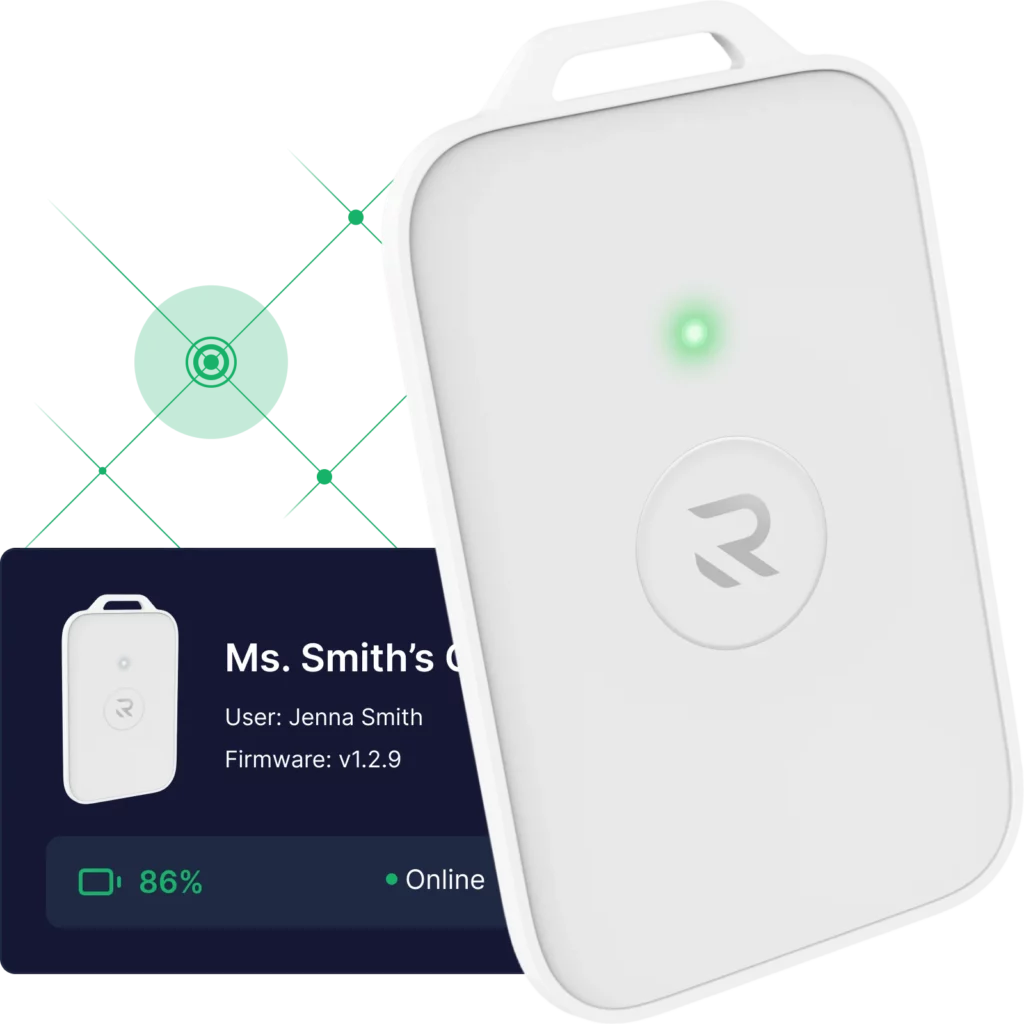
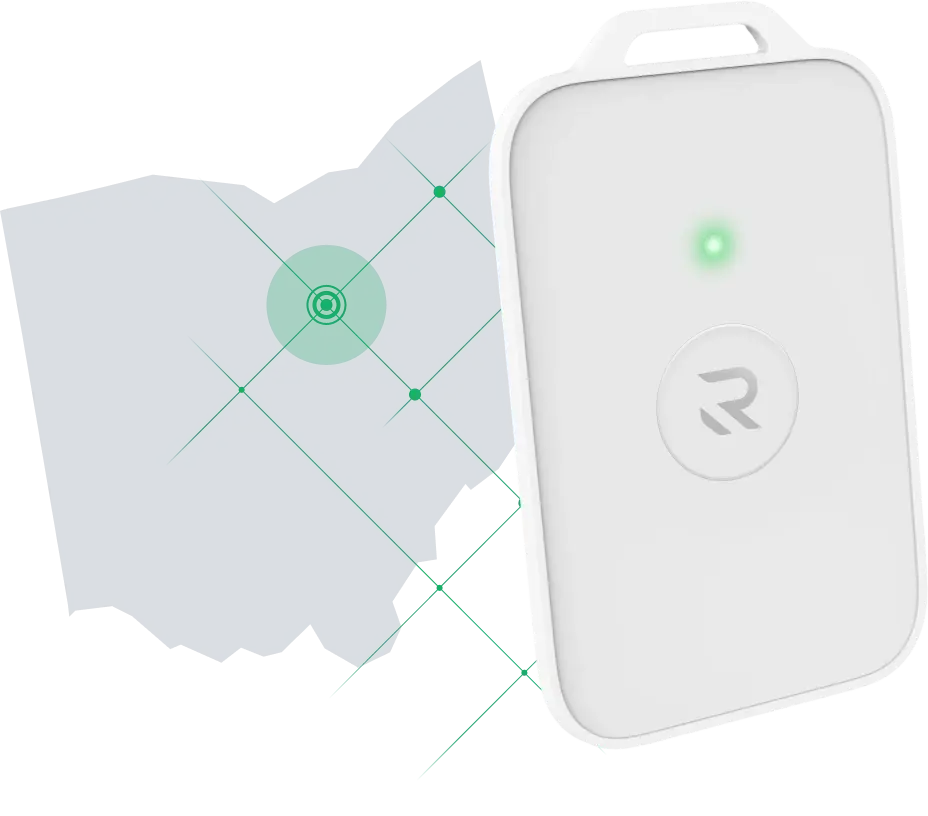
The Rescue Card is a wearable panic button worn by teachers and staff, exactly the kind of device SB 105 would require for every staff member. When pressed, it silently triggers an emergency alert. There’s no phone required. Rescue Repeaters extend signal coverage across a campus, covering classrooms, gymnasiums, portable buildings, and outdoor areas where WiFi dead zones are common.
Rescue Alert Stations anchor the system’s communication infrastructure. They come with approximately six hours of battery backup to maintain operation during power disruptions. This hardware is designed to work where app-based systems routinely fail, in the areas of campus with weak or no WiFi signal. These are precisely the spaces where staff are most vulnerable and least able to reach a phone.
Punch Rescue integrates with RapidSOS, a platform that connects activated panic button alerts directly to 911 and public safety agencies. The moment a Rescue Card is pressed, RapidSOS transmits real-time incident data (including location and alert type) to the appropriate dispatch center, the direct 911 integration SB 105 would specifically require.
Punch Rescue integrates with Mappedin to embed dynamic indoor facility maps directly within the response dashboard. When an alert is triggered, first responders receive accurate, room-level location data, supporting the kind of detailed site information Ohio’s emergency management plans already require.
Punch Rescue integrates with Lightspeed System’s Notify technology for emergency communication coordination, automated response plan distribution, and mass notifications. When an incident occurs, administrators, staff, and first responders receive the right information automatically. There are no manual steps required during a moment of crisis.
With SB 105 sitting in committee, Ohio districts have time to get ahead of a mandate that, if it passes, would likely take effect quickly. When evaluating systems, you need to ask:
Punch Rescue is built to answer yes to all of the above. It’s also highly customizable to meet unique school district needs and specifications.
SB 105 was introduced in February 2025 and remains in the Senate Finance Committee as of late September 2026.
SB 105 would require every school facility to have a wearable panic alert system capable of integrating with local 911, with every staff member provided a device.
Districts can install and test a wearable panic alert system now, document it in their Ohio Revised Code 3313.536 emergency management plan, and apply for state and federal funding that’s currently available, rather than waiting for a mandate to force the timeline.
SB 105, introduced in February 2025, would require every public and chartered nonpublic school to provide staff with a wearable panic alert system integrated with local 911. It remains in the Senate Finance Committee as of late September 2026.
Most panic buttons leave you guessing about device status, battery life, and system health. Punch Rescue provides real-time visibility across your entire infrastructure, so you know your school is ready when it matters most.