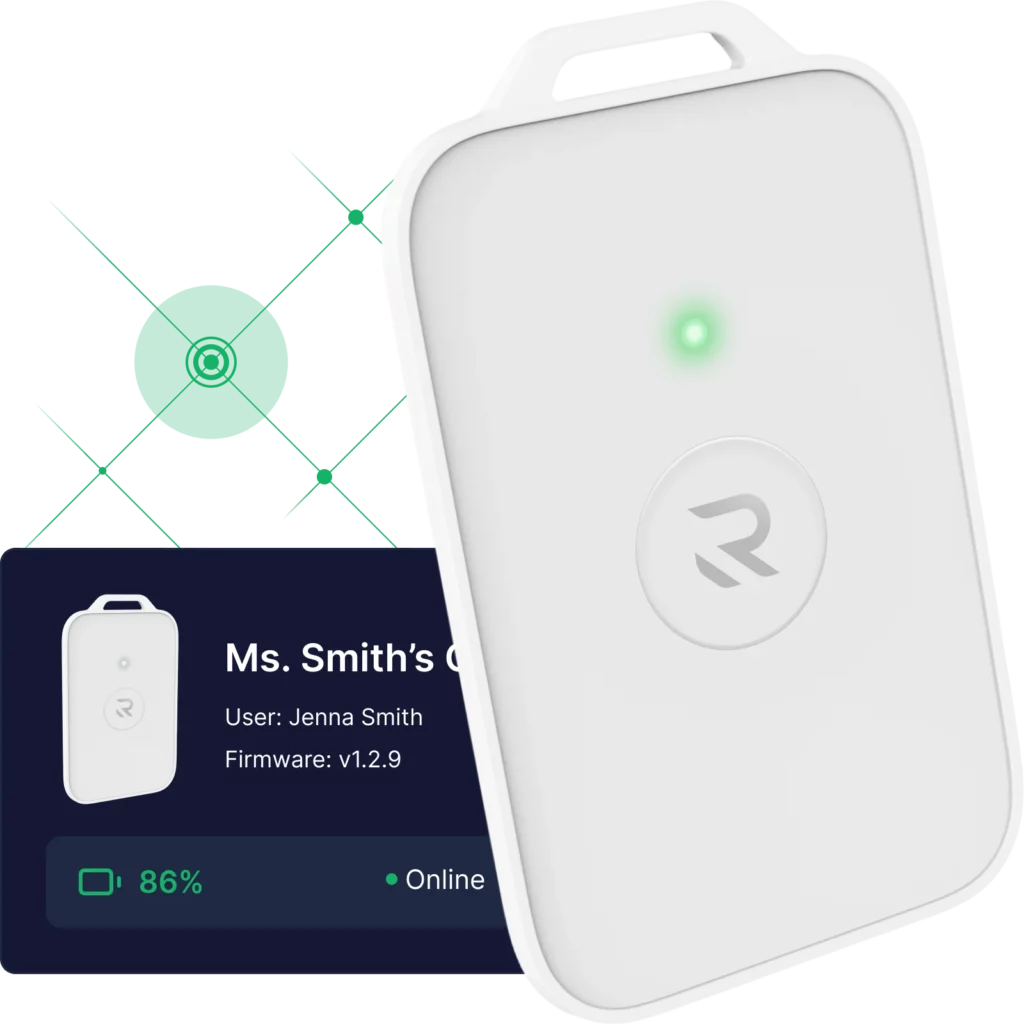
- Bill: HB 84
- Read the Full Legislation

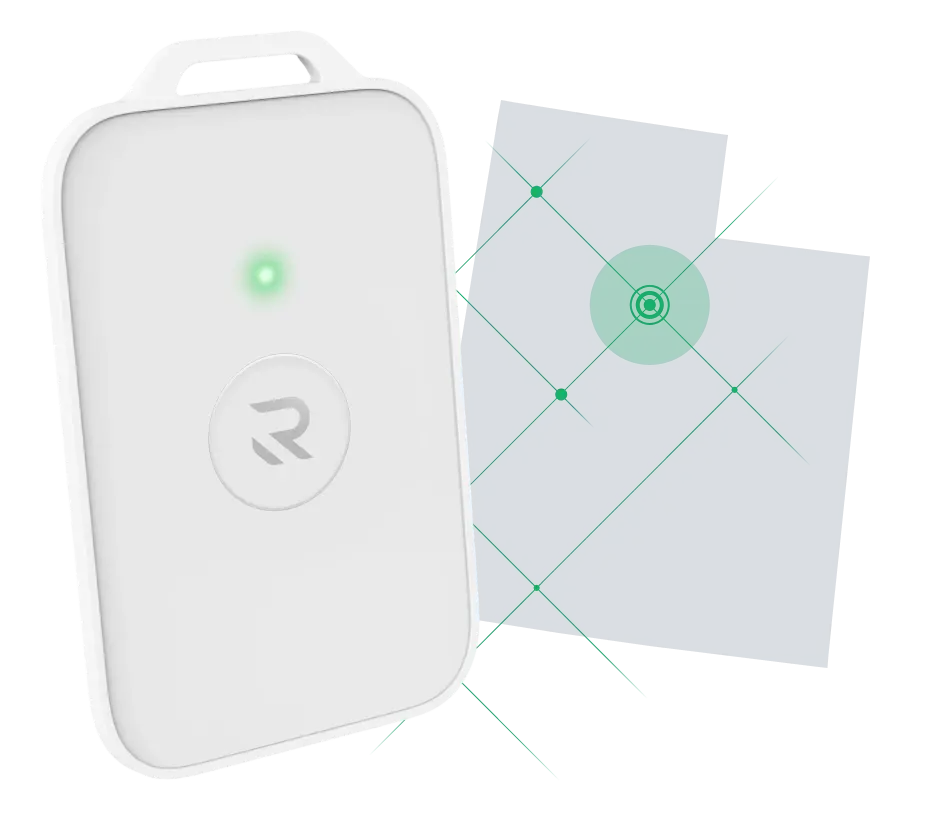
HB 84 requires every Utah public and charter school to provide a staff person in each classroom with a wearable panic alert device that allows for immediate contact with emergency services, law enforcement agencies, health departments, and fire departments. The law goes requires:
Note: HB 84 also mandates school safety incident and data reporting, school resource officer training, a school safety needs assessment, a school guardian program, and the designation of specific school safety personnel. This makes it one of the most comprehensive school safety laws in the country.
Alyssa’s Law is state legislation requiring K-12 schools to equip staff with rapid, direct-to-911 emergency alert technology. Utah’s version is one of the most comprehensive in the country, going well beyond a single panic button.
Yes. Utah’s Alyssa’s Law, HB 84, requires every public and charter school to provide a wearable panic alert device to a staff person in every classroom. The law also mandates live video feeds, remote door locks, and two-way responder communication tied to each alert.
Alyssa’s Law is named for Alyssa Alhadeff, a 14-year-old student killed in the February 14, 2018 shooting at Marjory Stoneman Douglas High School in Parkland, Florida. Her parents, Lori and Dr. Ilan Alhadeff, became leading voices pushing for school safety reform. They founded the nonprofit Make Our Schools Safe. The law’s advocates push for legislation that gives every classroom a direct, silent line to law enforcement during an emergency (without triggering school-wide alarms that could escalate danger or tip off a threat).
Utah’s version of Alyssa’s Law was authored by Sen. Don Ipson and Rep. Ryan Wilcox as part of HB 84. This is the state’s largest school safety measure. Governor Spencer Cox signed the bill in March 2024, and Lt. Governor Deidre Henderson held a ceremonial signing at the University of Utah shortly after. It took effect May 1, 2024. Utah was among the states that passed a version of Alyssa’s Law in 2024, alongside Oklahoma.
Advocacy groups cite Utah’s law as a model for the level of detail other states should be writing into their own versions of Alyssa’s Law.
HB 84 treats the wearable panic alert device as one layer of a much larger safety mandate. Districts also have to implement:
A panic alert system that only satisfies the wearable-device requirement leaves the rest of HB 84 unaddressed. Districts evaluating vendors should confirm a system’s video, mapping, and communication components support the law’s full scope.
As with every state’s version of Alyssa’s Law, wearable panic alert systems are additions to a school’s safety infrastructure. They are not replacements for existing classroom phones, intercoms, or other established communication devices.
Alyssa’s Law has now passed in New Jersey (2019), Florida (2020), New York (2022), Texas and Tennessee (2023), Utah and Oklahoma (2024), Georgia, Washington, and Oregon (2025), and Virginia and West Virginia (2026). As of early 2026, more than 18 additional states are actively considering legislation.
Utah sits at the demanding end of the national spectrum. Where states like Tennessee only require districts to consider a panic alarm, and New Jersey requires a single silent alarm per building, Utah mandates a wearable device for every classroom staff person. These devices must be tied to video, door locks, and two-way communication.
Only a handful of states have gone this far:
Utah’s law was written with the benefit of watching earlier states’ rollouts. This is why it reads more like a comprehensive security standard than a single-device mandate.
Utah schools have both a dedicated state grant and federal funding sources available for HB 84 compliance.
The Utah Legislature allocated $72 million through HB 61, the School Safety and Support Grant. This is for districts to purchase safety and security enhancements. Eligible expenses include interoperable communication hardware and software, panic buttons, and all-hazards response technology. To apply, a district must have a designated school safety specialist on staff and a completed building safety assessment. Districts should contact the Utah State Board of Education to confirm current application windows, since funding cycles and remaining allocations vary.
The federal School Violence Prevention Program, administered by the COPS Office at the U.S. Department of Justice, has been the primary federal funding source for school safety technology nationwide. The FY26 application window is now closed, however. The program offered a maximum federal share of $500,000 per award over three years, with a local cost-share requirement of at least 25%.
The Grants.gov deadline was August 4, 2026, and the JustGrants deadline was August 11, 2026.
The BJA STOP School Violence Program reopened its FY2026 cycle on September 21, 2026. It now offers 15 awards of up to $2 million each for state governments and public institutions of higher education (Category 1). It also offers 80 awards of up to $1 million each for local governments, school districts (including public charter schools), nonprofits, private K-12 schools, and tribal governments (Category 2). It is a 36-month award. The Grants.gov deadline is October 30, 2026, and the JustGrants deadline is November 6, 2026.
Because HB 84’s scope extends beyond the panic button, districts stacking HB 61 funds with STOP dollars are best positioned to cover the video, mapping, and access-control components the law also requires.
Punch Rescue provides resilient hardware and software designed to work when it matters most. For Utah schools, that means a wearable panic alert system that satisfies HB 84’s core requirement. It also integrates with the video, mapping, and notification layers the law also demands.
The Rescue Card is a wearable panic button worn by teachers and staff. When pressed, it silently triggers an emergency alert. There’s no phone required. Rescue Repeaters extend signal coverage across a campus, covering classrooms, gymnasiums, portable buildings, and outdoor areas (where WiFi dead zones are common). They serve as the signal-strengthening infrastructure HB 84 calls for.
The Rescue Base Station anchors the system’s communication infrastructure. It comes with approximately six hours of battery backup to maintain operation during power disruptions. This hardware is designed to work where app-based systems routinely fail, in the areas of campus with weak or no WiFi signal. These are precisely the spaces where staff are most vulnerable and least able to reach a phone.
Punch Rescue integrates with RapidSOS, a platform that connects activated panic button alerts directly to 911 and public safety agencies. The moment a Rescue Card is pressed, RapidSOS transmits real-time incident data (including location and alert type) to the appropriate dispatch center. This directly satisfies HB 84’s requirement for immediate contact with law enforcement, fire, and health departments.
Punch Rescue integrates with Mappedin to embed dynamic indoor facility maps directly within the response dashboard. When an alert is triggered, first responders receive accurate, room-level location data. This gives Utah districts the situational context HB 84’s live-video and mapping requirements are designed to provide.
Punch Rescue integrates with Lightspeed System’s Notify technology for emergency communication coordination, automated response plan distribution, and mass notifications. When an incident occurs, administrators, staff, and first responders receive the right information automatically. There are no manual steps required during a moment of crisis.
HB 84’s scope is broader than most states’ versions of Alyssa’s Law. When evaluating systems, you need to ask:
Punch Rescue is built to answer yes to all of the above. It’s also highly customizable to meet unique school district needs and specifications.
Yes. Utah’s Alyssa’s Law, HB 84, effective May 1, 2024, requires every public and charter school to provide a wearable panic alert device to a staff person in every classroom. It’s one of the most comprehensive Alyssa’s Law versions in the country.
Live video feeds tied to each alert, remote door locks, two-way communication between staff and responders, signal repeaters, ballistic windows and internal locks on ground-level classrooms, perimeter fencing, and PSAP-accessible video surveillance.
Yes. HB 84 also mandates a school guardian program, school resource officer training, a documented school safety needs assessment for every building, and formally designated school safety personnel. A system that satisfies the wearable-device requirement alone doesn’t cover the rest of the law.
Every Utah public and charter school. The law took effect May 1, 2024.
The School Safety and Support Grant (HB 61) allocated $72 million for eligible expenses, including panic buttons and interoperable communication hardware, alongside federal COPS SVPP and BJA STOP funding. Applying requires a designated school safety specialist and a completed building safety assessment. Contact Punch Rescue’s sales team to confirm current HB 61 application support and funding availability.
Punch Rescue’s Rescue Card, Rescue Repeaters, RapidSOS, and Mappedin integrations are built to satisfy HB 84’s wearable-device, connectivity, and mapping requirements. Reach out to Punch Rescue to confirm current video-surveillance and door-lock integration options to cover HB 84’s full scope for your district.
Utah requires every public and charter school to provide a wearable panic alert device to a staff person in each classroom. The law’s requirements extend well beyond the device itself.
Most panic buttons leave you guessing about device status, battery life, and system health. Punch Rescue provides real-time visibility across your entire infrastructure, so you know your school is ready when it matters most.